Our air leak testing machines work on pressure decay and differential pressure — dry, fast and repeatable. Built in Faridabad with the fixture, the pneumatic circuit and the PLC control panel made in one workshop, so a reading you can log is a reading you can defend.
An air leak testing machine seals your component, fills it with dry compressed air to a set pressure, lets it settle, and then watches what happens. If the pressure falls faster than your reject limit allows, the part leaks. That is the whole idea — and everything else in the machine exists to make that measurement repeat.
We build two variants. Pressure decay watches the absolute pressure in the part alone, and suits most castings, housings and assemblies. Differential pressure compares your part against a sealed master of the same volume, cancelling out temperature drift and giving far tighter resolution — the animation above shows exactly that: both chambers fill together, then the test side falls away while the master holds, and the difference is what the machine judges.
Why differential wins on tight limits: when the reject limit is small, the noise in an absolute reading — a part still warm from machining, a workshop that heats up after lunch — is bigger than the leak you are hunting. A master chamber sees the same drift and cancels it.
The instrument is the easy bit. What makes an air leak test machine trustworthy is the fixture: sealing faces that suit your casting's parting line, clamp force that repeats without crushing, and the smallest dead volume we can get away with. A large trapped volume dilutes a small leak until it disappears into the noise — a machine designed without that in mind will pass leakers all day and nobody will know.
Air is the default across automotive and auto-component lines because it is dry, fast and gives a number you can store. We supply air leak test machines for cylinder heads, engine blocks, oil pans, intake manifolds, fuel rails, radiators, intercoolers, EGR housings, brake components, gearbox casings, pump bodies, compressor housings, motor end shields and pressure die cast housings of every kind.
Where the part is plastic or composite, the circuit and the pressure both change — see our note on choosing a leak test method. Where the working pressure is high, a hydraulic leak testing machine is the honest answer instead. And where the leak has to be seen rather than measured, a water leak testing machine earns its place next to the air station.
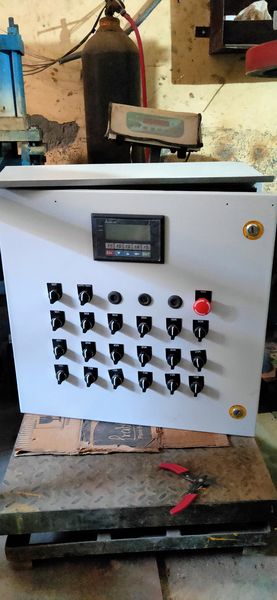
FutureTech Electricals began as a control panel manufacturer in Faridabad. The panel on every air leak testing machine is designed, built and ferruled in the same workshop as the machine itself.
Test pressure, settle, hold and reject limit stored per part on the HMI. Operator picks the part; the machine sets itself.
Part ID, pressure curve, ΔP value, verdict, operator and timestamp — the evidence you need when a complaint lands.
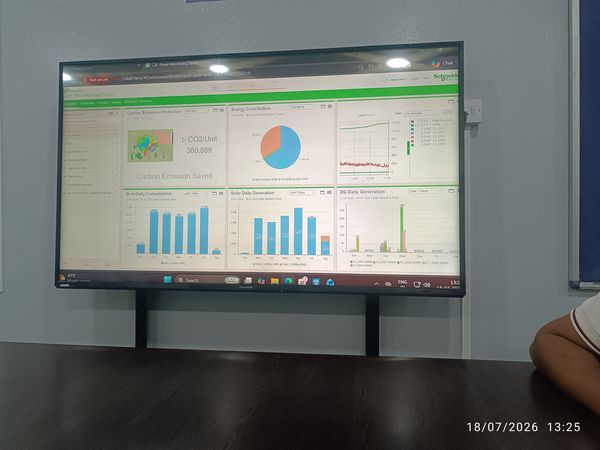
Optional SCADA with graph history, shift-wise rejection analysis and export to your ERP or quality system.
Failed parts need a supervisor login to release. The verdict belongs to the machine, not to the operator having a bad day.
Known-good and calibrated-leak masters run at shift start, logged automatically — proof the station was working.
Modbus, Ethernet/IP or Profinet to the line PLC, with barcode or RFID part identification and poka-yoke interlocks.
Photographs from our Faridabad workshop and from customer installations.
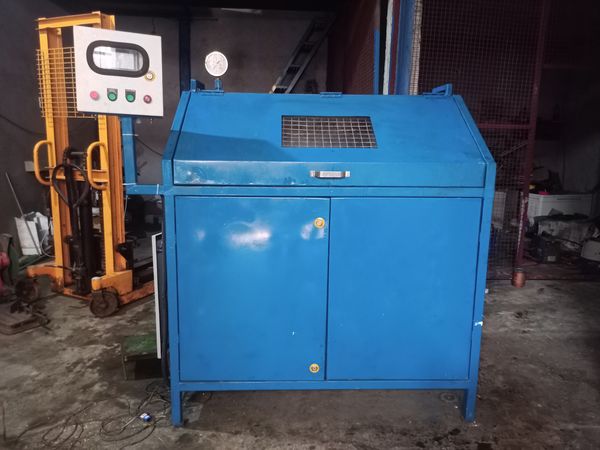
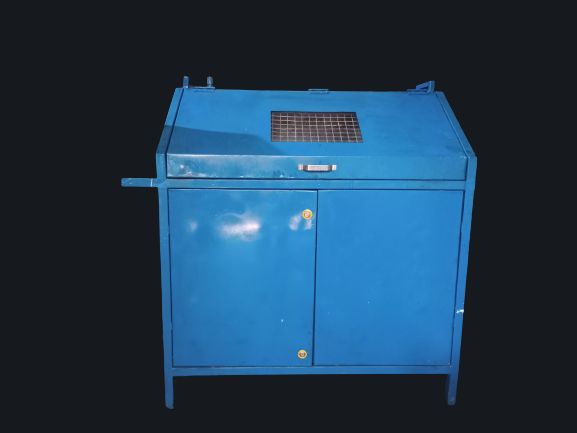
air-leak-test-machine-1.jpgFull machine, front viewair-leak-test-fixture.jpgSealing fixture close-upair-leak-test-hmi.jpgHMI with live ΔP readingair-leak-test-panel.jpgPLC control panel insideair-leak-test-masters.jpgMaster and calibrated leakair-leak-test-inline.jpgStation installed on lineEvery one of these is agreed with you and written on the GA drawing before manufacturing starts. Nothing is left to be discovered at trial.
| Parameter | What it covers | Fixed at |
|---|---|---|
| Method | Pressure decay or differential pressure against master | Enquiry |
| Test pressure | Set to your component and customer standard | Enquiry |
| Reject limit | In mbar/sec or cc/min, taken from your drawing | Drawing approval |
| Number of test ports | Single or multi-cavity, tested independently | Drawing approval |
| Fixture and clamping | Pneumatic or hydraulic, part-specific, poka-yoke | Drawing approval |
| Cycle time | Fill + settle + hold + evaluate, tuned on your part | Trial run |
| Control system | PLC and HMI make, recipe structure, SCADA if required | GA approval |
| Air preparation | Filter, regulator and dryer sized for the circuit | GA approval |
| Safety | Guarding, pressure relief, interlocks, E-stop circuit | Always |
1. Send the part or the drawing. Sealing faces, internal volume and the reject limit you are held to. A WhatsApp photo is enough to start the conversation.
2. Concept and GA drawing. Fixture layout, pneumatic circuit, panel GA and the cycle chart — approved by you before anything is manufactured.
3. Build and wiring. Fabrication, ferruled panel wiring and PLC/HMI programming, all in our own Faridabad workshop.
4. Trial with your masters. We run a known-good part and a calibrated leaker, and tune settle and hold until the verdict repeats without argument.
5. FAT and dispatch. Witnessed acceptance at our works, then packed with drawings, program backup and manual.
6. Installation and training. Commissioned on your line by our engineers, operators trained, support on call afterwards.
Pressure decay measures the absolute pressure inside your part and watches it fall. Differential pressure compares your part against a sealed master of similar volume and measures only the difference between them, which cancels out temperature drift. Decay suits ordinary limits; differential is what you want when the reject limit is tight.
That depends on the part volume, the fixture design and the method. Tell us the limit on your drawing and the internal volume, and we will tell you honestly whether air testing will hold it or whether the part needs a different method.
Air expands as it warms, so a part that has just come off machining reads as gaining or losing pressure for reasons that have nothing to do with a leak. We design in settle time, and where the line cannot wait, differential testing against a master or temperature compensation solves it.
Yes. Test pressure, settle, hold and reject limit are stored as recipes on the HMI against each part number. Where the fixture also needs to change, we design quick-change tooling so the changeover takes minutes rather than a shift.
Yes. Where a component has separate circuits — a manifold or a multi-chamber housing — we test each port independently in the same cycle and report a separate verdict for each.
Yes. FutureTech Electricals started as a control panel manufacturer in Faridabad, and the panel is built and ferruled in the same workshop as the machine. One team answers for both the mechanics and the electricals.
Yes — Delhi NCR, Gurugram, Manesar, Bhiwadi, Ghaziabad, Noida and across India. Installation and commissioning are done by our own engineers.
Share the drawing or a photo on WhatsApp and we will come back with a method, a cycle time and a price.
Please add a phone number or an email so we can reply.
Only a phone number or email is needed. Everything else is optional — the WhatsApp chat opens with your requirement already written, so you can add the rest there.
Want to know more, or ask anything about Air Leak Testing Machine? We reply fast on WhatsApp