We could subcontract the fabrication, buy in the power packs and hire a programmer per project. Plenty of firms do, and it works until commissioning week. Doing all of it ourselves is slower to set up and far quicker to finish, and it is the single reason our machines get signed off on time.
FutureTech began in 2012 as a control panel builder in Sanjay Colony, Faridabad. Machines came next, because customers who trusted us with the panel started asking who was building the machine it controlled. Hydraulics came after that, for the same reason. Each step was a response to the same problem: on a project split between suppliers, the gaps between them are where the delays live.
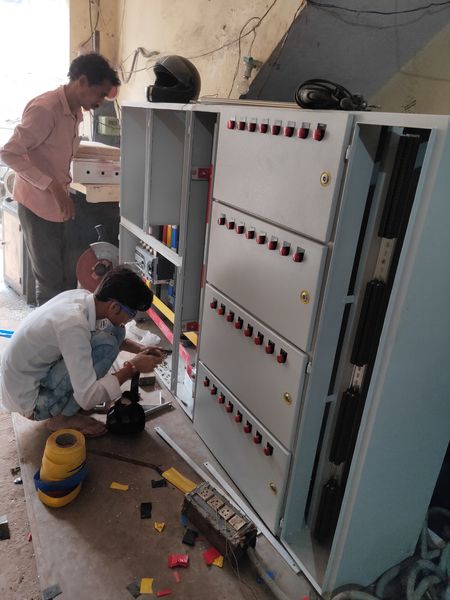
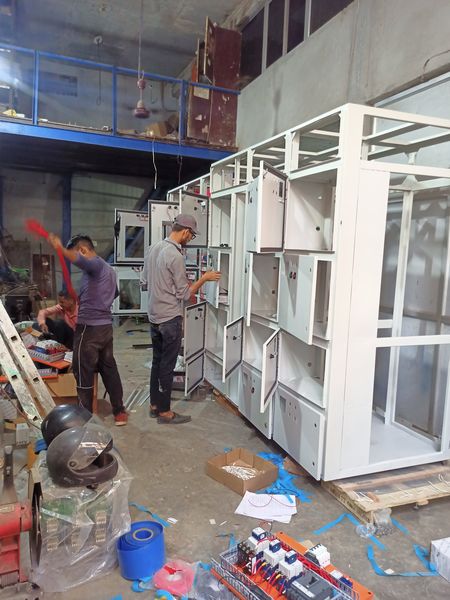
So today the design, the fabrication, the panel wiring, the hydraulic assembly, the PLC and SCADA programming and the testing all happen in the same building, by people who talk to each other in the corridor rather than by email.
This costs us margin on paper. Subcontracting is cheaper per job. It just is not cheaper by the end of commissioning week, and by then it is the customer paying for it in lost production.
Every job starts with drawings, and nothing is manufactured until they are approved. Mechanical GA, hydraulic circuit diagram, panel GA, control schematic and the cycle chart where a sequence is involved. The cycle chart in particular does more work than people expect — it defines the logic, the interlocks and the safety case in one document that everybody can read.
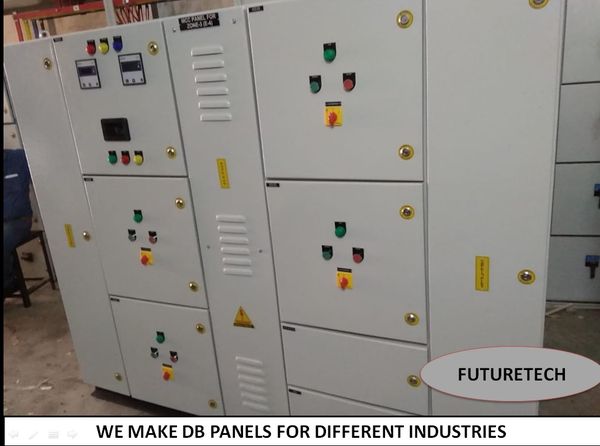
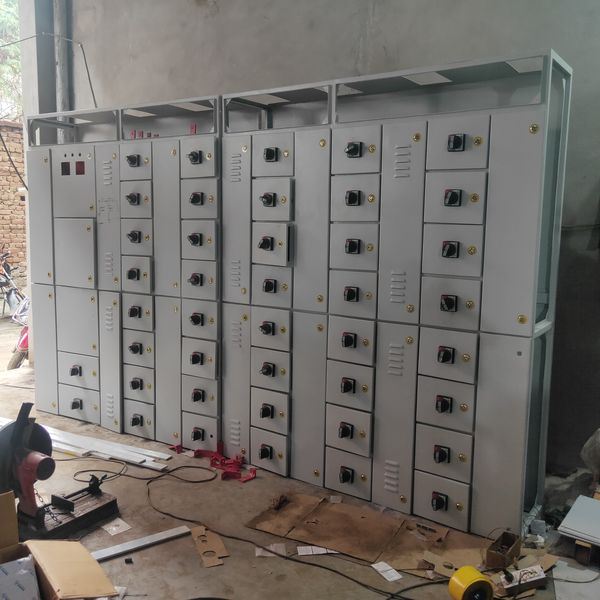
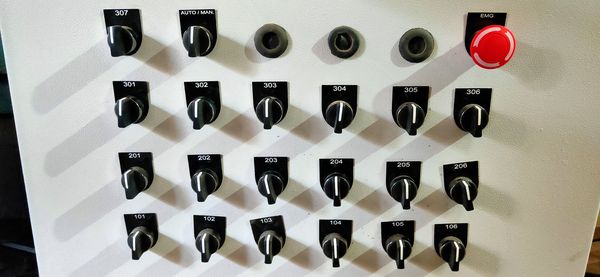
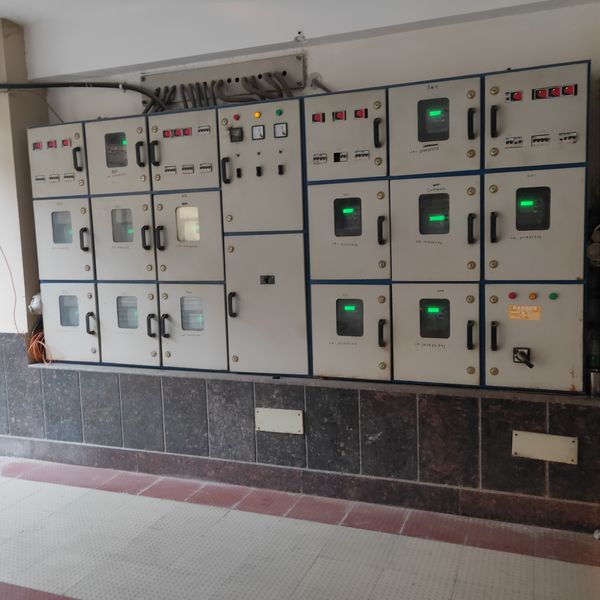
We build MCC, PCC, APFC, PLC, LT distribution, VFD and DG synchronizing panels, plus application panels for AHU, fire fighting, lifts and car parking.
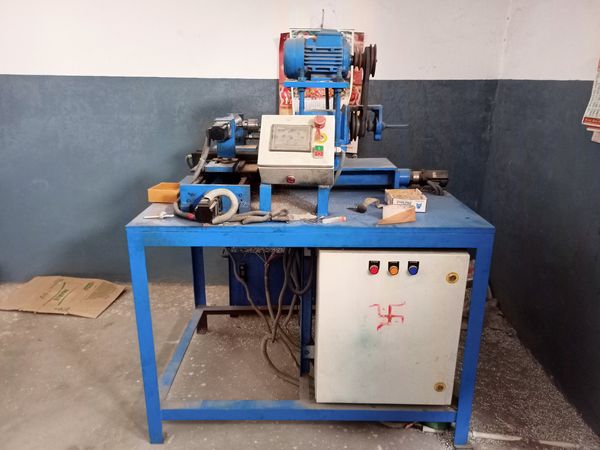
Hydraulic power packs are a product line in their own right and the reason our hydraulic SPM behave properly. Pump, motor, tank, valve bank, filtration and cooling are sized for the actual duty cycle rather than picked from stock — which is the difference between a machine that ramps smoothly and one that hunts and overheats by June.
PLC logic, HMI screens and SCADA configuration on Siemens, Delta, Mitsubishi and Allen-Bradley platforms — detailed on our PLC and SCADA capability page. The person writing the sequence is in the same building as the person wiring the outputs, which removes an entire category of commissioning problem.
Nothing leaves as an untested assembly. Panels are load tested and given a test report. Machines are run with your components — good parts and deliberately bad ones — and the acceptance criteria are proven at our works before packing. Where the customer wants to witness it, that is a factory acceptance test with a signed record.
What ships alongside: approved drawings, cable schedule, program backup, parameter list, spares list and the operating manual.
A short list, and every item on it comes from having seen the alternative go wrong.
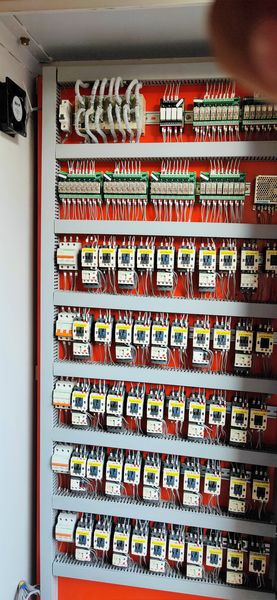
Not on a small job, not to save a day. An unferruled panel is a maintenance problem handed to somebody else.
E-stops and interlocks hard-wired through a safety relay. Software supervises; it does not decide whether something is safe.
Commissioning is not the first time the machine runs. It is the first time it runs at your place.
Backups and parameters handed over. A machine only one company can service is a liability, not a relationship.
On retrofits and solar especially. A number given over the phone is a number that gets revised later.
If a machine is beyond economic retrofit, or the method will not hold your limit, we say so before you spend.
Photographs from our Faridabad workshop and from customer installations.
workshop-wide.jpgWorkshop overviewpanel-wiring-ferruling.jpgFerruled panel wiringmachine-fabrication.jpgMachine fabrication in progresshydraulic-assembly.jpgHydraulic power pack assemblypanel-load-testing.jpgPanel load testingdispatch-loading.jpgDispatch with documentationThis is the sequence every job follows, from the first call to the machine running on your floor.
| Stage | What happens | What you get |
|---|---|---|
| Enquiry | Component, drawing or specification received and discussed | An honest view on feasibility |
| Survey | Site visit where the job needs one — retrofit, solar, installation | Written condition report |
| Concept | Layout, method and cycle chart | Concept for review |
| Quotation | Itemised scope with inclusions stated | A comparable quotation |
| Drawings | Mechanical GA, hydraulic circuit, panel GA, schematic | Approval set |
| Manufacture | Fabrication, wiring, hydraulics, programming | Progress updates |
| Testing | Load test, trial with your components, FAT if required | Test report |
| Dispatch | Packed with drawings, backups, spares list, manual | Complete document set |
| Commissioning | Installed and proven on your floor by our engineers | Trained operators |
We would rather show the workshop than describe it. Customers who visit before placing an order tend to place it, and customers who visit during manufacture tend to come back — partly because seeing a machine half-built answers questions that no specification sheet ever does.
We are at MCF 5585, Sanjay Colony, Sector 23, Faridabad. Call ahead and someone will walk you through whatever is on the floor that week.
Yes, and we would prefer it. Call ahead and we will show you whatever is being built that week — panels, machines, whatever is on the floor. It answers more questions than a specification sheet.
The core work — panel building, wiring, fabrication, hydraulic assembly, programming and testing — is all done in our own workshop. Specialist operations like heat treatment or precision grinding go to specialists, and we are open about which on any given job.
Yes. Factory acceptance testing with your components, your acceptance criteria and a signed record is a normal part of larger projects and available on any job.
Approved GA drawings, hydraulic and electrical schematics, cable schedule, PLC and HMI program backup, parameter list, spares list and operating manual. Written for the maintenance team who will inherit it.
It depends entirely on complexity and on how quickly drawings come back approved. We commit to a date once the GA is approved, and drawing approval is usually the part that decides whether it is met.
Yes, with our own engineers, including operator and maintenance training at handover. We do not hand a crate to a third party and hope.
One number for mechanical, hydraulic and electrical, and the drawings we support against are the ones we made. Spares are specified at handover so you are not searching for a valve six months later.
Share the drawing or a photo on WhatsApp and we will come back with a method, a cycle time and a price.
Please add a phone number or an email so we can reply.
Only a phone number or email is needed. Everything else is optional — the WhatsApp chat opens with your requirement already written, so you can add the rest there.
Want to know more, or ask anything about our workshop? We reply fast on WhatsApp