Hydrostatic testing exists because water is nearly incompressible. Take a vessel to proof pressure with water and a failure is a split and a puddle. Do the same with air and it is an explosion. We build hydrostatic proof test rigs in Faridabad with programmed pressure profiles, guarded chambers and a certificate for every part.
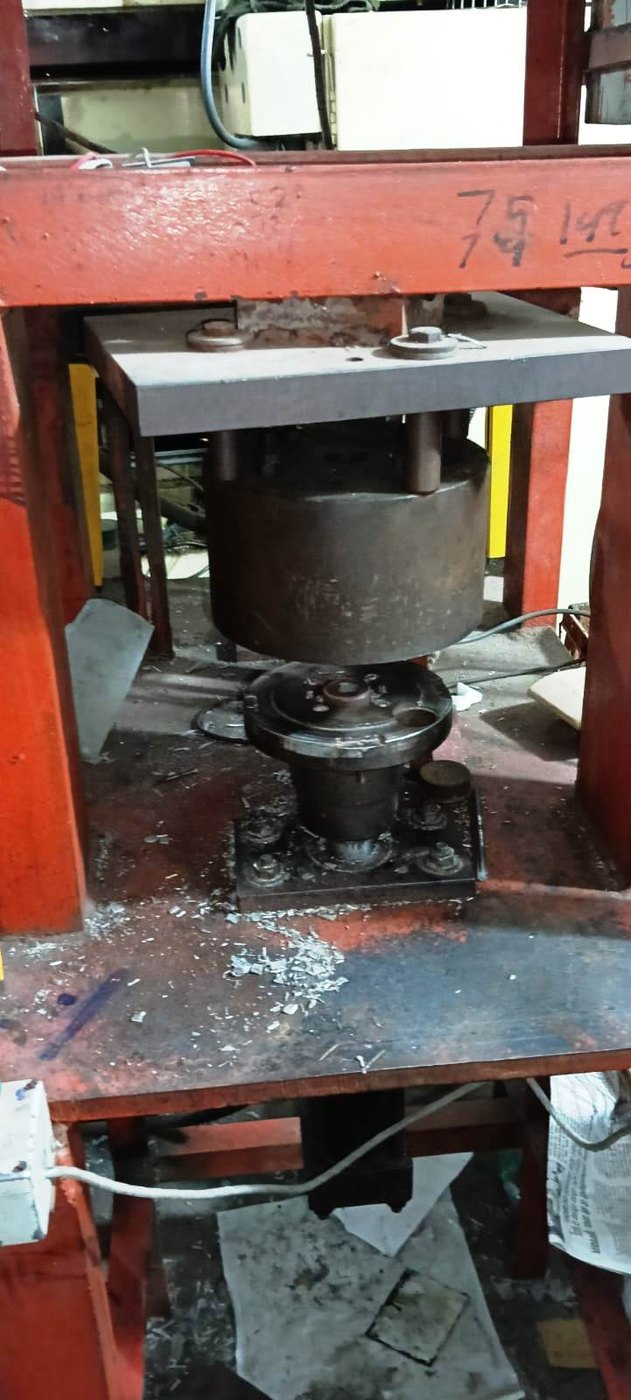
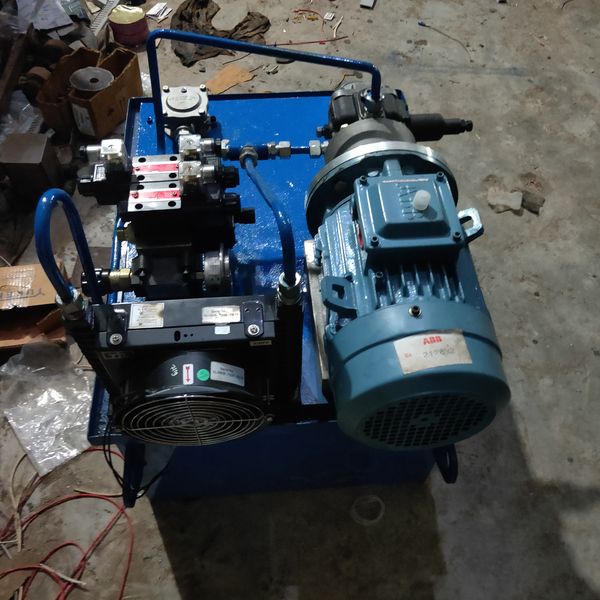
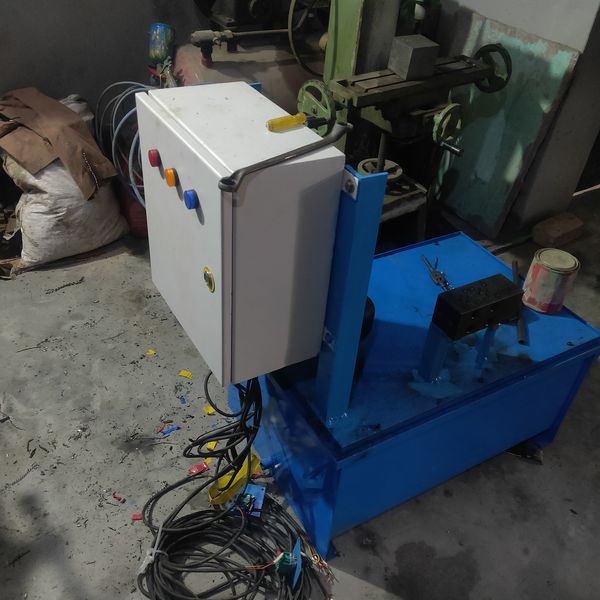
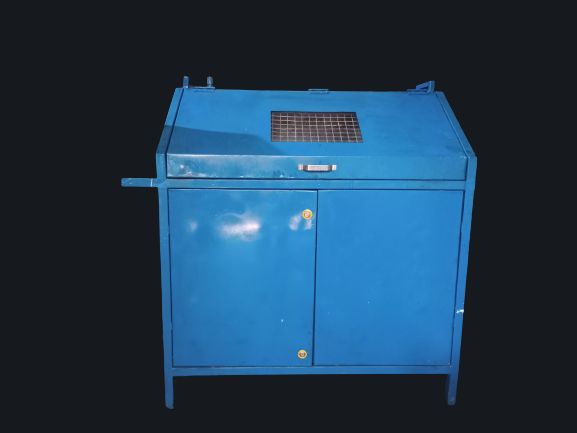
Hydrostatic testing — taking a component above its working pressure with water and holding it there — is the standard proof test for anything that will contain pressure in service. Cylinders, pressure vessels, tubes, pipe spools, fittings, valve bodies, fire extinguishers, gas cylinders and boiler components all get tested this way, and the reason is safety.
Water is nearly incompressible, so almost no energy is stored in it under pressure. If the test piece fails, it splits and the pressure collapses instantly — a mess, not an event. The same component at the same pressure with air behind it stores enormous energy, and a failure is genuinely dangerous. That is why every code specifies liquid for proof testing, and why we build these rigs for water.
Purging air is not a detail — it is the safety step. Trapped air in a "hydrostatic" test reintroduces exactly the stored energy the method exists to avoid. Our rigs vent and purge as part of the automatic sequence, not as something the operator is trusted to remember.
Pressure vessel and boiler component manufacturers, hydraulic cylinder makers, tube and pipe mills, valve and fitting manufacturers, gas and fire extinguisher cylinder producers, and heat exchanger fabricators. Related machines from the same family: hose pipe burst and impulse rigs, and hydraulic leak testing machines where the question is sealing rather than structural proof.
Worth being explicit, because customers often need both and think they are the same. A proof test asks: will this component survive above its working pressure without permanent deformation or rupture — a structural question. A leak test asks: does it hold pressure without losing any — a sealing question. We program both into one sequence where required: ramp to proof, hold, drop to working pressure, hold again and measure decay, then release.
Pressure profile, hold timing, safety interlocks and certificate generation all come from a panel designed and ferruled in our own Faridabad workshop.
Fill and vent are part of the programmed sequence. Trapped air is the one thing that makes a hydrostatic test dangerous.
Pressure raised at a controlled rate, because most test codes specify it and a slammed ramp gives a curve you cannot judge.
The PLC holds for the full specified time. The cycle does not end early because the shift is running late.
Pressure-time curve, hold time, decay and verdict against the serial number — printable for your inspector.
Where components must ship dry, draining and drying are part of the same automatic cycle.
Chamber with interlocked door, relief valve and E-stop through a safety relay — hard-wired, not software-decided.
Photographs from our Faridabad workshop and from customer installations.
hydrostatic-test-rig.jpgComplete hydrostatic righydrostatic-chamber.jpgGuarded test chamberhydrostatic-pump.jpgHigh pressure pump unithydrostatic-hmi.jpgHMI pressure curvehydrostatic-panel.jpgPLC control panelhydrostatic-certificate.jpgPrinted test certificateThese rigs are built to a test code, so we start from the standard you are held to and confirm every parameter on the drawing.
| Parameter | What it covers | Fixed at |
|---|---|---|
| Test standard | The code or customer specification being satisfied | Enquiry |
| Proof pressure | Test pressure and its relation to working pressure | Enquiry |
| Component range | Volume, size and connection types to be tested | Enquiry |
| Ramp rate | Rate of pressure rise as the standard requires | Drawing approval |
| Hold time | Duration at proof, and at working pressure if leak tested | Drawing approval |
| Acceptance | Permitted pressure drop and any visual criteria | Drawing approval |
| Purge and drain | Air venting, draining, blow-off and drying if required | GA approval |
| Certificate | Fields, format and export or print arrangement | GA approval |
| Safety | Chamber, door interlock, relief valve, E-stop circuit | Always |
The pressure side of a hydrostatic rig is straightforward engineering. What decides whether the rig is quick to use is how the component is sealed and clamped — because an operator who spends four minutes fitting adapters on a two-minute test has a rig that halves his output rather than doubling it.
So we design the sealing arrangement around the range of components you actually test, with quick-connect adapters per size and a clamping arrangement that one person can operate. It is unglamorous and it is usually the difference between a rig that gets used and one that gets worked around.
Because water is nearly incompressible and stores almost no energy under pressure. If the component fails it splits and the pressure collapses. The same test with air stores enormous energy and a failure is dangerous. Every pressure code specifies liquid for this reason.
It reintroduces the stored energy the method exists to avoid, so purging matters. Our rigs fill and vent as part of the automatic sequence rather than relying on the operator to remember.
Yes, in one sequence: ramp to proof pressure, hold, drop to working pressure, hold again and measure decay, then release. Two questions, one cycle, one verdict for the operator.
Yes. Drain, blow-off and where needed a drying stage are built into the same cycle for components going straight to assembly, paint or packing.
Yes — pressure-time curve, hold time, pressure drop, verdict and serial number, printable and exportable. That is usually what your customer or inspector actually wants from the test.
The rig is built around your range. Tell us the largest and smallest components, their volumes and their connections, and we will size the pump, the chamber and the sealing adapters accordingly.
Yes — Delhi NCR, Gurugram, Manesar, Bhiwadi, Ghaziabad, Noida and across India, installed and commissioned by our own engineers.
Share the drawing or a photo on WhatsApp and we will come back with a method, a cycle time and a price.
Please add a phone number or an email so we can reply.
Only a phone number or email is needed. Everything else is optional — the WhatsApp chat opens with your requirement already written, so you can add the rest there.
Want to know more, or ask anything about High Pressure Water Testing Machine? We reply fast on WhatsApp