Pressing a stator into a shell is an interference fit that punishes every small misalignment — a scored bore, a distorted stack, an air gap that is no longer concentric. We build hydraulic stator pressing SPM in Faridabad with guided rams, alignment fixtures and force-displacement monitoring that stops a bad press before it becomes scrap.
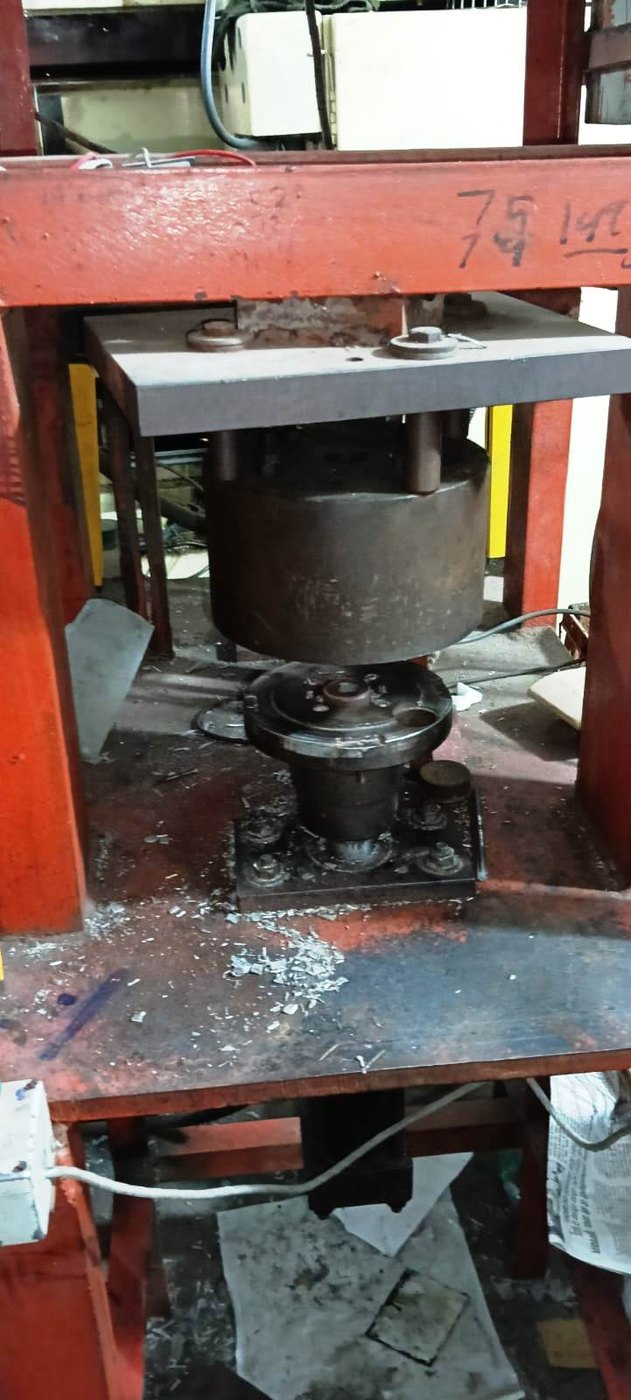
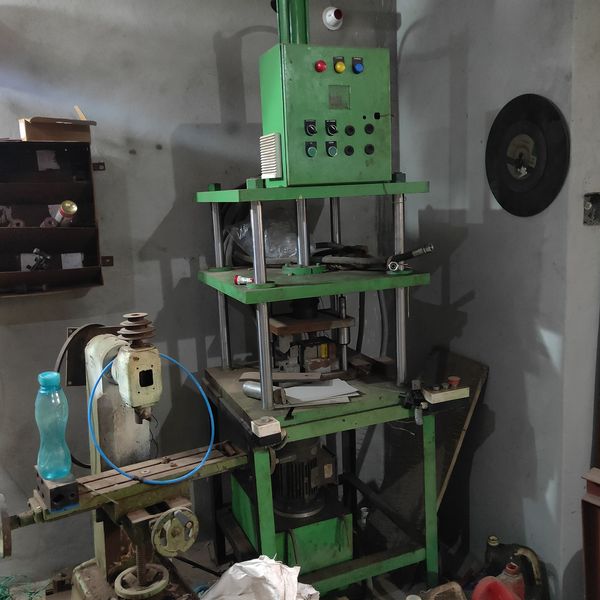
A stator press machine pushes a laminated stator stack into a motor shell or housing as an interference fit. The theory is simple and the practice is not, because everything that can go wrong happens in the first few millimetres of entry — before the operator has any idea there is a problem.
If the stator enters even slightly off-square, the leading laminations shave the bore, force climbs abnormally, and either the stack distorts or the shell is scored. The motor that comes out of that press may still turn, but the air gap is no longer concentric — and it shows up later as noise, vibration, heating or an early bearing failure at the customer's end, where diagnosis is expensive and the cause is invisible.
The force curve tells you before the part does. A clean stator insertion has a recognisable shape: low entry force, a steady climb through the interference, and a sharp rise at seating. A cocked entry looks nothing like it — which is why we monitor the curve rather than just the final force.
Where the interference is moderate, a straight hydraulic press with good alignment does the job and keeps the cycle short. Where it is high — larger frames, thin shells that would distort, or aluminium housings — heating the shell before insertion lets the stator drop in with far less force and no scoring, and the joint tightens as the shell cools. We build both, and where a line runs several frame sizes, we build stations that do cold pressing for the small frames and shrink fit for the large ones under one PLC.
The same platform covers related motor assembly operations: rotor onto shaft pressing, bearing insertion, end shield fitting and circlip assembly. Where the housing must also be leak tested afterwards, we build the leak test station to match.
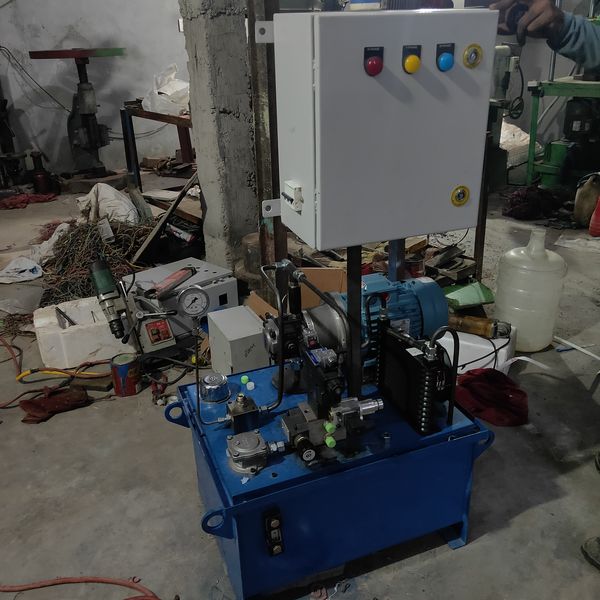
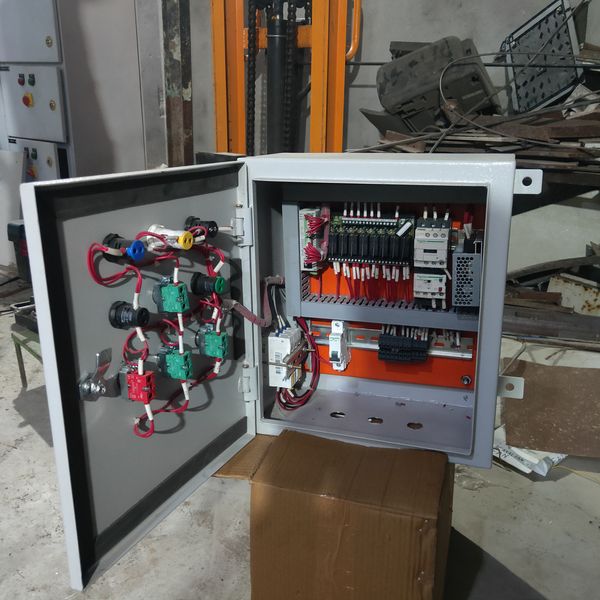
The press is driven by a hydraulic power pack we build ourselves, and controlled by a PLC panel designed and ferruled in the same Faridabad workshop.
Force against depth watched through the whole stroke and compared to the envelope learned from your good assemblies.
A cocked entry spikes force early. The machine stops and retracts before the bore is scored, rather than after.
Final depth measured by encoder and checked against the recipe, so a short-seated stator cannot pass.
Where the shell is heated, temperature is verified before the cycle starts and logged with the result.
Every insertion saved against the motor serial with operator, tool and timestamp, exportable to your quality system.
Pump, valve bank and cooling sized for your force and cycle rate by the team that builds our standalone power packs.
Photographs from our Faridabad workshop and from customer installations.
stator-press-machine.jpgComplete press stationstator-press-fixture.jpgAlignment fixture and toolingstator-press-hmi.jpgHMI with insertion curvestator-press-heating.jpgShell heating stationstator-press-panel.jpgPLC control panelstator-press-installed.jpgStation on assembly lineInterference fits leave no room for assumptions. Each of these is agreed and written on the GA drawing before manufacturing begins.
| Parameter | What it covers | Fixed at |
|---|---|---|
| Press force | Peak insertion force for your largest frame size | Enquiry |
| Frame sizes | Range of stator and shell sizes the station must handle | Enquiry |
| Fit method | Cold press or heated shell shrink fit | Enquiry |
| Stroke and daylight | Sized to the longest stack plus tooling | Drawing approval |
| Alignment fixture | Locating and squaring, quick-change per frame size | Drawing approval |
| Monitoring | Load cell range, encoder resolution, envelope criteria | Trial run |
| Heating | Induction or oven, temperature range and interlock | GA approval |
| Control and data | PLC and HMI make, recipe structure, SCADA if required | GA approval |
| Safety | Two-hand start or light curtain, interlocks, E-stop circuit | Always |
Before the station is signed off, we press a batch of your good assemblies to establish the envelope, and then deliberately run the failures you actually see — a stator started off-square, an undersize shell, a stack from the reject bin. If the machine misses one, the criteria are wrong and we correct them.
That trial is part of the buy-off, because a monitoring feature that has never been tested against a real defect is a feature, not a safeguard.
It depends on the interference, the stack length, the shell material and whether you press cold or shrink fit. Give us the drawing with the fit tolerances and the largest frame size, and we will size the press and the power pack around it.
Cold pressing is faster and simpler where the interference is moderate. Heating the shell suits high interference, thin or aluminium housings, and large frames — the stator enters with little force and no scoring, and the joint tightens as the shell cools. We build both and often combine them for a multi-frame line.
The force curve changes shape immediately. A cocked entry spikes force in the first few millimetres, well before the interference should be building. The PLC aborts and retracts at that point, so the bore is not scored and the stack is not distorted.
Yes. Force profile, envelope, depth and tooling are stored as recipes per frame size, with quick-change alignment fixtures and a tooling ID check so the wrong fixture cannot run.
Yes, against the motor serial number, with operator, tooling and timestamp. With SCADA added, curves can be recalled and exported for warranty investigation.
Yes, it is one of our own product lines, sized for your force and cycle rate rather than picked off a shelf.
Yes — Delhi NCR, Gurugram, Manesar, Bhiwadi, Ghaziabad, Noida and across India, installed and commissioned by our own engineers.
Share the drawing or a photo on WhatsApp and we will come back with a method, a cycle time and a price.
Please add a phone number or an email so we can reply.
Only a phone number or email is needed. Everything else is optional — the WhatsApp chat opens with your requirement already written, so you can add the rest there.
Want to know more, or ask anything about Stator Press Machine? We reply fast on WhatsApp