A fire pump panel spends its whole life doing nothing, and is judged entirely on the one occasion it has to work. That changes how it should be built — auto start on pressure drop, manual stop only, and no protection that can quietly shut the pump down while a building is burning.
Free site visit and quotation across Faridabad, Ballabgarh, Palwal, Gurugram, Delhi NCR, Noida, Ghaziabad and Manesar. Looking for a fire fighting panel manufacturer near you? Call +91 90154 04168 — same-day reply, or send your drawing on WhatsApp.
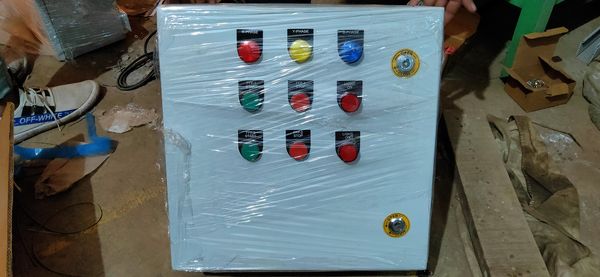
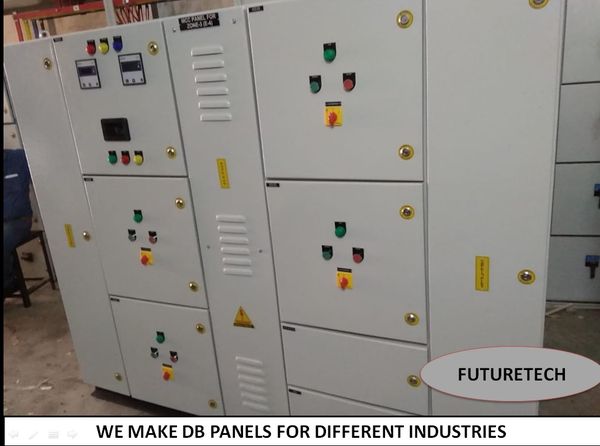
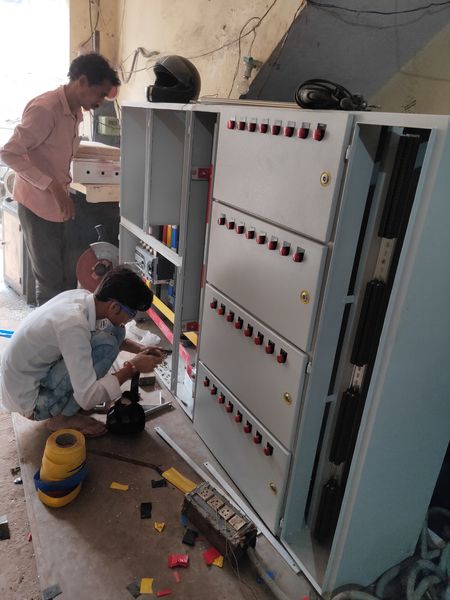
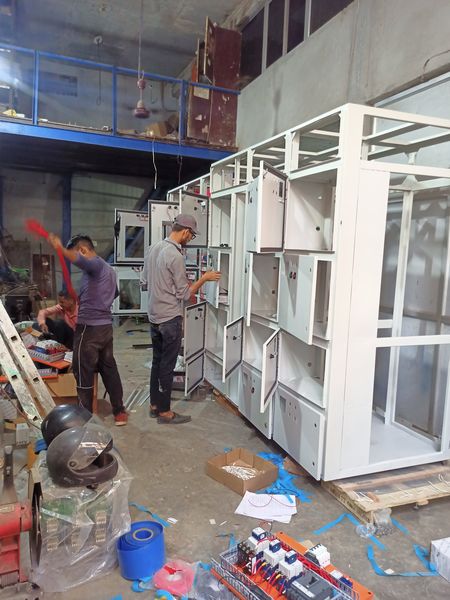
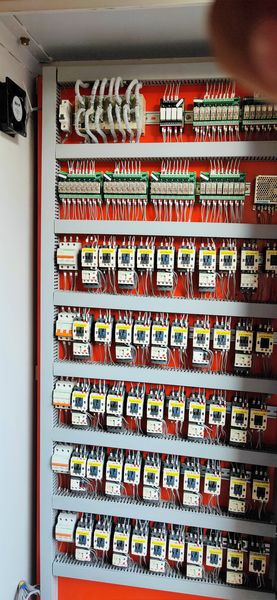
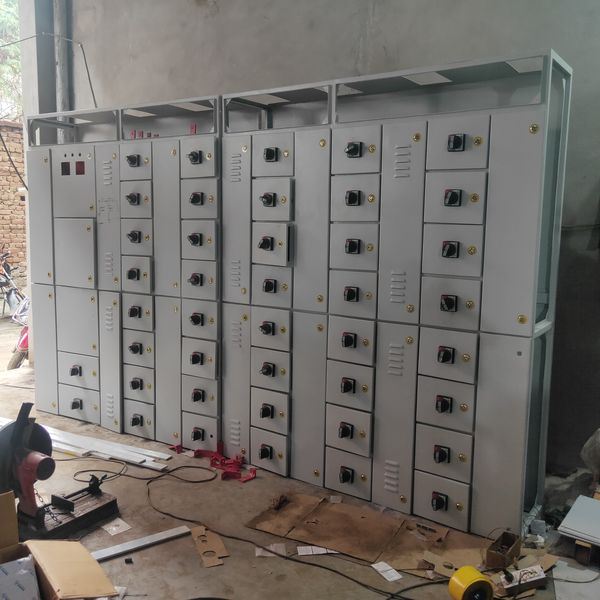
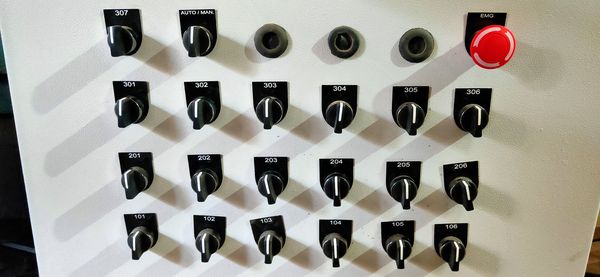
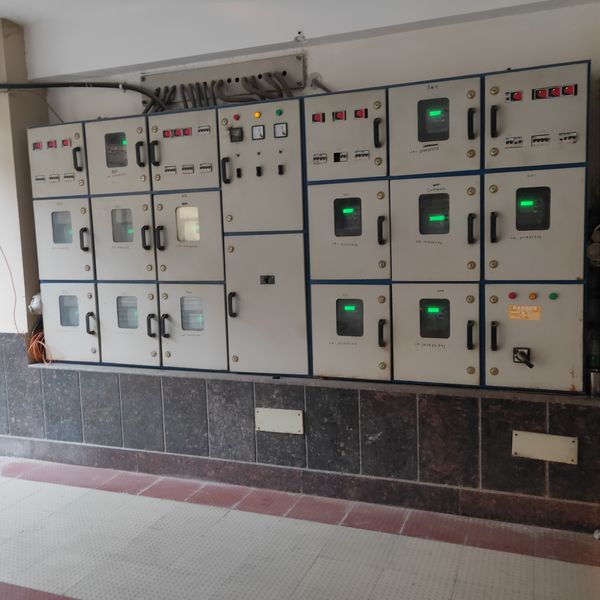
Almost every control panel we build is designed to protect the equipment. A fire fighting panel is designed to protect the building, and where those two aims conflict, the building wins. That single principle explains everything unusual about how these panels are wired.
The pump starts automatically when hydrant or sprinkler pressure falls, and it stops only when a person stops it. There is no auto-stop on pressure recovery, because pressure recovering does not mean the fire is out — it may mean a valve closed. Overload protection is arranged so it alarms rather than trips the running pump, because a fire pump that shuts itself down to save its own motor has failed at the only job it had.
Engineers new to fire systems often "improve" this. They add auto-stop, or fit a normal overload relay. Both make the panel look tidier and both defeat its purpose. The manual-stop rule is deliberate.
Each pump gets its own starter section, its own pressure switch setting and its own indication, with the start pressures staggered so they come in sequence rather than together.
Factories and warehouses, commercial and office buildings, hotels, hospitals, malls and multiplexes, residential towers, and industrial plants with hydrant and sprinkler systems. In most buildings the fire panel sits alongside an LT distribution board, a lift control panel that must obey its trip signal, and an AHU panel that must shut down or switch to smoke extract on the same signal.
Built, wired, ferruled and tested in our own Faridabad workshop, and supplied with the GA drawing and schematic your fire consultant will want to see.
Separate pressure switches per pump with staggered settings, so jockey, main and diesel come in sequence rather than together.
No auto-stop on pressure recovery. Recovering pressure does not mean the fire is out.
Faults raise an alarm rather than shutting down a running fire pump — the rule that separates a fire panel from a process panel.
Battery charging, repeated start attempts, fuel, temperature and oil pressure monitoring with full indication.
Test start facility that proves the pump without waking the whole building, so testing actually happens.
Pump running, pump failed, mains failure and controller trouble reported out to the fire alarm system and BMS.
Photographs from our Faridabad workshop and from customer installations.
fire-fighting-panel.jpgComplete fire pump panelfire-panel-internal.jpgInternal wiring and ferrulingfire-panel-jockey.jpgJockey pump starter sectionfire-panel-diesel.jpgDiesel engine control sectionfire-panel-schematic.jpgGA drawing and schematicfire-panel-installed.jpgPanel in pump roomFire panels are built to the consultant specification and the applicable code, and every point is confirmed on the drawing before manufacturing.
| Parameter | What it covers | Fixed at |
|---|---|---|
| Pump configuration | Jockey, main electric, diesel standby — ratings of each | Enquiry |
| Starting method | DOL, star-delta or soft start per pump | Enquiry |
| Pressure settings | Cut-in pressure for each pump, staggered | Drawing approval |
| Stop logic | Manual stop only on main and standby | Drawing approval |
| Diesel controls | Battery charger, start attempts, engine monitoring points | Drawing approval |
| Annunciation | Indication points and volt-free contacts to the fire panel | GA approval |
| Test facility | Test start arrangement and what it does and does not trigger | GA approval |
| Enclosure | IP rating, material, mounting, cable entry for a pump room | GA approval |
| Documentation | GA drawing, schematic, cable schedule, test report | Always |
Pump rooms are damp, dusty and often in a basement that floods before anything else does. A panel built to plant-room standards and dropped into that environment corrodes quietly for years and then does not work when it is needed.
So we specify the enclosure, the IP rating, the gland plates and the mounting height for where the panel is actually going — and we say so on the drawing, rather than assuming somebody downstream will notice.
Because recovering pressure does not mean the fire is out — it can equally mean a valve was closed. Codes require the main and standby fire pumps to be stopped manually by a person who has confirmed the situation. It is deliberate, not an omission.
A fire pump that shuts itself down to protect its own motor has failed at the one job it exists for. Protection is arranged to annunciate so somebody knows, while the pump keeps running.
It maintains system pressure against small leaks so the main pump does not start for trivial reasons. Its cut-in pressure is set above the main pump\u2019s, so it acts first and the main pump only starts when a hydrant or sprinkler has genuinely opened.
Yes — battery charging, repeated start attempts, engine running, fuel low, high temperature and low oil pressure monitoring, with the full indication and interface to the fire alarm panel.
Yes, that is what the test start facility is for. A pump nobody tests is a pump nobody can rely on, so we make testing easy enough that it actually gets done weekly.
Yes. Pump running, pump failed, mains failure and controller trouble are provided as volt-free contacts to the fire alarm panel and BMS, with the point list agreed at drawing stage.
Yes — Delhi NCR, Gurugram, Manesar, Bhiwadi, Ghaziabad, Noida and across India.
Share the drawing or a photo on WhatsApp and we will come back with a method, a cycle time and a price.
Please add a phone number or an email so we can reply.
Only a phone number or email is needed. Everything else is optional — the WhatsApp chat opens with your requirement already written, so you can add the rest there.
Want to know more, or ask anything about Fire Fighting Panel? We reply fast on WhatsApp