That single fact is why industrial solar pays back faster than any other kind. A factory consumes what it generates, at the moment it generates it, at its full tariff — no export, no feed-in rate, no waiting for the meter to settle. The design job is simply to match the plant to the load.
Free site visit and quotation across Faridabad, Ballabgarh, Palwal, Gurugram, Delhi NCR, Noida, Ghaziabad and Manesar. Looking for an industrial solar EPC company near you? Call +91 90154 04168 — same-day reply, or send your drawing on WhatsApp.
Residential solar has a timing problem. The plant generates hardest at midday, when the house is empty, so most of the output is exported at whatever feed-in rate the DISCOM offers — usually well below what the householder pays to buy power back in the evening.
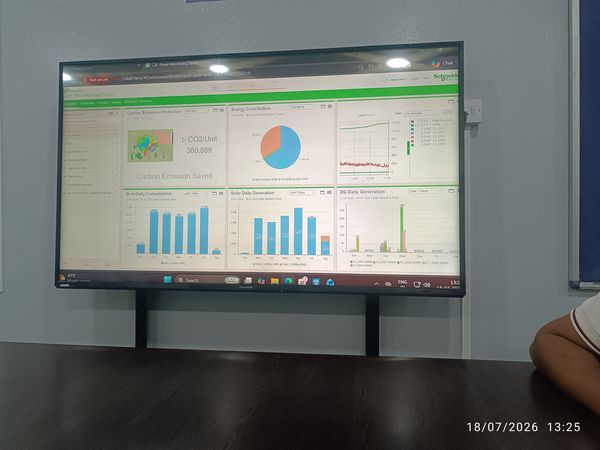
A factory has the opposite situation. Motors, compressors, ovens, lighting and air handling all run during exactly the hours the plant generates. The curves in the chart above overlap for most of the working day, and every unit in that overlap is self-consumed — it never touches the grid and it is worth your full industrial tariff, not the export rate. That single difference is why industrial solar pays back faster than any other segment.
The design goal is not maximum generation. It is maximum overlap. A slightly smaller plant that is fully self-consumed usually beats a larger one that exports half its output.
Most proposals start with roof area and work backwards. We start with your electricity bills and your shift pattern, because those decide how much of the generation you will actually use.
Industrial roofs bring their own problems, and pretending otherwise is how plants end up leaking or under-generating.
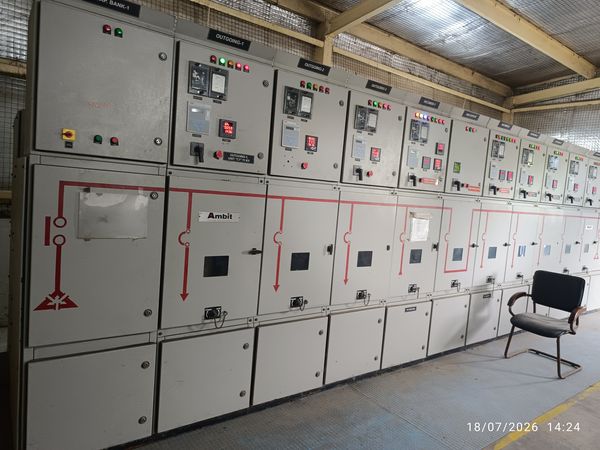
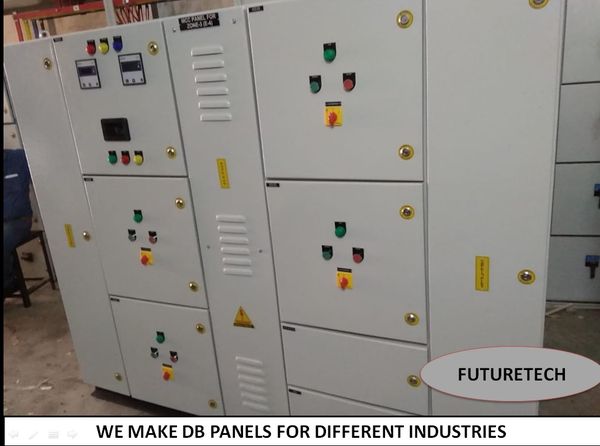
Most solar EPC contractors are solar companies who then have to work out your electrical system. We came the other way round — FutureTech has built MCC, PCC and APFC panels for factories since 2012, so the interconnection is familiar territory rather than the difficult part at the end.
We are a Luminous authorised solar partner and have executed rooftop and industrial solar work in Faridabad and Delhi NCR, including commissioning and documentation for MW-scale plants. See also our honest breakdown of what drives solar cost.
Every one of these comes from having built the electrical systems in factories before building solar plants on top of them.
Plant sized for maximum self-consumption from your actual load curve, not from available roof area.
Protection coordination checked against your existing panel, by people who build those panels.
Solar shifts the power factor seen at the meter. We check the effect on your APFC and demand charges up front.
The plant must not back-feed a diesel set. On a factory that runs on DG during outages this is a safety item, not a nicety.
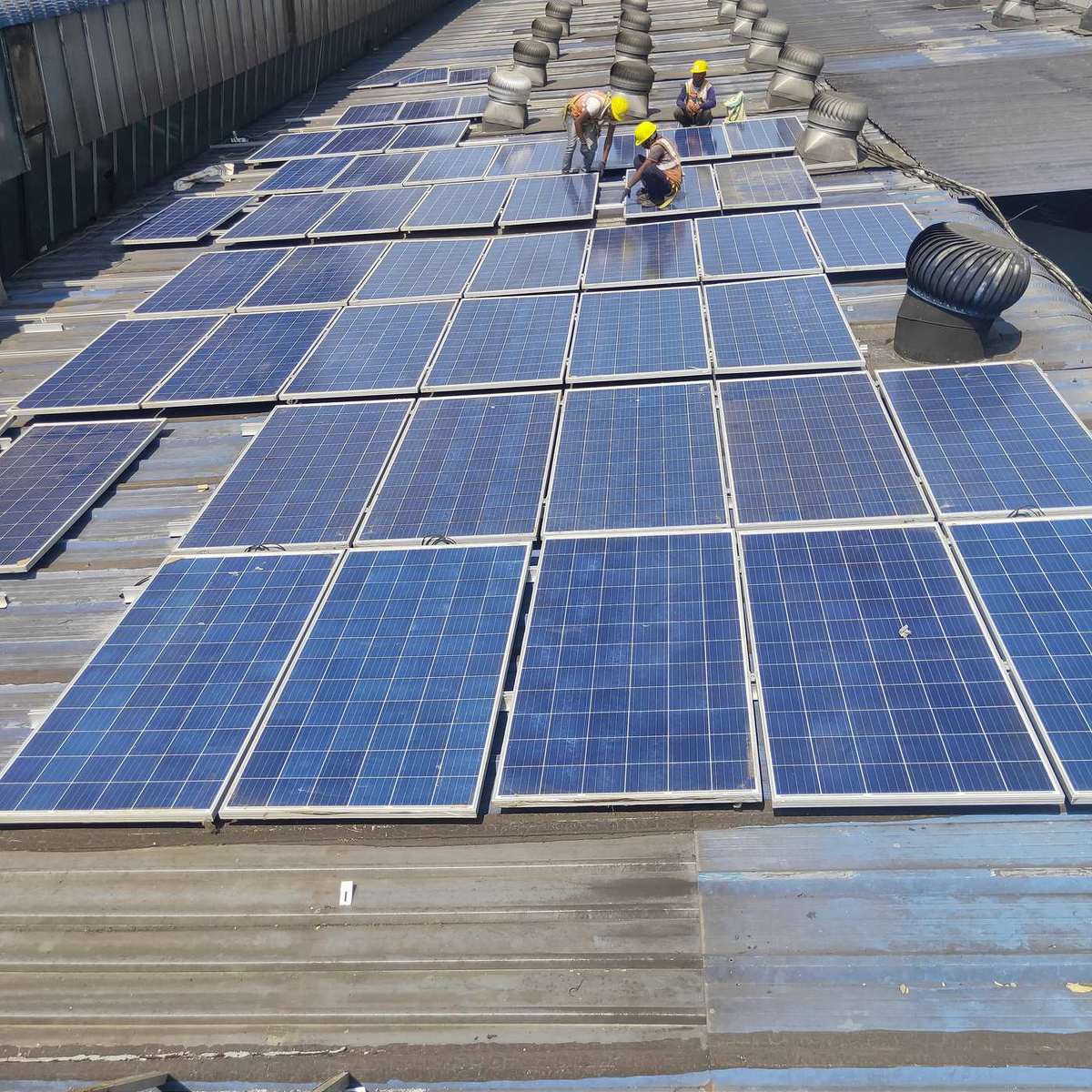
Added dead and wind load checked against the existing shed, with fixings suited to the sheet profile.
Process dust and soiling factored into the estimate and the cleaning schedule, rather than quoting a clean-roof number.
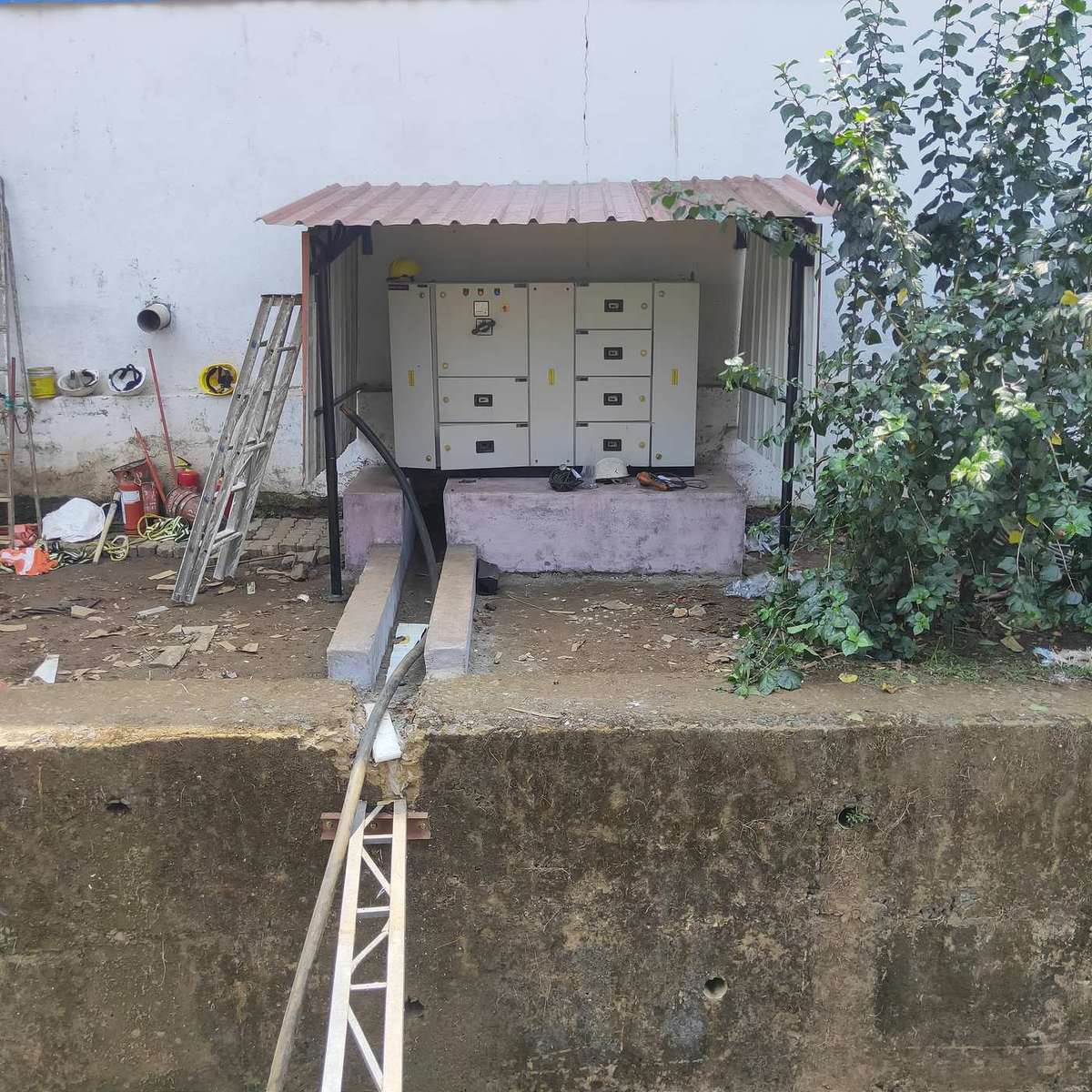
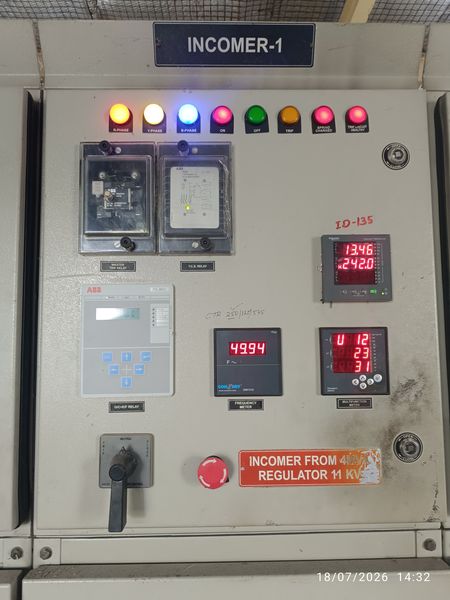
Photographs from our Faridabad workshop and from customer installations.
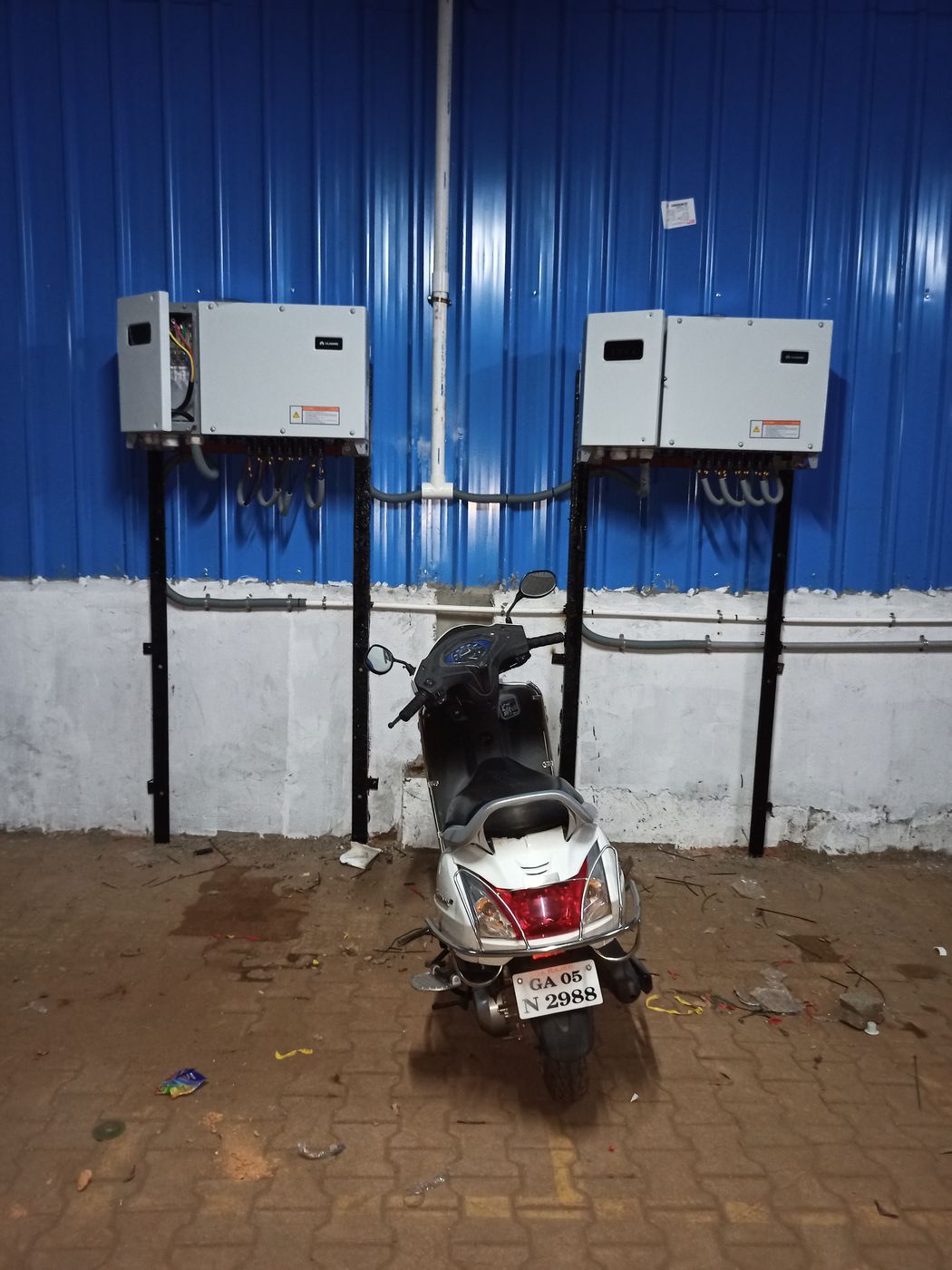
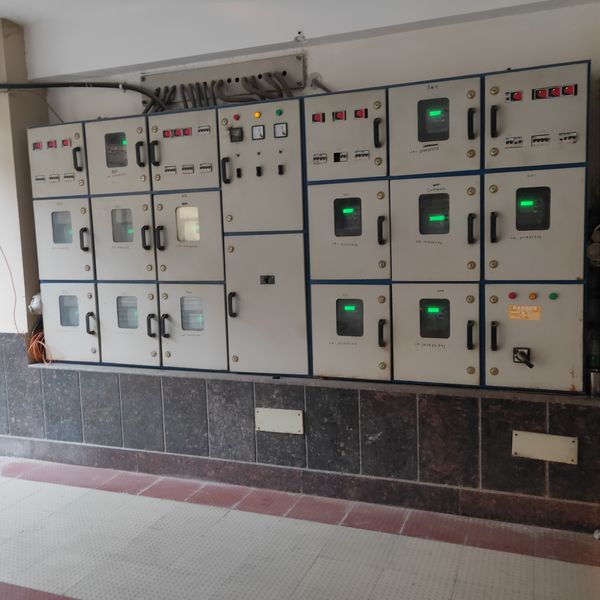
industrial-solar-plant.jpgFactory rooftop plantindustrial-solar-shed-roof.jpgSheet roof mountingindustrial-solar-inverter.jpgInverter roomindustrial-solar-interconnection.jpgLT panel interconnectionindustrial-solar-walkway.jpgRoof access walkwayindustrial-solar-monitoring.jpgGeneration monitoringAn industrial plant has more to settle than a residential one, and all of it is confirmed before work starts.
| Parameter | What it covers | Fixed at |
|---|---|---|
| Load analysis | Twelve months of bills, shift pattern, load profile | Survey |
| Plant capacity | Sized for self-consumption within net metering limits | Survey |
| Roof assessment | Sheet profile, condition, remaining life, structural capacity | Survey |
| Shadow study | Chimneys, tanks, AHUs, cooling towers through the day | Survey |
| Structure | Mounting type, height, wind zone design, galvanising | Design approval |
| Interconnection | LT or HT tie-in point, protection coordination | Design approval |
| DG interlock | Anti-islanding and DG parallel prevention | Design approval |
| Net metering | DISCOM application, feasibility, meter and inspection | Design approval |
| O&M | Cleaning schedule for your dust environment, monitoring, service | Handover |
Single line diagram, structure drawings with wind zone calculations, string layout, cable schedule, protection settings, net metering approval, commissioning report and generation monitoring access. Plus a cleaning schedule based on your actual dust environment rather than a generic monthly figure.
The people who inherit a solar plant are usually your maintenance team, not the person who bought it. So the documentation is written for them.
Because a factory consumes what it generates, when it generates it. Self-consumed units are worth your full industrial tariff; exported units are worth the feed-in rate, which is lower. A house is empty at midday and exports most of its output. A factory is running.
Net metering limits are tied to your sanctioned load and contract demand, and vary by state. We check the applicable limit during the survey before proposing a capacity, so the design does not have to be cut back at approval stage.
Yes, and self-consumption is close to total — but the plant only offsets the daytime third of your consumption. The economics are still good; the sizing logic is just different, and we work it out from your bills rather than a rule of thumb.
Not with a plain on-grid inverter, which must shut down for safety. A hybrid system with battery can run selected loads. Separately, if you run on DG during outages, the plant must be interlocked so it cannot attempt to parallel with the diesel set.
It can. Solar supplies real power but not reactive power, so the power factor seen at the meter changes and your existing APFC settings may need revisiting. Having built APFC panels for years, we check this rather than leave you to find it on the next bill.
A plant lasts twenty-five years, so putting one on a roof with eight years of life left creates an expensive problem later. We assess the roof honestly and will tell you to replace the sheet first if that is the right answer.
Yes — DISCOM application, technical feasibility, meter installation, inspection and commissioning, stated as a line item in the quotation rather than left as an extra.
Share the drawing or a photo on WhatsApp and we will come back with a method, a cycle time and a price.
Please add a phone number or an email so we can reply.
Only a phone number or email is needed. Everything else is optional — the WhatsApp chat opens with your requirement already written, so you can add the rest there.
Want to know more, or ask anything about Industrial Solar Power Plant? We reply fast on WhatsApp