We build air, water and hydraulic leak test rigs with the PLC, the fixture and the control panel made under one roof in Faridabad. Every cycle logs its own pressure curve, so a doubtful part never leaves the line on someone's judgement call.
Air, water and hydraulic leak testing machines — leakage testing rigs built, tooled and calibrated in-house. Free site visit and quotation across Faridabad, Ballabgarh, Palwal, Gurugram, Delhi NCR, Noida, Ghaziabad and Manesar. Looking for a leak testing machine manufacturer near you? Call +91 90154 04168 — same-day reply, or send your drawing on WhatsApp.
Pressure decay is simple. Holding a part the same way ten thousand times, at the same seal load, with the same trapped volume, is not — and that is where a borderline reading really comes from.
Seal design, clamp force and dead volume matter more than the instrument. We design the fixture around your part, not around a catalogue.
A part warm off the previous operation reads as a leak. We build in settle time and, where it matters, temperature compensation.
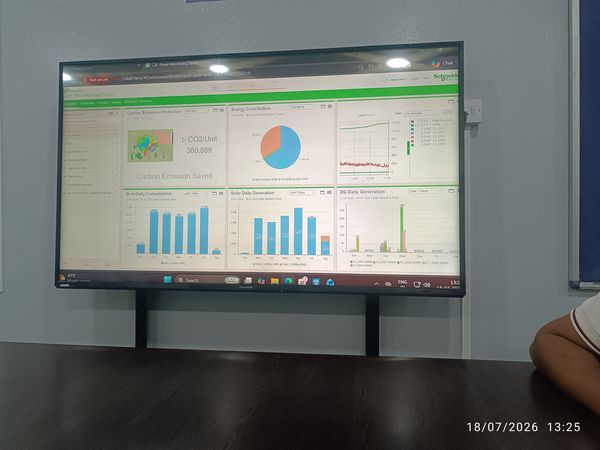
When a customer complaint arrives, "it passed" is not evidence. Every cycle here writes part ID, pressure curve and verdict.
Pressure decay and differential pressure for castings, housings, manifolds and assemblies. Cycle: fill, settle, hold, evaluate — all PLC timed.
Under-water bubble test with pneumatic lowering, timed dwell and operator confirmation. Used where a visual verdict is still the standard.
Oil or water at working pressure for cylinders, hoses, valve bodies and tubes. Hydraulic power pack, safety enclosure and interlocks built in-house.
Low-pressure, low-volume testing for plastic and composite parts where a standard rig over-pressurises and distorts the component.
Photographs from installations. Replace-ready — real images going up shortly.
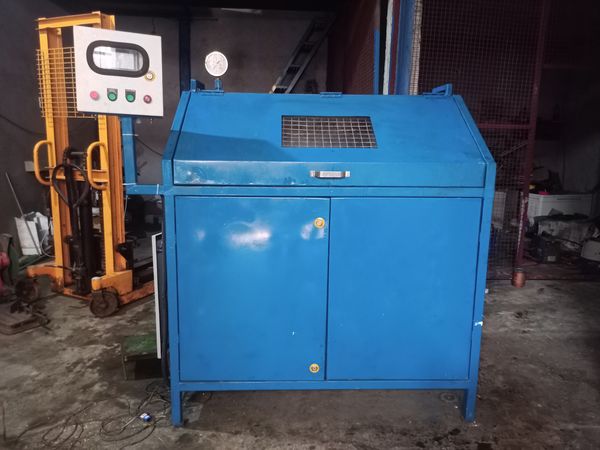
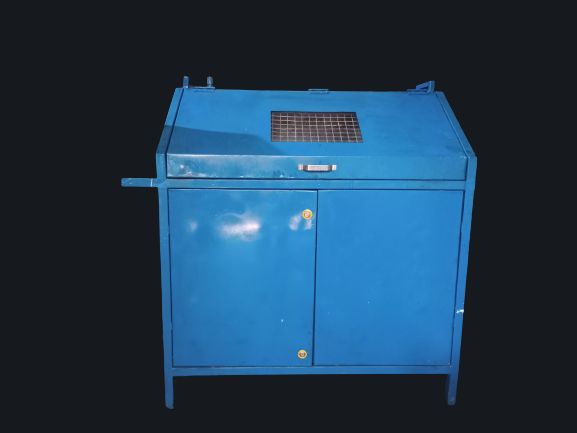
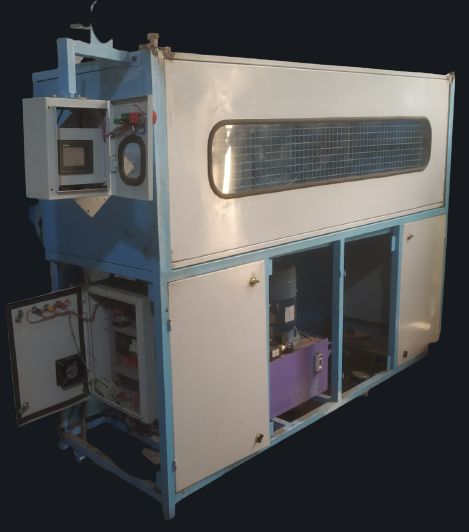
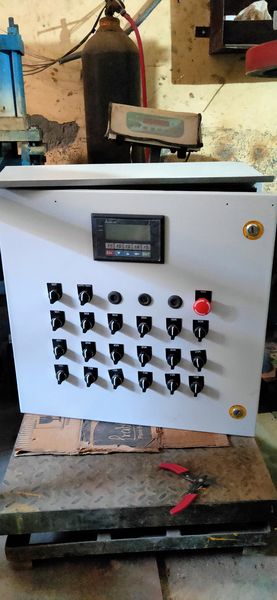
leak-test-machine-1.jpgFull machine, front viewleak-test-fixture.jpgFixture and sealing close-upleak-test-hmi.jpgHMI showing live readingwater-leak-test-tank.jpgSubmersion tank in operationleak-test-control-panel.jpgPLC control panelhydraulic-leak-test-rig.jpgHigh-pressure rig| Parameter | Typical range | Fixed at |
|---|---|---|
| Test method | Pressure decay · differential · submersion · hydrostatic | Enquiry stage |
| Test pressure | To suit part — low-pressure moulded up to high-pressure hydraulic | Enquiry stage |
| Reject limit | Set in mbar/sec or cc/min against your drawing | Drawing approval |
| Cycle time | Fill + settle + hold + evaluate, tuned on your part | Trial run |
| Control | PLC + HMI, recipe per part number | GA approval |
| Data | Part ID, curve, verdict, operator, timestamp | GA approval |
| Clamping | Pneumatic or hydraulic, part-specific fixture | Drawing approval |
| Safety | Guarding, interlocks, pressure relief, E-stop | Always |
We need the sealing faces, the internal volume and the reject limit you are held to.
Fixture layout, pneumatic/hydraulic circuit, panel GA and cycle chart — approved by you before manufacturing.
Mechanical build, ferruled panel wiring and PLC/HMI programming — all in our Faridabad workshop.
We run masters — a known-good and a known-leaker — and tune settle and hold until the verdict repeats.
Witnessed acceptance at our works, then packed with drawings, program backup and manual.
Commissioned on your line, operators trained, and support on call afterwards.
The component drawing or a sample part, the sealing points, the test pressure you work to, and the reject limit your customer has specified. Expected cycle time and whether it sits on a line or on a bench also change the design.
Air pressure decay gives a number you can record and defend, and it is faster. Water submersion gives a visual verdict operators trust, and it finds the location of the leak. Where a customer standard demands one, we build that; where both help, we have built stations that do air first and send only doubtful parts to water.
Yes. The PLC and HMI can log part number, pressure curve, verdict, operator and timestamp, and export to your system. For lines that need it, we add SCADA with graph history and shift reports.
Yes — that is where we started. The panel is built and wired in the same workshop as the machine, which means one team answers for both the mechanics and the electricals when something needs attention.
Moulded plastic and composite parts need lower pressure and gentler clamping, otherwise the part flexes and reads as a leak. We size the circuit and the fixture for that separately.
Faridabad, Delhi NCR, Gurugram, Manesar, Bhiwadi and across India. Installation and commissioning are done by our own team.
They built the machine around our part, not the other way round. Cycle time came out better than the target we gave.
The leak tester rejects what should be rejected — our customer audit stopped flagging us.
One machine, one panel, one team. When something needs adjusting they come the same week.
Share the drawing or a photo on WhatsApp and we will come back with a method, a cycle time and a price.
Please add a phone number or an email so we can reply.
Only a phone number or email is needed. Everything else is optional — the WhatsApp chat opens with your requirement already written, so you can add the rest there.
Want to know more, or ask anything about Leak Testing Machine Manufacturer in Faridabad? We reply fast on WhatsApp