Ask five installers for a price and you will get five different numbers, because the quote depends on things nobody discusses on a first call — your roof, your sanctioned load, your cable run and what you actually want the plant to do. This page explains what moves the number, so you can read a quotation instead of just comparing totals.
Every enquiry about solar panel installation cost starts the same way: what does a solar plant cost? The honest answer is that the panels and the inverter — the parts everybody compares — are the most standardised and least variable part of the job. What actually separates one quotation from another is everything around them, and none of it can be assessed without seeing your roof.
A plant on a clean, flat RCC roof next to the LT panel costs very differently from the same capacity on a sheet-metal shed roof, on a raised structure to clear a water tank, with a hundred metres of cable back to the panel room. Same kilowatts, same panels, quite different money.
Read this page as a checklist for comparing quotations. If one quote is much cheaper than another, the difference is almost always in the structure, the cable, the protection devices or the scope of net metering — not in the panels.
Capacity should come from your electricity bill and your roof, in that order. We look at twelve months of consumption, your sanctioned load, your daytime load pattern, and the shadow-free roof area actually available. Oversizing beyond what net metering rules allow wastes money; undersizing means you paid for the structure and the cabling and then only half-used them.
Cost per kW falls as size rises — a larger plant spreads the fixed costs of design, approvals, net metering and mobilisation over more capacity. That is why a small residential plant costs more per kW than an industrial one.
Mono PERC, TOPCon or bifacial, and the wattage per module. Higher-efficiency panels cost more per watt but need less roof and less structure — which sometimes makes the total cheaper on a tight roof. DCR modules (domestically manufactured cells) may be required for subsidy eligibility and are priced differently from non-DCR. Ask which type is in the quotation and whether it matches your subsidy route.
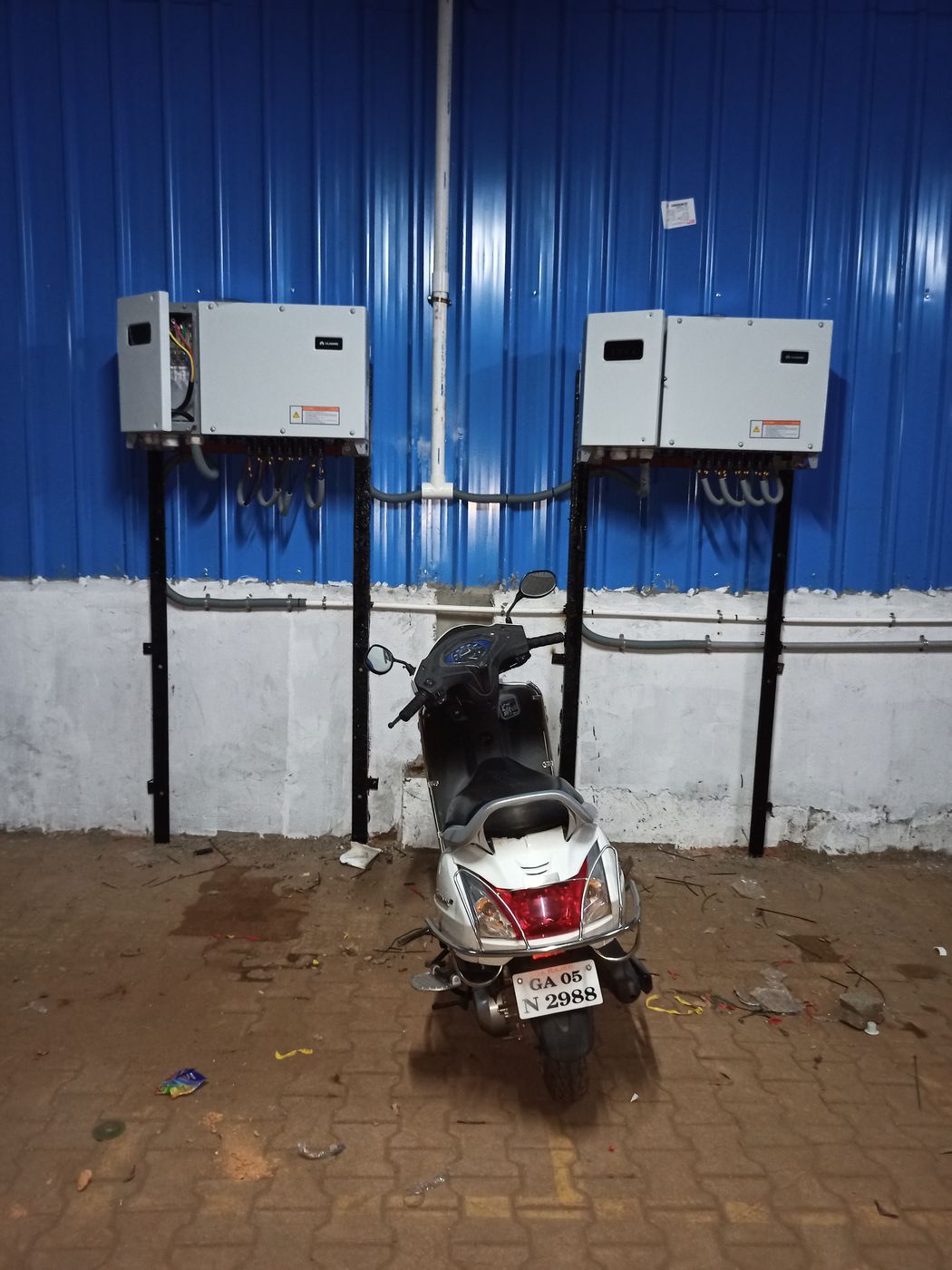
String inverter, multiple string inverters or micro-inverters, and on-grid versus hybrid with battery. This is where quotations quietly differ most: a hybrid inverter with battery capability costs substantially more than a plain on-grid unit, and a plant that must run through a power cut needs it. If your quote is unusually cheap, check whether it is on-grid only — most plants in India are, and a plain on-grid plant shuts down during a grid outage.
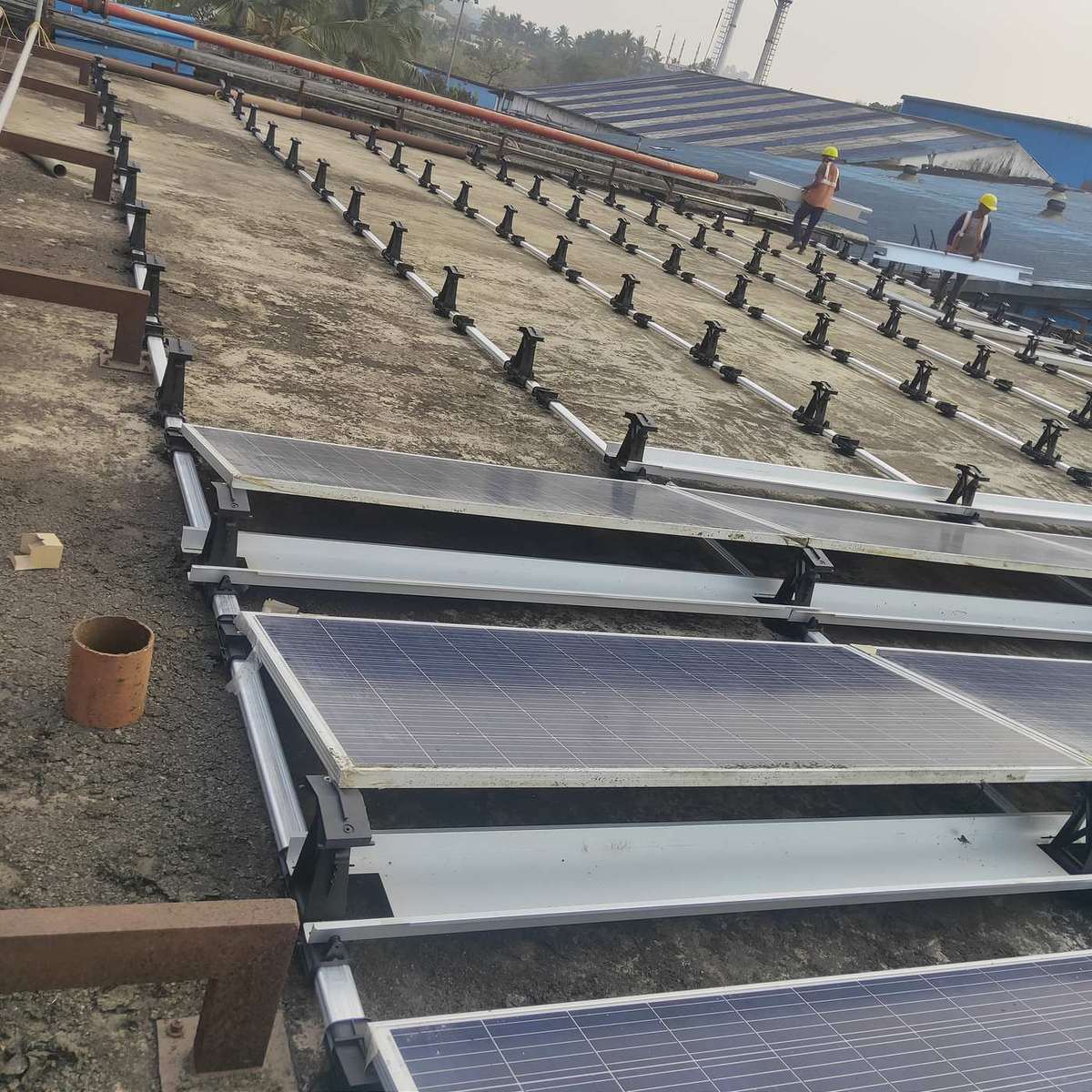
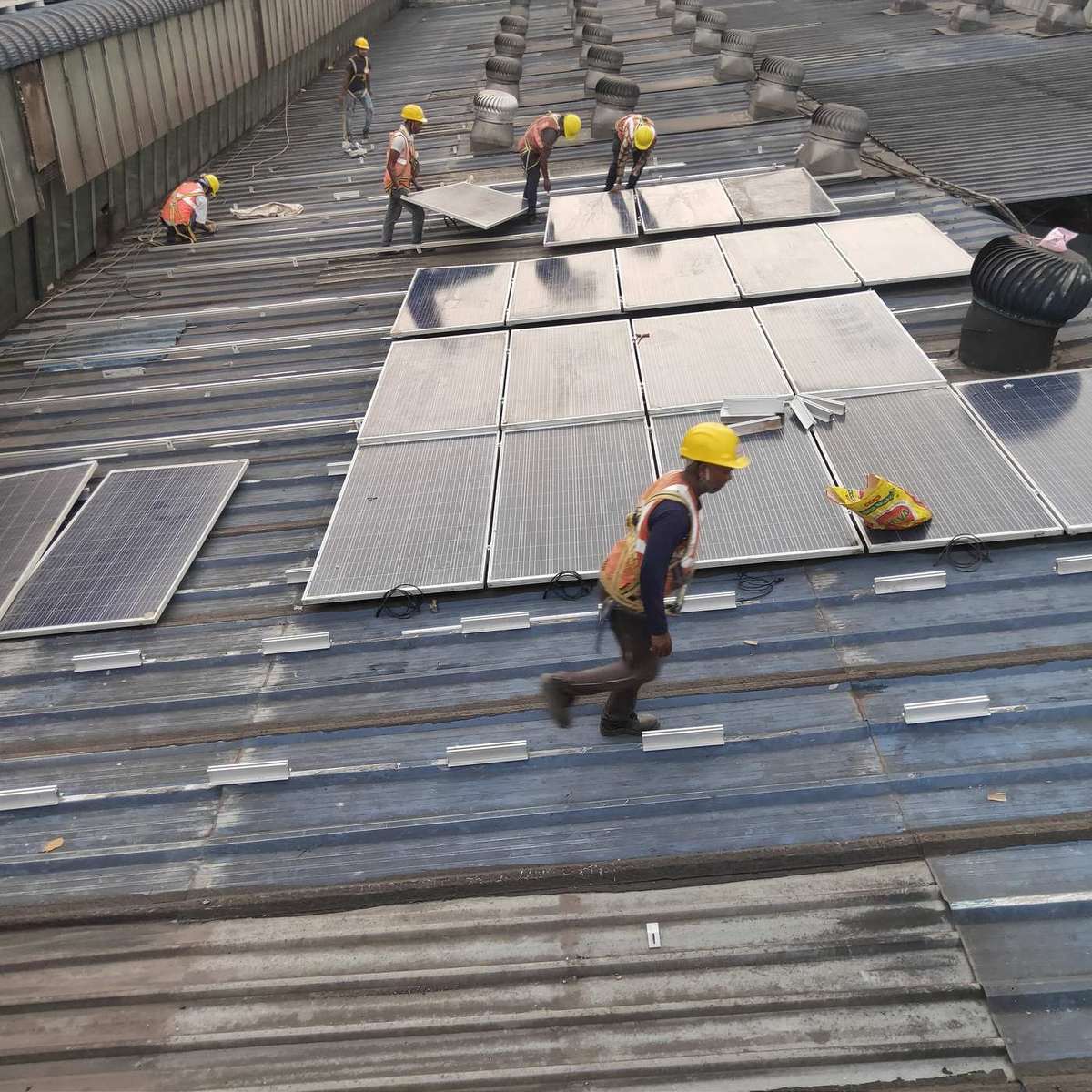
This is the biggest genuine variable. RCC flat roof with ballasted or bolted structure, metal sheet roof with clamps, elevated structure to clear obstructions or to keep the roof usable, and the wind zone the structure must be designed for. A raised walkable structure over a shed can cost more than the panels underneath it. Galvanising specification matters too — a cheap structure rusting in eight years on a plant designed for twenty-five is a false economy.
DC and AC cable sizing and length, ACDB, DCDB and array junction boxes, earthing and lightning arrester, and the interconnection to your existing LT panel. Long cable runs cost money twice — once in copper, and again in the larger cable needed to keep losses acceptable. This is also where corner-cutting is easiest to hide, which is exactly why we build our own DC boxes.
Application to the DISCOM, technical feasibility, meter, inspection and commissioning. Check whether the quotation includes it or lists it as extra — it is one of the commonest differences between two otherwise identical prices.
Put them side by side and check: panel make, model and wattage; inverter make, model and whether hybrid; structure material, height and galvanising; DC and AC cable size and length; whether ACDB, DCDB and AJB are included and DC-rated; earthing and LA scope; net metering scope; monitoring; warranty terms; and O&M for how many years. When one is cheaper, one of those lines is where it went.
We are a Luminous authorised solar partner and we execute rooftop solar EPC across Faridabad and Delhi NCR. If you want a number for your site, send us your last twelve electricity bills and a photo of the roof, and we will come and survey it.
These are not upgrades in our quotations. They are the difference between a plant that lasts twenty-five years and one that becomes somebody else's problem in year six.
Roof condition, shadow analysis, cable route and interconnection point checked in person. Phone quotes are guesses.
With calculations, and galvanising specified for a twenty-five year life rather than a five year one.
ACDB, DCDB and AJB made in our own workshop with DC-rated devices, sized on cold-temperature Voc.
The scope most commonly thinned to win a price, and the one that decides whether your inverter survives a storm.
DISCOM application, feasibility, inspection and commissioning included and stated, not left as a surprise line.
Generation monitored so a dead string is noticed in days, and a service arrangement you can actually call.
Photographs from our Faridabad workshop and from customer installations.
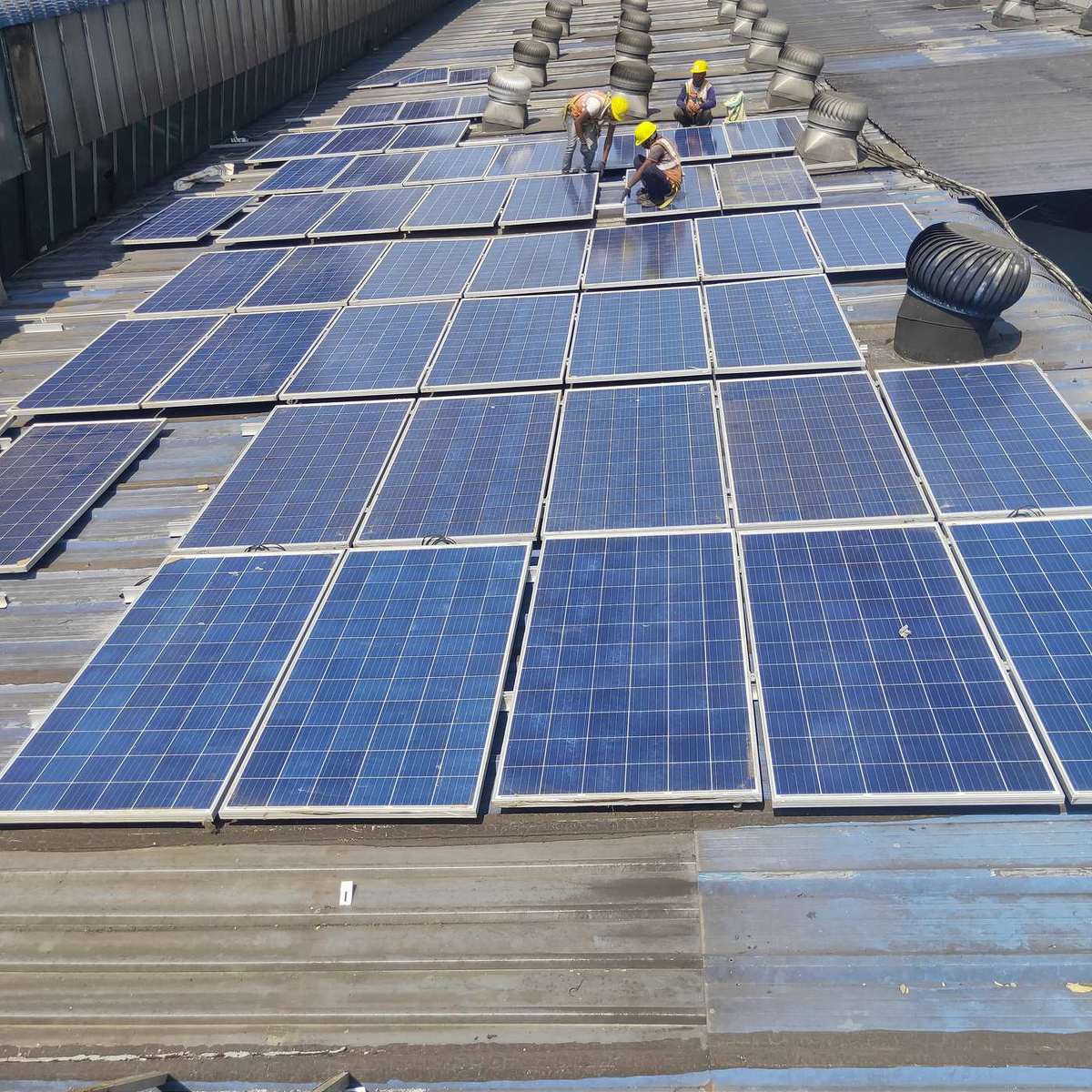
solar-rooftop-plant.jpgCompleted rooftop plantsolar-structure.jpgMounting structure detailsolar-inverter-install.jpgInverter and ACDB installedsolar-cable-routing.jpgDC cable routing and trayssolar-earthing.jpgEarthing and lightning arrestersolar-net-meter.jpgNet meter installedThis is what a proper quotation should state line by line. If any of it is missing from a quote you are comparing, ask why.
| Line item | What to check | Why it matters |
|---|---|---|
| Plant capacity | kW DC and kW AC, and the DC:AC ratio | Decides real generation, not just panel count |
| Panels | Make, model, wattage, DCR or non-DCR, warranty | Subsidy eligibility and long-term output |
| Inverter | Make, model, on-grid or hybrid, MPPT count | Whether the plant works during a power cut |
| Structure | Material, height, galvanising, wind zone design | Biggest cost variable and biggest corner-cut |
| DC side | Cable size and length, AJB, DCDB, DC SPD, isolators | Safety and losses over twenty-five years |
| AC side | Cable, ACDB, protection, interconnection point | How it ties into your existing supply |
| Earthing and LA | Number of pits, LA provision, testing | Protects the most expensive component |
| Net metering | Application, liaison, meter, inspection | Commonest hidden extra |
| Monitoring and O&M | What is monitored, service response, duration | Whether faults are found in days or at the bill |
Payback depends on your tariff, your daytime consumption and how much you export. A factory that consumes most of its generation during working hours pays back far faster than a home that exports most of it, because self-consumption is worth your full tariff while export is worth the feed-in rate.
So the right question is not "what is the payback on solar" but "what is the payback on my load pattern". We work it out from your actual bills during the survey and show you the arithmetic, including the assumptions — because a payback figure without stated assumptions is marketing, not analysis.
Because the panels and inverter, which are the standardised part, are not what varies. The structure, the cable run, the roof type and the interconnection do — and none of those can be assessed without seeing the site. Anyone who quotes a firm number on a first call is either guessing or planning to revise it later.
Generally yes, because design, approvals, net metering and mobilisation are largely fixed costs spread over more capacity. That is why residential plants cost more per kW than industrial ones.
An on-grid plant feeds the grid and shuts down during an outage — it will not run your load in a power cut. A hybrid inverter with battery keeps selected loads running. Hybrid costs meaningfully more, and it is one of the commonest reasons two quotations differ.
Yes. RCC flat roof with a standard structure is the baseline. A sheet-metal roof needs different mounting. An elevated walkable structure to clear obstructions or keep the roof usable can cost more than the panels sitting on it.
DCR means domestically manufactured cells, which certain subsidy schemes require. DCR and non-DCR modules are priced differently, so make sure the quotation matches the subsidy route you intend to use.
We state it as a line item, including DISCOM application, liaison, inspection and commissioning. It is one of the commonest hidden extras in cheaper quotations, so check for it in every quote you compare.
Twelve months of electricity bills, your sanctioned load, and a photograph of the roof. Then a site visit. After that the number we give you is the number.
Share the drawing or a photo on WhatsApp and we will come back with a method, a cycle time and a price.
Please add a phone number or an email so we can reply.
Only a phone number or email is needed. Everything else is optional — the WhatsApp chat opens with your requirement already written, so you can add the rest there.
Want to know more, or ask anything about Solar Installation Cost? We reply fast on WhatsApp