For cylinders, valve bodies, hoses and tubes, air tells you very little and is dangerous besides. We build hydraulic leak testing and hydrostatic test rigs in Faridabad — with the hydraulic power pack, the safety enclosure and the PLC control panel all made in our own workshop.
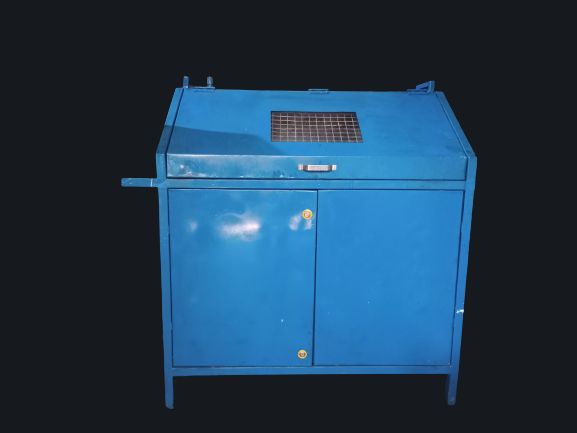
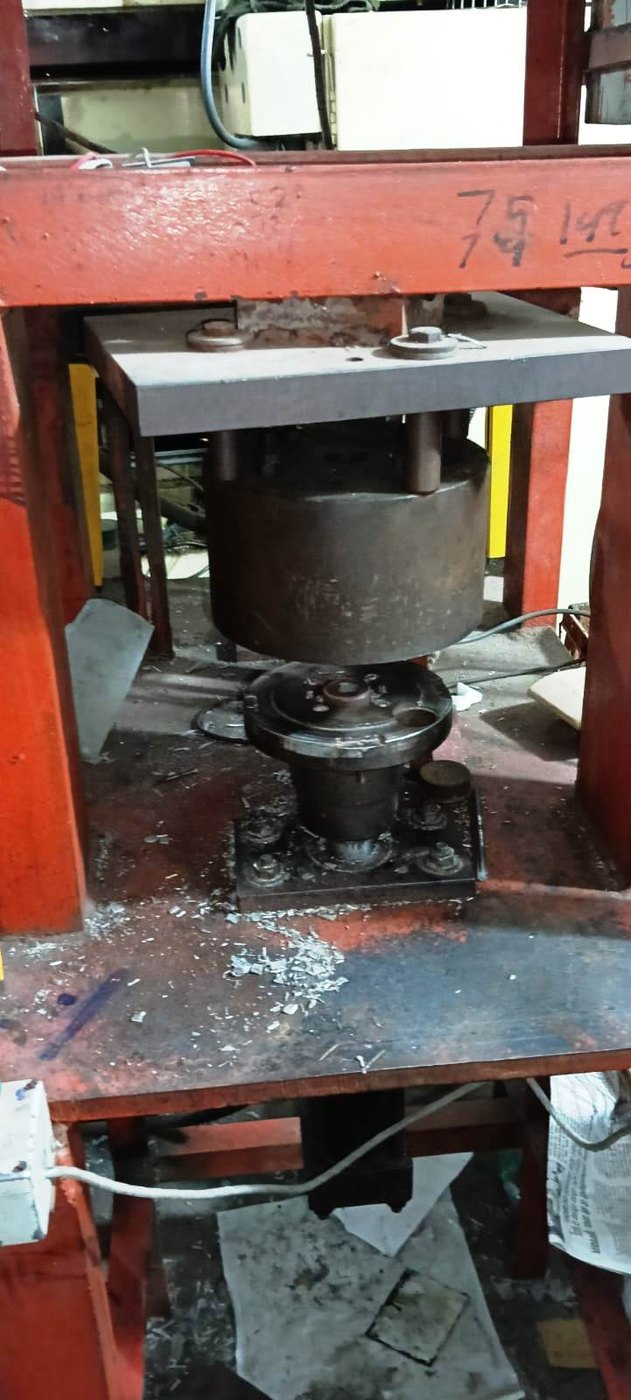
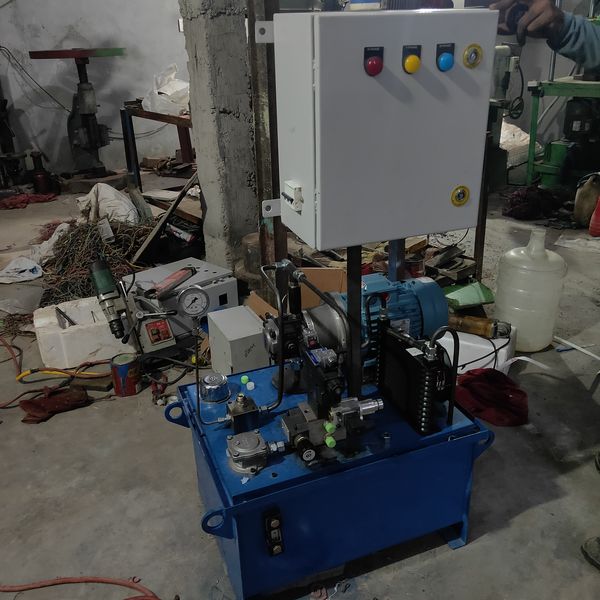
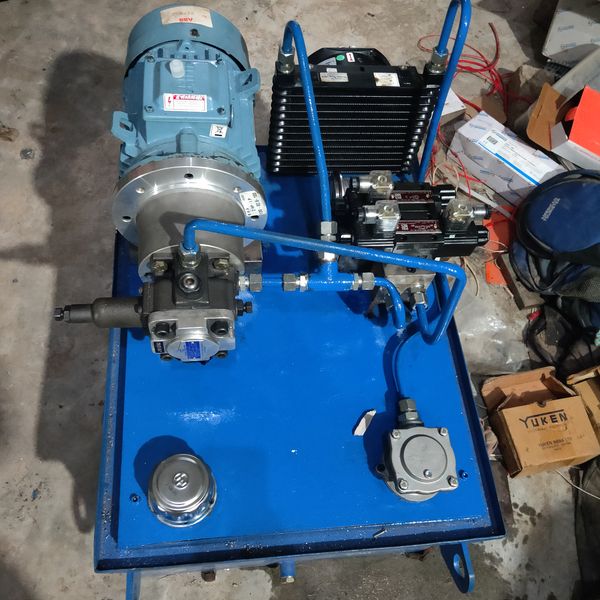
A hydraulic leak testing machine pressurises your component with oil or water instead of air, and holds it at or above its working pressure while the machine watches for a drop. For anything that works at high pressure — hydraulic cylinders, valve bodies, manifolds, hose assemblies, tubes, brake components, fuel injection parts — this is the only test that means anything.
There are two reasons, and both matter. First, safety: compressed air stores enormous energy, and a part that bursts on an air rig at high pressure is a serious accident. Liquid is almost incompressible, so a failure releases very little energy — the part splits and the pressure collapses. Second, relevance: a seal that holds air at low pressure may open completely under oil at working pressure. Testing at the pressure the part actually sees is the only honest test.
The safety point is not a formality. A hydrostatic test at high pressure is routine. The same pressure with air behind it is a bomb. This is why every standard for pressure components specifies liquid, and why our rigs are built with enclosures and relief valves as standard rather than as an option.
Because FutureTech manufactures hydraulic power packs as its own product line, the pump, the valve bank and the circuit are sized for your test duty rather than picked from whatever was in stock. That is the difference between a rig that ramps smoothly to pressure and one that hunts, overshoots and gives you a noisy graph.
Hydraulic cylinders and tie-rod assemblies, valve bodies and manifolds, hydraulic hose assemblies and crimped fittings, seamless and welded tubes, brake master cylinders and calipers, fuel rails, pressure vessels and accumulator shells, pump casings and gearbox housings that see line pressure.
Related rigs from the same family: high pressure hose pipe testing machines for burst and impulse work, and solenoid valve testing machines where seat leak and response time are tested together. For dry, fast screening at low pressure, an air leak testing machine remains the better tool.
Every hydraulic test rig ships with its own PLC control panel, designed and ferruled in the same Faridabad workshop that builds the machine — and with a safety circuit that does not depend on the PLC alone.
Proportional or stepped ramp to proof pressure, so the part is not shocked and the graph is clean enough to judge.
Pressure against time recorded for every part. A slow bleed and a sudden failure look completely different, and both are visible.
Door interlock, pressure relief and E-stop wired through a safety relay — not left to a PLC output to decide.
Proof pressure, hold time and reject criteria stored per part on the HMI, with adapters listed for the operator.
Optional SCADA for test certificates against serial numbers, batch trends and export to your quality system.
Pump, valve bank, cooling and tank sized for your duty cycle by the same team that builds our standalone power packs.
Photographs from our Faridabad workshop and from customer installations.
hydraulic-leak-test-rig.jpgFull rig with enclosurehydraulic-test-power-pack.jpgHydraulic power packhydraulic-test-fixture.jpgClamping and sealing adaptershydraulic-test-hmi.jpgHMI pressure-time graphhydraulic-test-panel.jpgPLC control panelhydraulic-test-cylinder.jpgCylinder under testPressure and safety cannot be improvised. Every one of these is agreed and written on the GA drawing before manufacturing begins.
| Parameter | What it covers | Fixed at |
|---|---|---|
| Test media | Hydraulic oil or water, based on your component and standard | Enquiry |
| Proof pressure | Set from your drawing or applicable standard | Enquiry |
| Hold time | At proof and at working pressure, enforced by PLC | Drawing approval |
| Power pack | Pump, motor, tank, valve bank and cooling for your duty cycle | Drawing approval |
| Clamping | Hydraulic, sized for end-load, with port adapters | Drawing approval |
| Enclosure | Guarded chamber, interlocked door, safe drain | GA approval |
| Data | Pressure-time graph, verdict, serial number, operator | GA approval |
| Media handling | Filtration, and drain-and-blow if parts must ship dry | GA approval |
| Safety | Relief valve, hard-wired interlocks, E-stop through safety relay | Always |
Two different questions get asked of the same rig, and it is worth being clear which one you need. A proof or hydrostatic test takes the component above its working pressure for a set time to show it will not fail — a structural check. A leak test holds it at working pressure and measures whether pressure falls — a sealing check.
Most components need both, in one sequence: ramp to proof, hold, drop to working pressure, hold again, and evaluate. We program the whole profile into the PLC so the operator runs one cycle and gets one verdict, with the full curve stored behind it.
Because of the energy stored. Compressed air at high pressure holds enormous energy and a part that bursts becomes shrapnel. Liquid is nearly incompressible, so the same failure releases almost nothing. That is why every pressure standard specifies liquid, and why we build enclosures and relief valves as standard.
Water is cleaner, cheaper and easier to dispose of, and suits parts that will be washed anyway. Oil suits components that must not see water, and gives better lubricity on repeated cycles. Your customer standard often names one; where it does not, we advise based on the part and what happens to it after the test.
Yes. The PLC and HMI record the pressure-time curve, hold times, verdict, serial number and operator. With SCADA added, that becomes a printable test certificate per serial number, with batch trends behind it.
Yes — it is one of our own product lines. The pump, valve bank, tank and cooling are sized for your test duty rather than picked off a shelf, which is what gives a clean ramp instead of a hunting one.
We size the rig to your component and the standard you work to. Tell us the proof pressure, the volume and the cycle rate, and we will size the power pack, the enclosure and the safety circuit around it.
Yes. Where the component must go straight to assembly or paint, we add a drain, blow-off and where needed a drying stage as part of the same cycle.
Yes — Delhi NCR, Gurugram, Manesar, Bhiwadi, Ghaziabad, Noida and across India, installed and commissioned by our own engineers.
Share the drawing or a photo on WhatsApp and we will come back with a method, a cycle time and a price.
Please add a phone number or an email so we can reply.
Only a phone number or email is needed. Everything else is optional — the WhatsApp chat opens with your requirement already written, so you can add the rest there.
Want to know more, or ask anything about Hydraulic Leak Testing Machine? We reply fast on WhatsApp