A crimped hose assembly hides its weakest point inside the ferrule. Proof pressure finds the ones that were crimped wrong, burst testing finds the true margin, and impulse testing finds the ones that will fail after two hundred thousand cycles in a machine. We build rigs for all three in Faridabad, behind a proper enclosure.
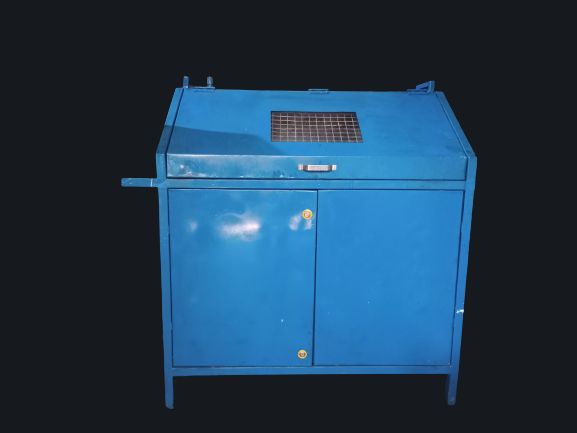
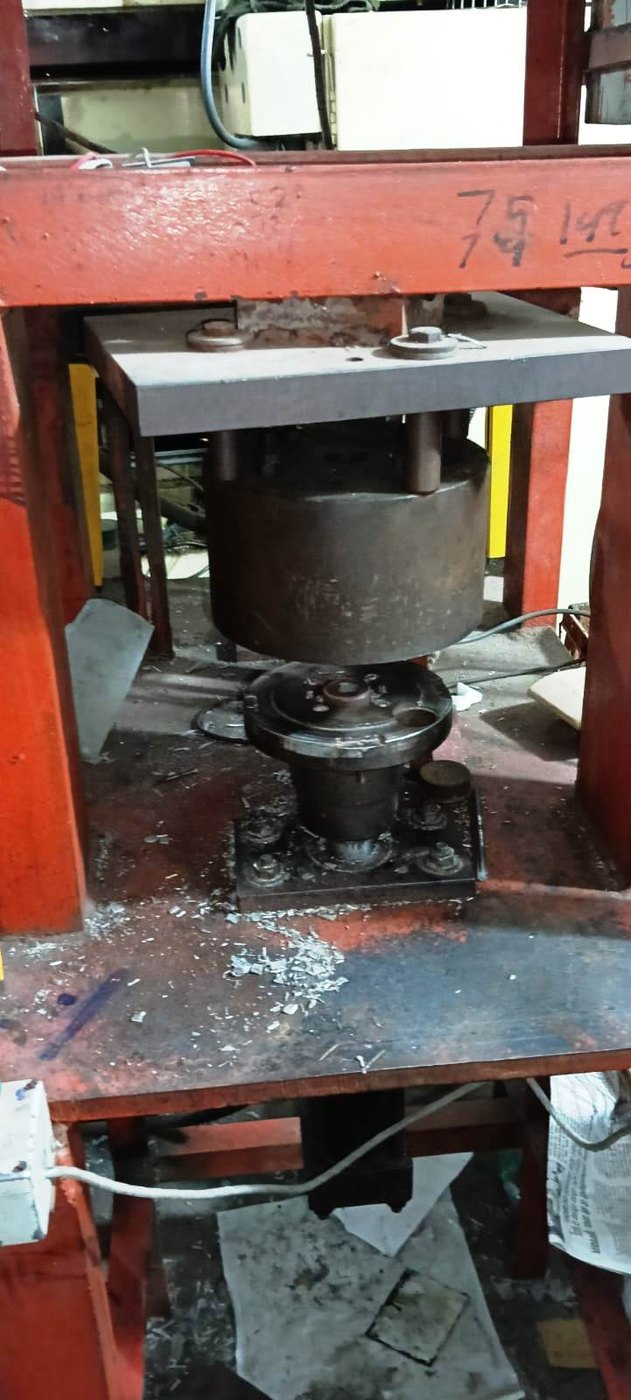
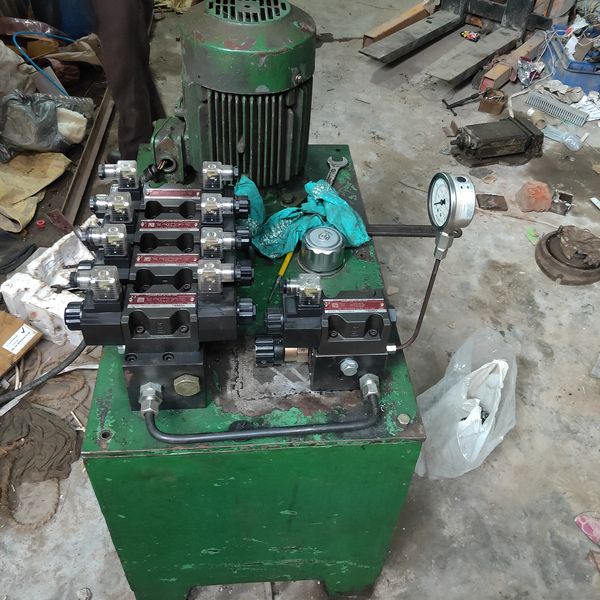
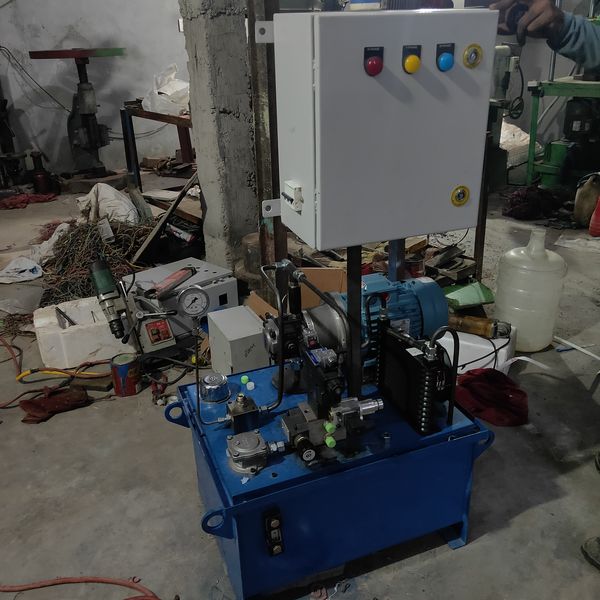
A hose pipe testing machine is really a family of rigs, because "test the hose" means three quite different things depending on who is asking and why.
The impulse test is the honest one. A hose that passes proof pressure easily can still fail at eighty thousand cycles because the reinforcement was wound slightly loose. Only cycling finds that, and only cycling matches what a machine actually does to a hose.
A high-pressure hose bursting releases a great deal of energy very quickly, and does it with a metal ferrule attached. Every rig we build for burst or impulse work runs inside a guarded chamber with an interlocked door, so the test cannot start with the door open and the door cannot open while pressure is held. We use liquid rather than gas as the pressurising medium wherever the standard permits, for the same reason discussed on our hydraulic leak testing machines — a liquid failure collapses, a gas failure explodes.
Hydraulic hose assembly manufacturers, automotive brake and fuel line producers, hose and fitting distributors who crimp to order, tube and pipe manufacturers, and OEM quality labs. Related rigs from the same family: high pressure water testing machines for hydrostatic proof work on vessels and tubes, and hydraulic leak testing machines for cylinders and valve bodies.
The pressure profile, the cycle counting and the safety interlocks all run from a panel built and ferruled in our own Faridabad workshop.
Ramp rate, peak, dwell and frequency programmed to the test standard rather than approximated by a pressure switch.
Count retained through power failure. A quarter-million-cycle test that loses its counter is a quarter-million cycles wasted.
A burst stops that station and records the cycle count at failure, while the remaining assemblies keep running.
Test cannot start with the door open, and the door cannot open while pressure is held. Hard-wired, not software.
Pressure-time curve, hold times, cycle count and verdict against the serial number, printable and exportable.
Batch testing with independent monitoring, so throughput does not depend on the weakest sample in the batch.
Photographs from our Faridabad workshop and from customer installations.
hose-testing-machine.jpgComplete test righose-testing-enclosure.jpgSafety enclosure and doorhose-testing-manifold.jpgMulti-station manifoldhose-testing-hmi.jpgHMI with cycle counthose-testing-panel.jpgPLC control panelhose-testing-bend-fixture.jpgMinimum bend radius fixtureTest standards drive everything here, so we work from the standard you are held to rather than from a generic bench specification.
| Parameter | What it covers | Fixed at |
|---|---|---|
| Test type | Proof, burst, impulse — or all three on one rig | Enquiry |
| Test standard | The standard your customer holds you to | Enquiry |
| Pressure range | Working, proof and expected burst pressure | Enquiry |
| Hose sizes | Diameter and length range, end fitting types | Drawing approval |
| Stations | Number of assemblies tested simultaneously | Drawing approval |
| Impulse profile | Pulse shape, frequency, peak and target cycle count | Drawing approval |
| Temperature | Ambient or elevated, and how it is conditioned | GA approval |
| Enclosure | Chamber construction, door interlock, drain | GA approval |
| Data | Certificate format, fields logged, export method | GA approval |
A rig doing proof tests works in bursts. An impulse rig runs continuously for days or weeks on the same batch — which changes what it must be built like. Seals, pump duty, oil cooling and filtration all have to survive a duty cycle far beyond a production test bench, and the counter has to survive a power cut.
We size the hydraulics for continuous duty, fit proper cooling and filtration, and hold the cycle count in retentive memory. It is the difference between a rig that completes a 250,000-cycle qualification and one that has to start again on day nine.
Proof takes the assembly to a set multiple of working pressure and holds it — a production check. Burst takes samples to destruction to establish the real margin — a qualification test. Impulse cycles the hose between low and high pressure hundreds of thousands of times to predict field life. They answer different questions and most manufacturers need at least two of them.
A high-pressure hose failing releases a lot of energy with a metal ferrule attached. Every burst and impulse rig we build runs inside a guarded chamber with an interlocked door — the test cannot start with the door open and the door cannot open under pressure.
Often yes, with the pressure profile programmed per test type as a recipe. Where the impulse cycle rate is high and the duty is continuous, a dedicated impulse rig usually makes more sense than tying up the production proof bench for two weeks.
That station stops, the cycle count at failure is recorded against the serial number, and the remaining stations continue. Losing a whole batch because one sample failed on day three is exactly what independent station monitoring prevents.
Yes, with a heated chamber or heated media depending on what the standard specifies, and with the temperature logged alongside the pressure record.
Yes, it is held in retentive memory. On a 250,000-cycle qualification a lost counter means starting again, so it is not something we leave to chance.
Yes — Delhi NCR, Gurugram, Manesar, Bhiwadi, Ghaziabad, Noida and across India, installed and commissioned by our own engineers.
Share the drawing or a photo on WhatsApp and we will come back with a method, a cycle time and a price.
Please add a phone number or an email so we can reply.
Only a phone number or email is needed. Everything else is optional — the WhatsApp chat opens with your requirement already written, so you can add the rest there.
Want to know more, or ask anything about Hose Pipe Testing Machine? We reply fast on WhatsApp