A panel that has run for twenty years has usually earned its keep — sound enclosure, sound busbars, and a wiring loom nobody has a drawing for. Retrofitting keeps the steel and replaces what actually failed: obsolete devices, brittle cable, and a safety circuit that was never up to today's standard.
Free site visit and quotation across Faridabad, Ballabgarh, Palwal, Gurugram, Delhi NCR, Noida, Ghaziabad and Manesar. Looking for a control panel retrofitting company near you? Call +91 90154 04168 — same-day reply, or send your drawing on WhatsApp.
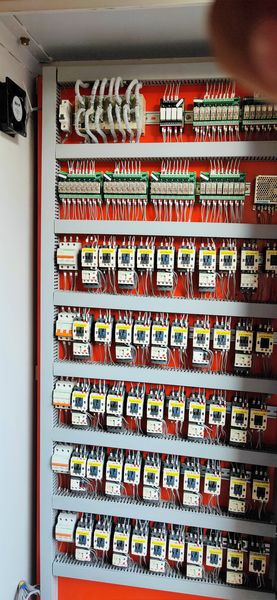
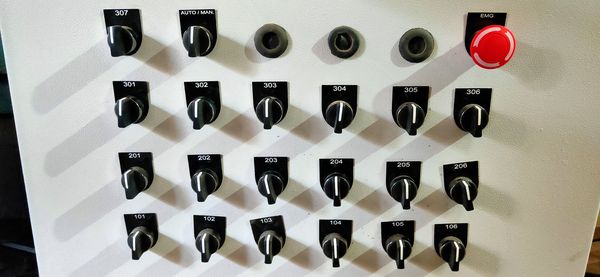
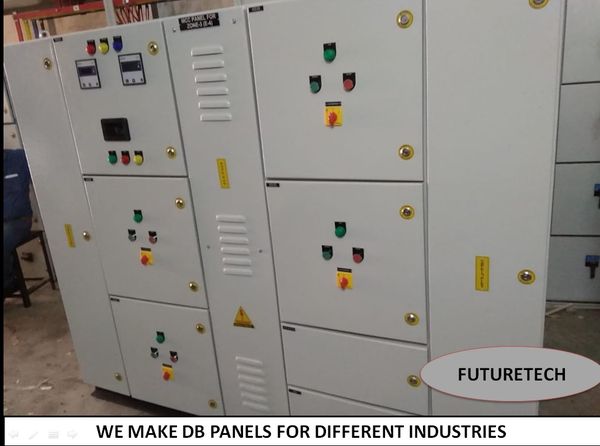
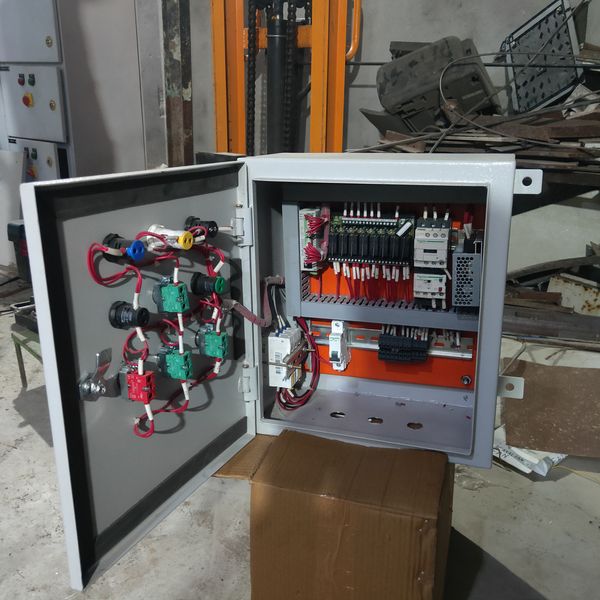
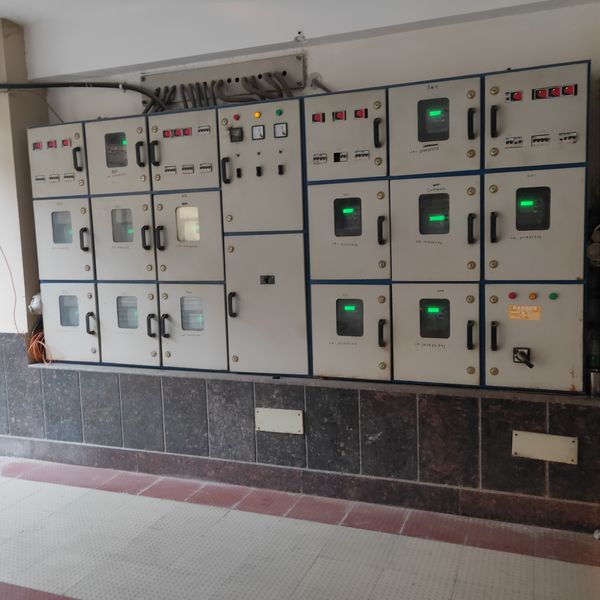
Panels rarely fail as a whole. What fails is the contents — a breaker whose spares no longer exist, a starter that has been repaired three times, a relay logic circuit nobody can follow, and cable insulation that has spent twenty years going brittle in a hot plant room. The enclosure, the busbars and the structure are frequently in perfectly good condition.
Control panel retrofitting is the business of separating those two facts: keep the steel and the busbar work, replace what actually aged, and leave behind a set of drawings that match what is inside. It costs a fraction of a new panel and, on a running plant, takes far less downtime than a replacement.
The commonest reason people call us: not a failure, but a modification. Somebody needs to add a drive, change a motor rating, or bring a safety circuit up to standard — and opens the panel to find nothing is labelled and no drawing exists.
Most old panels have no accurate drawing. Either none was made, or one was made and then twenty years of undocumented modifications happened on top of it. That is the real reason a simple change becomes a two-day job — an electrician spends the first day working out what is actually connected to what.
So every retrofit we do ends with an as-built set: GA, schematic, cable schedule and device list, matching what is physically in the panel. That deliverable often turns out to be worth more to the customer than the new hardware.
Retrofitting is not always the right answer, and we will tell you when it is not:
That last one is worth thinking about early — sometimes the cheapest option on paper is the most expensive in lost production, and building a replacement MCC or PCC panel offline is the right call.
This is the same argument we make about CNC machine retrofitting and about obsolete lift controllers: the expensive, long-lived part is usually fine, and it is the electronics and the wiring that reached the end of their life first.
On a live plant the survey matters more than anything, because the shutdown window is usually fixed and the work has to fit inside it.
Device condition, cable condition, busbar rating, earthing and what is actually connected. No quotation from a photograph.
What is replaced, what is kept, what is left alone — so there are no discoveries halfway through a shutdown.
Sub-assemblies, plates and looms prepared in our workshop so the on-site window is as short as it can be.
E-stops and interlocks through a safety relay, correct earthing — usually the biggest gap on an old panel.
GA, schematic, cable schedule and device list matching what is now inside. Often the most valuable part of the job.
Function tested and load tested before the plant is handed back, with a report.
Photographs from our Faridabad workshop and from customer installations.
panel-retrofit-before.jpgPanel before — old wiringpanel-retrofit-after.jpgAfter — ferruled and labelledpanel-retrofit-rewiring.jpgRewiring in progresspanel-retrofit-vfd.jpgVFD added to existing panelpanel-retrofit-drawings.jpgAs-built drawing setpanel-retrofit-testing.jpgTesting before handbackNothing is quoted without opening the panel, because what is inside is the only thing that decides the scope.
| Stage | What it covers | Output |
|---|---|---|
| Survey | Devices, cable, busbar, earthing, actual connections | Condition report |
| Scope | Replace, retain or leave alone, item by item | Itemised quotation |
| Design | New schematic and GA for the retrofitted panel | Approval drawings |
| Off-site prep | Plates, looms and sub-assemblies built in our workshop | Shorter shutdown |
| Shutdown work | Strip, rewire, fit devices, terminate | Retrofitted panel |
| Safety | E-stop, interlocks through safety relay, earthing | Corrected safety circuit |
| Testing | Function and load testing before handback | Test report |
| Documentation | As-built GA, schematic, cable schedule, device list | Complete drawing set |
On a running plant the shutdown window is the fixed constraint and everything else has to fit inside it. So we plan backwards from it: what can be pre-built in the workshop, what can be pre-terminated, what genuinely has to happen with the power off, and what the fallback is if something unexpected appears when the panel is opened.
That plan is agreed before the shutdown, not improvised during it. It is the difference between a weekend job and a Monday morning nobody enjoys.
Usually yes, often substantially, because the enclosure, busbars and structure are retained. But not always — if the busbar is undersized for your grown load or the fault level has risen beyond the panel rating, a new panel is the honest answer and we will say so.
It depends on the scope, and we plan backwards from your window. Sub-assemblies, plates and looms are prepared in our workshop first so the on-site time is as short as possible. The duration is committed in the quotation once the survey is done.
It is the normal situation and it is one of the main reasons to retrofit. We work out what is connected during the survey, and you get an as-built drawing set at the end — which many customers value more than the hardware.
Yes, and where the load varies it often pays for the whole retrofit on its own. We check the space, the incoming rating, the cable and the motor suitability during the survey.
Yes. A wall of interlocked relays becomes a PLC and HMI that can be diagnosed, documented and modified without an archaeology exercise. We capture the existing logic during the survey and confirm it with you before it is programmed.
Yes — E-stops and interlocks through a safety relay rather than a contactor auxiliary, plus earthing checked and corrected. On panels of a certain age this is usually the largest genuine gap.
Yes — Delhi NCR, Gurugram, Manesar, Bhiwadi, Ghaziabad, Noida and across India, with our own engineers doing the survey and the site work.
Share the drawing or a photo on WhatsApp and we will come back with a method, a cycle time and a price.
Please add a phone number or an email so we can reply.
Only a phone number or email is needed. Everything else is optional — the WhatsApp chat opens with your requirement already written, so you can add the rest there.
Want to know more, or ask anything about Panel Retrofitting & Upgradation? We reply fast on WhatsApp