A pharma clean room and a grey iron foundry could not be less alike, but the conversation that brings both to us is identical: a machine has to prove something about a part, and somebody has to answer for it later. What changes between industries is the environment, the standard and the paperwork.
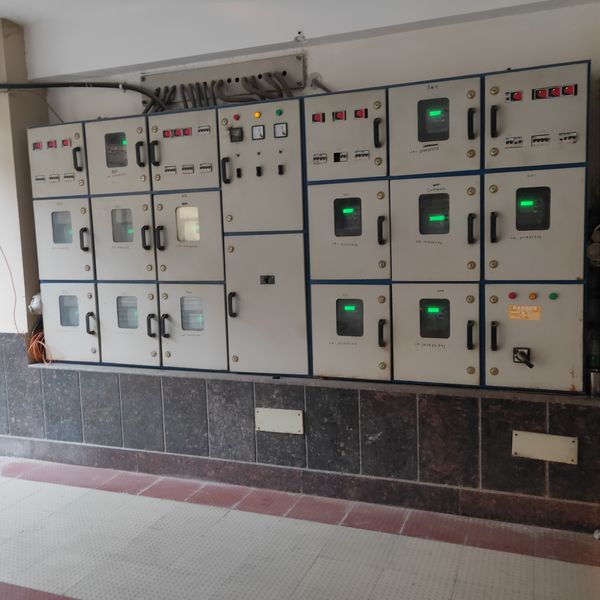
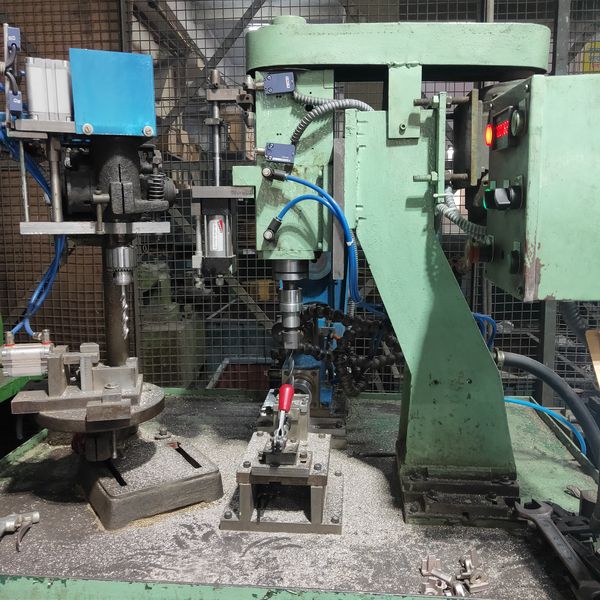
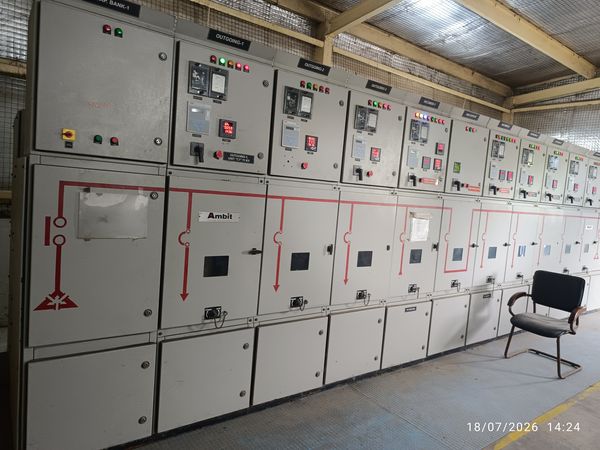
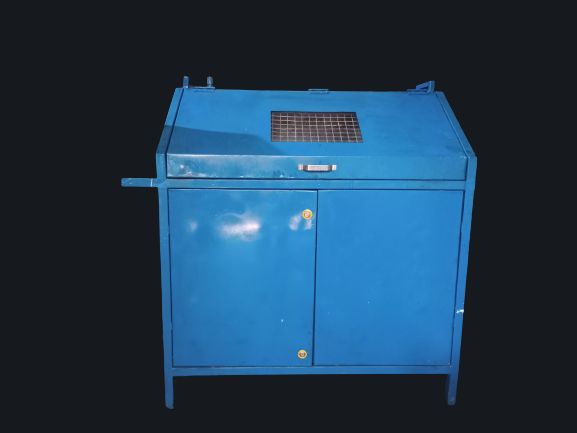
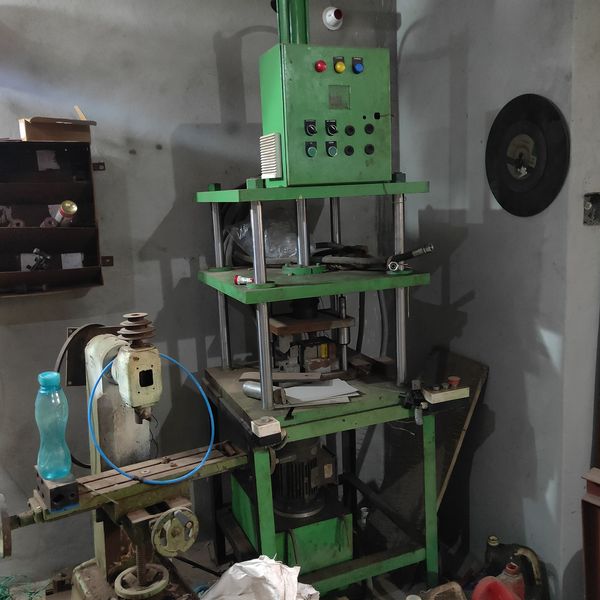
Since 2012 we have supplied control panels, testing machines and special purpose machines to manufacturers across Faridabad, Ballabgarh, Delhi NCR, Gurugram, Manesar, Bhiwadi, Ghaziabad and Noida, and to plants further afield across India. What follows is what each sector actually asks us for, and what changes about the way we build it.
Our largest sector, and the most demanding on traceability. Tier-1 and Tier-2 suppliers around Faridabad need machines that produce evidence, because their customers audit them.
What changes: serial-level traceability is non-negotiable, PPAP and audit documentation is expected, and the customer's own standard usually dictates the test method rather than leaving it to us.
Motor and pump manufacturers need assembly stations that hold interference fits and then prove the housing seals.
What changes: thin-wall aluminium components, tight concentricity, and a mix of frame sizes that pushes everything towards quick-change tooling and recipes.
Here the panel matters more than the machine, and the documentation matters more than either.
What changes: consultant specifications drive everything, GA drawings and control schematics must be approved before manufacturing, and the documentation set is part of the deliverable rather than an afterthought.
Washdown environments and hygiene requirements change the enclosure and the wiring practice more than the logic.
The hardest environment we build for — heat, dust, vibration and constant electrical noise.
What changes: enclosure sealing, cooling, cable entry and derating all get more attention than in a clean plant, because a panel built to office-block standards fails in a foundry within a year.
Continuous processes where an unplanned stop is expensive, so the emphasis falls on reliability and on drives.
Institutional and commercial projects, usually working to a consultant's specification and a contractor's programme.
The sector changes the environment, the standard and the paperwork. It does not change how the thing is built.
GA drawing and schematic approved before manufacturing, in every sector, on every job.
Every core identified. The person who opens the panel in year seven can work on it.
Tested at our works, with a report, rather than commissioned for the first time on your floor.
Drawings, cable schedule, program backup, parameter list and spares list — to the people who inherit it.
Mechanical, hydraulic, electrical and software from one workshop. One number to call afterwards.
If the job is better done another way, or by somebody else, we say so. It has cost us orders and won us customers.
Photographs from our Faridabad workshop and from customer installations.
industry-automotive.jpgAutomotive line installationindustry-foundry-panel.jpgFoundry MCC panelindustry-pharma-ahu.jpgPharma AHU panelindustry-motor-assembly.jpgMotor assembly stationindustry-solar-plant.jpgIndustrial solar plantindustry-hvac-panel.jpgHVAC plant room panelsThis is what changes from one sector to another, and what we ask about early because it drives the whole design.
| Sector | What drives the design | What we ask first |
|---|---|---|
| Automotive | Traceability and customer audits | Which standard, what records |
| Auto components | Cycle time and poka-yoke | Parts per hour, defect modes |
| Motors and pumps | Interference fits, frame variety | Frame range, fit tolerances |
| Pharma | Consultant spec and documentation | Specification, BMS points |
| Food and packaging | Washdown and hygiene | Area classification, IP needs |
| Foundry and die casting | Heat, dust, vibration, power factor | Environment, furnace load |
| Textile and process | Continuity and drive control | Downtime cost, supply quality |
| Buildings and HVAC | Consultant spec and interfaces | Schematic, fire and BMS interfaces |
| Solar | Load pattern and interconnection | Bills, sanctioned load, roof |
A supplier who does one thing usually does it well. The reason we work across sectors is that the underlying disciplines are the same — a control panel, a hydraulic circuit, a PLC sequence and a measurement that has to be defensible. What differs is the environment and the paperwork around them.
And the cross-over helps. Traceability practice learned on automotive work goes into a pharma panel. Enclosure design learned in a foundry goes into a rooftop solar DC box. The force-monitoring approach built for a press turns up in a leak test rig. Working in one sector only would have taught us none of that.
Both. Some of our longest relationships are with small units in Faridabad who needed one machine built properly. Others are multi-panel institutional projects. The process is the same either way — survey, drawing, approval, build, trial.
Probably. The sectors above are where our work has gone so far, not a limit. If a machine has to prove something about a part, or a panel has to run a process, the discipline is the same. Tell us the problem.
Yes. Faridabad, Ballabgarh, Palwal, Gurugram, Manesar, Bhiwadi, Ghaziabad and Noida are our regular area, and we supply and commission across India with our own engineers.
Yes, and usually we have to. In automotive especially, the OEM standard dictates the test method and the records. Send us the standard along with the drawing.
Yes — GA drawings, schematics, cable schedules, test reports, program backups and parameter lists. In regulated sectors the documentation set is part of the deliverable, not an extra.
Yes. Panel, machine, hydraulics, programming, installation and commissioning from one workshop is the arrangement we prefer, because it removes the handover gaps that cause most project delays.
Share the drawing or a photo on WhatsApp and we will come back with a method, a cycle time and a price.
Please add a phone number or an email so we can reply.
Only a phone number or email is needed. Everything else is optional — the WhatsApp chat opens with your requirement already written, so you can add the rest there.
Want to know more, or ask anything about our work? We reply fast on WhatsApp