A press that only knows how far it travelled will happily press a missing washer, a cross-threaded bolt or a part that was never there. Our bolt press machines plot force against displacement for every single cycle and judge that curve against a learned envelope — so a wrong assembly is caught at the press, not at the customer.
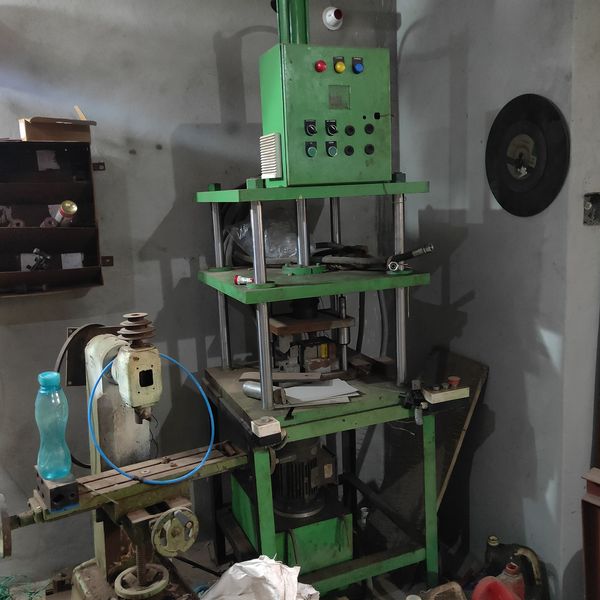
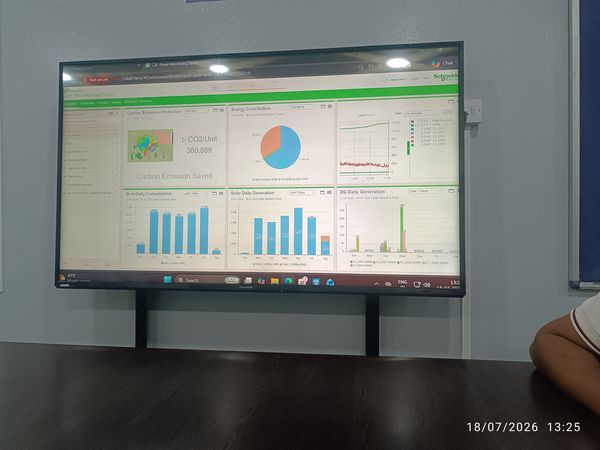
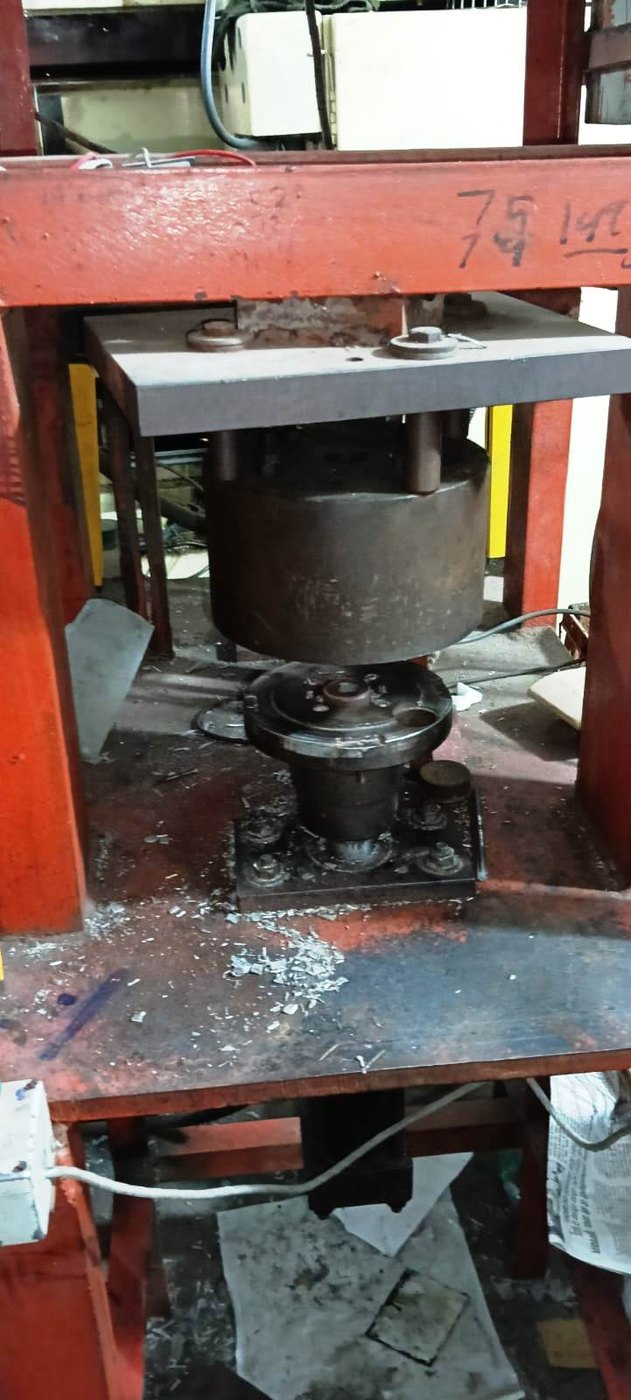
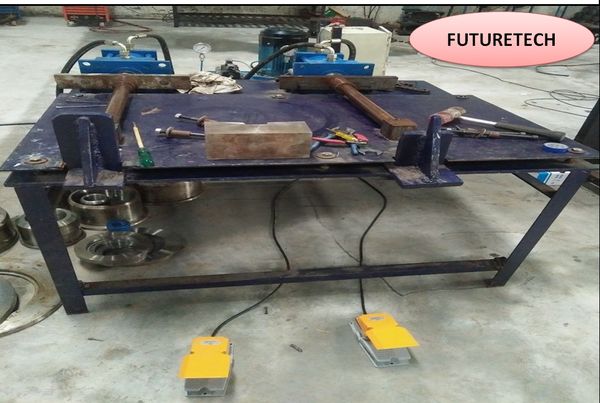
An ordinary press machine knows one thing: how far the ram travelled, or how much force it reached. That is enough to bend metal and not much else. A bolt press machine with PLC and SCADA monitoring knows something far more useful — the relationship between force and displacement across the entire stroke, which is effectively a fingerprint of what happened inside the joint.
That fingerprint is what catches the failures a simple press cannot see. A missing washer changes the point at which force begins to build. A cross-threaded bolt shows force rising too early and too steeply. A cracked component collapses mid-stroke. A worn tool drifts a little further every week. None of these trip a force limit or a position limit — all of them are obvious the moment you look at the curve.
This is where the graph earns its keep: the machine is not asking "did we reach 40 kN?" It is asking "did this joint behave the way a good joint behaves?" Those are very different questions, and only one of them protects you at the customer end.
During setup we press a batch of known-good assemblies. The system learns the corridor those curves occupy and stores it as an envelope — the shaded band in the animation above. From then on, every production cycle is plotted live against that band. Stay inside it and the part passes. Wander outside at any point in the stroke and the machine calls it NG, records why, and locks the part out.
We build monitored press stations for bearing and bush insertion, dowel and pin pressing, stator into shell pressing, rotor onto shaft assembly, seal and circlip fitting, riveting and staking, bolt and stud pressing, and gear and pulley mounting. Anywhere the joint is safety-critical or the assembly is invisible once closed, the curve is the only evidence you will ever have.
The press itself can be hydraulic, pneumatic or servo-electric depending on the force, the stroke and how much control you need over speed. Where the force is high and the duty cycle heavy, we drive it with a hydraulic power pack built in-house. Where positioning precision matters more than raw force, a servo press gives you programmable velocity profiles and a smoother curve to judge.
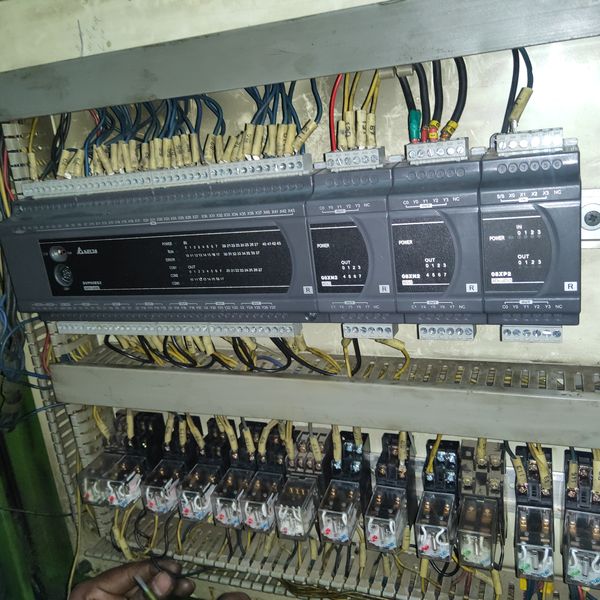
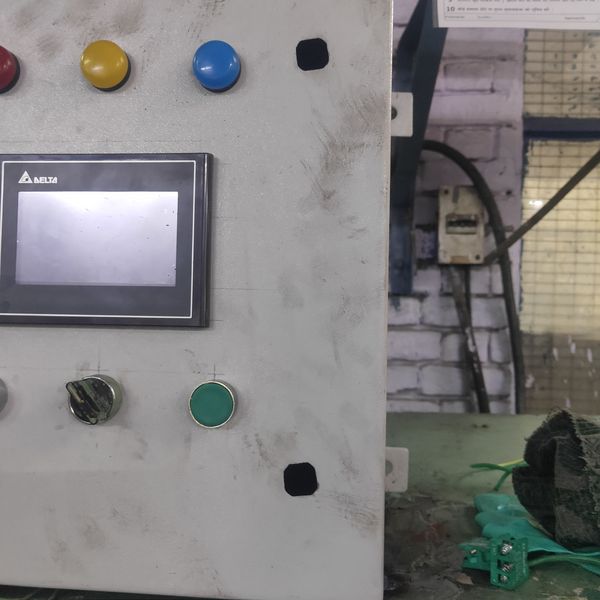
This is the clearest example of why our control panel background matters. The PLC, the HMI screens, the SCADA graphing and the panel itself are all built by one team in our Faridabad workshop.
The operator watches the curve build in real time against the envelope. Nothing is hidden until after the cycle.
Teach mode presses a batch of known-good assemblies and builds the pass corridor from what actually happens.
Each cycle saved against part serial, with operator, tool number and timestamp — retrievable months later.
Shift and batch trends show peak force creeping up. You change the tool on a plan, not after a rejection.
Failed assemblies are locked in the fixture or diverted mechanically. Release needs a supervisor login and a reason.
Light curtains or two-hand controls, interlocks and E-stop through a safety relay — not through a PLC output.
Photographs from our Faridabad workshop and from customer installations.
bolt-press-machine.jpgComplete press stationbolt-press-scada-graph.jpgSCADA force-displacement graphbolt-press-hmi.jpgHMI with live curvebolt-press-tooling.jpgTooling and fixturebolt-press-panel.jpgPLC control panelbolt-press-installed.jpgStation on customer lineA monitored press has more to agree than a plain one, and every point below is settled on the GA drawing before manufacturing starts.
| Parameter | What it covers | Fixed at |
|---|---|---|
| Press type | Hydraulic, pneumatic or servo-electric | Enquiry |
| Press force | Peak force and working force for your joint | Enquiry |
| Stroke and daylight | Sized to your component and tooling | Drawing approval |
| Load cell | Range and accuracy class, mounting position | Drawing approval |
| Position measurement | Linear encoder or scale, resolution | Drawing approval |
| Judging criteria | Envelope, window checks, final force and position | Trial run |
| Tooling | Part-specific, quick-change where multiple parts run | Drawing approval |
| Control and data | PLC and HMI make, SCADA scope, ERP export format | GA approval |
| Safety | Two-hand start or light curtain, interlocks, E-stop circuit | Always |
Buying a press with graphing is easy. Making the graph mean something takes a few hours on the shop floor with your parts, and that is the part we do not skip.
We press a batch of good assemblies to establish the corridor, then deliberately introduce the failures you actually see — a missing washer, a bolt started off-square, a component from the reject bin — and confirm the machine catches each one. If a real defect passes, the envelope is wrong and we tighten it. If good parts fail, it is too tight and we widen it. Only when both hold does the station go into production.
That trial is written into the buy-off, so what you sign for is not a machine with a graphing feature — it is a machine that has been proven to catch your defects.
Missing washers and components, cross-threaded or off-square bolts, cracked or soft parts, wrong-variant components, short-fed assemblies and worn tooling. None of these necessarily break a force limit or a position limit, but all of them change the shape of the curve.
From your own good parts. Teach mode presses a batch of known-good assemblies and builds the corridor from the curves they produce. We then test it against real defects to confirm it catches them before the station goes live.
Yes. Every cycle is stored against the part serial with operator, tool number and timestamp. With SCADA, curves can be recalled, printed as a report and exported to your quality system or ERP.
Pneumatic suits light, fast, low-force work. Hydraulic gives high force with a heavy duty cycle. Servo-electric gives programmable speed profiles, precise positioning and the cleanest curves, and is what we recommend where the joint is critical. Tell us the force, stroke and cycle rate and we will advise.
Yes. Force profile, envelope and tooling are stored as recipes per part number. With quick-change tooling and a tooling ID sensor, the machine refuses to run if the wrong tool is fitted for the selected part.
Yes. PLC programming, HMI screens, SCADA graphing and the control panel are all done by our own team in Faridabad, which is where FutureTech started as a control panel manufacturer.
Yes — Delhi NCR, Gurugram, Manesar, Bhiwadi, Ghaziabad, Noida and across India, installed and commissioned by our own engineers.
Share the drawing or a photo on WhatsApp and we will come back with a method, a cycle time and a price.
Please add a phone number or an email so we can reply.
Only a phone number or email is needed. Everything else is optional — the WhatsApp chat opens with your requirement already written, so you can add the rest there.
Want to know more, or ask anything about Bolt Press Machine with PLC & SCADA? We reply fast on WhatsApp