When volume rises and the reject cost is high, a manual bench stops being enough. We build fully automatic leak testing special purpose machines — indexing stations, pick-and-place loading, barcode traceability and SCADA reporting — with the PLC programming and the control panel done in our own Faridabad workshop.
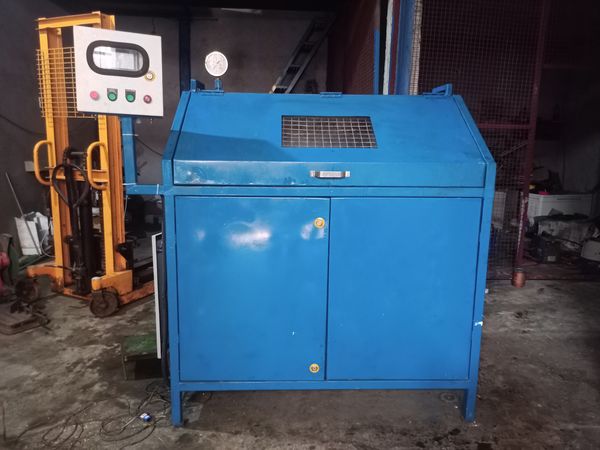
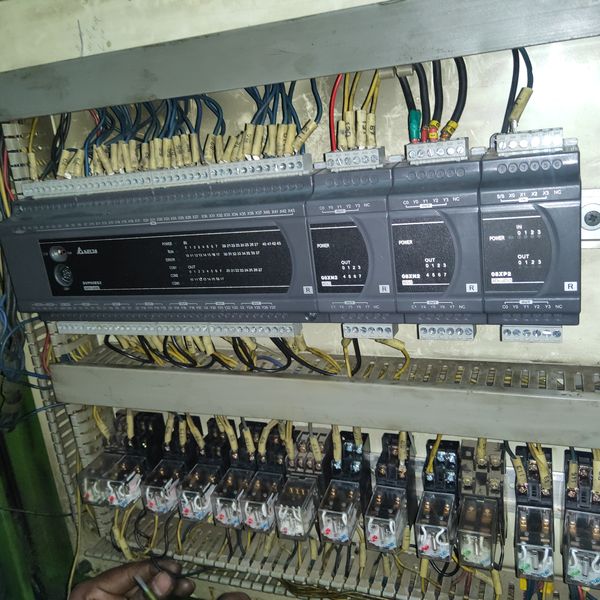
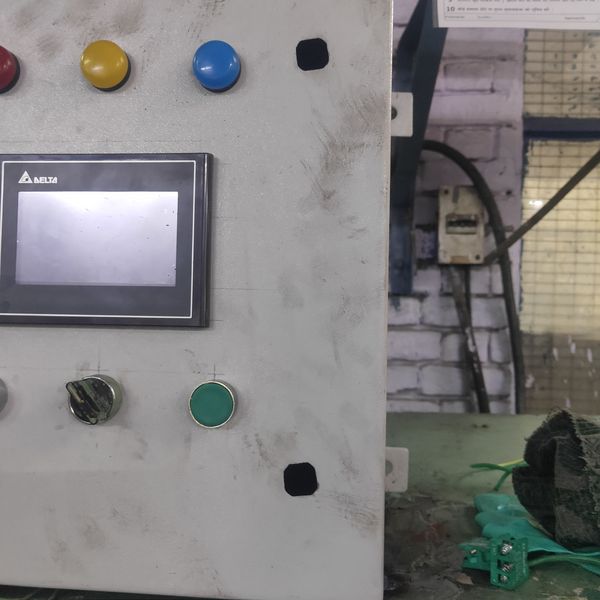
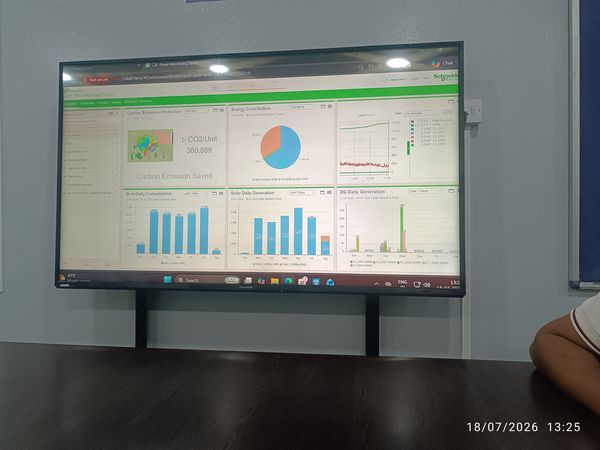
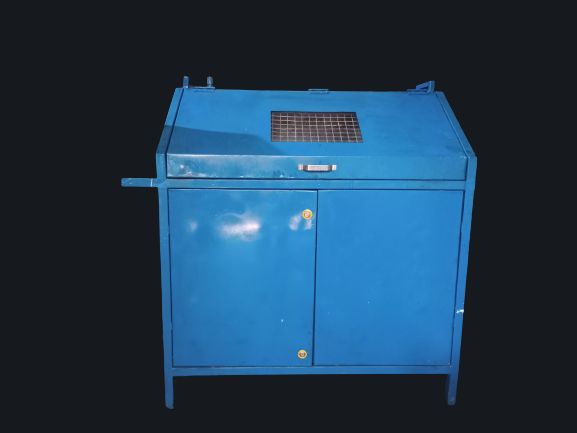
A PLC automated leak testing SPM is what you build when the volume no longer fits a manual station, or when the cost of one escaped leaker is high enough that a tired operator is a risk you cannot carry. The part is loaded, identified, sealed, tested, judged and sorted — and the human decision disappears from the middle of that chain.
We design these as special purpose machines rather than as catalogue equipment, because the loading, the fixture and the indexing depend entirely on your component and your line layout. What stays constant is the control philosophy: the PLC owns the sequence, the verdict is the machine's, and every cycle leaves a record.
The real return is not speed. It is that a reject cannot be talked out of. On a manual bench, a borderline part late in a shift becomes a judgement call. On an automated station, it becomes a logged NG with a curve attached to it.
The strongest lines we have built combine methods in one automated flow. An air leak test screens every part in seconds; anything doubtful is diverted to a water submersion station where the leak can be located and the finding fed back to the foundry. Where working pressure is high, a hydraulic test rig takes the same place in the sequence.
Because we build all of them, a combined line comes from one supplier with one PLC architecture behind it — rather than three machines from three vendors that have to be persuaded to talk to each other afterwards.
The same automation platform carries other operations. We build bolt press machines with SCADA force-displacement graphing, drilling and tapping SPM, and assembly stations where testing is one step in a longer sequence. If the operation ends in a pass or fail that somebody has to defend later, it belongs on a machine that records it.
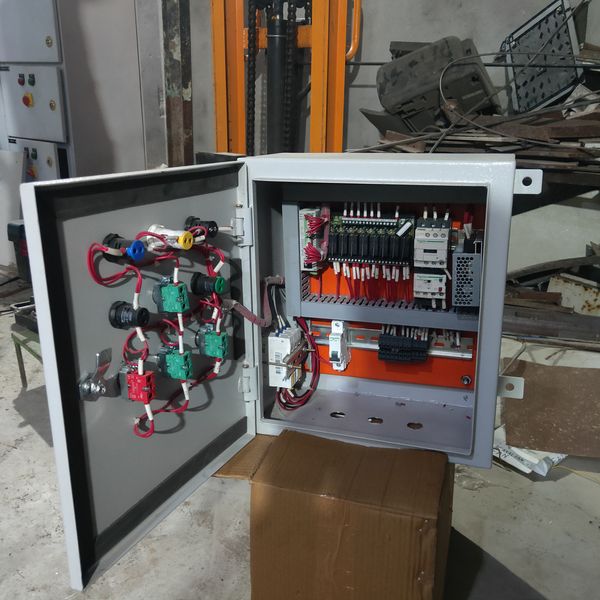
This is where our control panel background matters most. The PLC programming, the HMI screens, the SCADA layer and the panel itself are all done by the same team in Faridabad — so nobody points at anybody else when a station needs attention.
Barcode, QR or RFID read at entry. The recipe loads itself, so a wrong-recipe test becomes impossible.
Every cycle logged against the part serial: pressure curve, verdict, station, operator, timestamp. Retrievable months later.
Trend graphs, shift-wise rejection Pareto, downtime capture and export to ERP or your quality system.
NG parts are diverted mechanically to a locked bin. Releasing one needs a supervisor login and a recorded reason.
Calibrated master and known-leaker checks run and logged at shift start — proof the station was capable, not just running.
Guarding, light curtains where required, interlocks and E-stop through a safety relay, with the risk assessment done at GA stage.
Photographs from our Faridabad workshop and from customer installations.
leak-test-spm-full.jpgComplete automated stationleak-test-spm-indexing.jpgRotary indexing dialleak-test-spm-loading.jpgPick-and-place loadingleak-test-spm-scada.jpgSCADA screen with trend graphleak-test-spm-panel.jpgPLC control panel insideleak-test-spm-sorting.jpgAuto sorting and reject binAn automated station has more to agree than a bench does, and every point below is settled on the GA drawing before manufacturing starts.
| Parameter | What it covers | Fixed at |
|---|---|---|
| Test method | Air decay, differential, submersion or hydrostatic — or combined | Enquiry |
| Cycle time | Target parts per hour, and the station count needed to reach it | Enquiry |
| Loading | Manual, pick-and-place, gantry, robot or conveyor | Drawing approval |
| Station layout | Rotary indexing or in-line transfer, number of stations | Drawing approval |
| Part identification | Barcode, QR or RFID, and where it is read | Drawing approval |
| Sorting | OK and NG routing, reject bin, release procedure | GA approval |
| Control and data | PLC and HMI make, SCADA scope, ERP export format | GA approval |
| Line interface | Modbus, Ethernet/IP or Profinet handshake with line PLC | GA approval |
| Safety | Guarding, light curtains, interlocks, E-stop through safety relay | Always |
1. Part, volume and layout. We need the component, the parts-per-hour you have to hit, and where the station sits on the floor. Automation is sized by cycle time, not by wishful thinking.
2. Concept and cycle chart. Station layout, transfer method, fixture concept and a timing chart showing how the target rate is actually reached — reviewed with you before design work starts.
3. GA drawing and control architecture. Mechanical GA, panel GA, PLC and SCADA architecture, and the safety assessment, all approved by you.
4. Build, wiring and programming. Fabrication, ferruled panel wiring, PLC and HMI programming and SCADA configuration — all in our own workshop.
5. Trial and buy-off. Run with your masters and a production batch, prove the cycle time and the repeatability, then witnessed FAT at our works.
6. Installation, integration and training. Commissioned on your line, handshake with the line PLC proven, operators and maintenance trained, and support on call afterwards.
It is rarely volume alone. Tell us the parts per hour, the operator cost, and what one escaped leaker costs you at the customer end — including recall risk. In most cases the escape cost decides it long before the labour saving does.
Yes. The part is identified at entry by barcode or RFID and the recipe loads itself. Where the fixture must also change, we design quick-change tooling so a changeover takes minutes, and the machine refuses to run if the wrong tooling is fitted.
Yes. We handshake over Modbus, Ethernet/IP or Profinet with Siemens, Allen-Bradley, Delta, Mitsubishi and other line controllers, so the station cannot be bypassed and the line knows every verdict.
History and analysis. The HMI runs the machine; SCADA keeps trend graphs, shift-wise rejection Pareto, downtime capture and serial-level records, and exports them to your ERP or quality system.
No. NG parts are diverted mechanically to a locked bin, and releasing one needs a supervisor login with a recorded reason. That is usually the whole reason a customer moves from a manual bench to an automated station.
Yes. Programming, HMI screens, SCADA configuration and the control panel are all done by our own team in Faridabad, so one team answers for the mechanics, the electricals and the software.
Yes — Faridabad, Delhi NCR, Gurugram, Manesar, Bhiwadi, Ghaziabad, Noida and the rest of India, installed and commissioned by our own engineers.
Share the drawing or a photo on WhatsApp and we will come back with a method, a cycle time and a price.
Please add a phone number or an email so we can reply.
Only a phone number or email is needed. Everything else is optional — the WhatsApp chat opens with your requirement already written, so you can add the rest there.
Want to know more, or ask anything about PLC Automated Leak Testing SPM? We reply fast on WhatsApp