Most hydraulic SPM projects involve three suppliers — one builds the machine, one supplies the power pack, one wires the panel — and when something misbehaves, all three point at each other. We do all three ourselves in Faridabad, which is the single biggest reason our machines get commissioned on time.
Free site visit and quotation across Faridabad, Ballabgarh, Palwal, Gurugram, Delhi NCR, Noida, Ghaziabad and Manesar. Looking for a hydraulic SPM manufacturer near you? Call +91 90154 04168 — same-day reply, or send your drawing on WhatsApp.
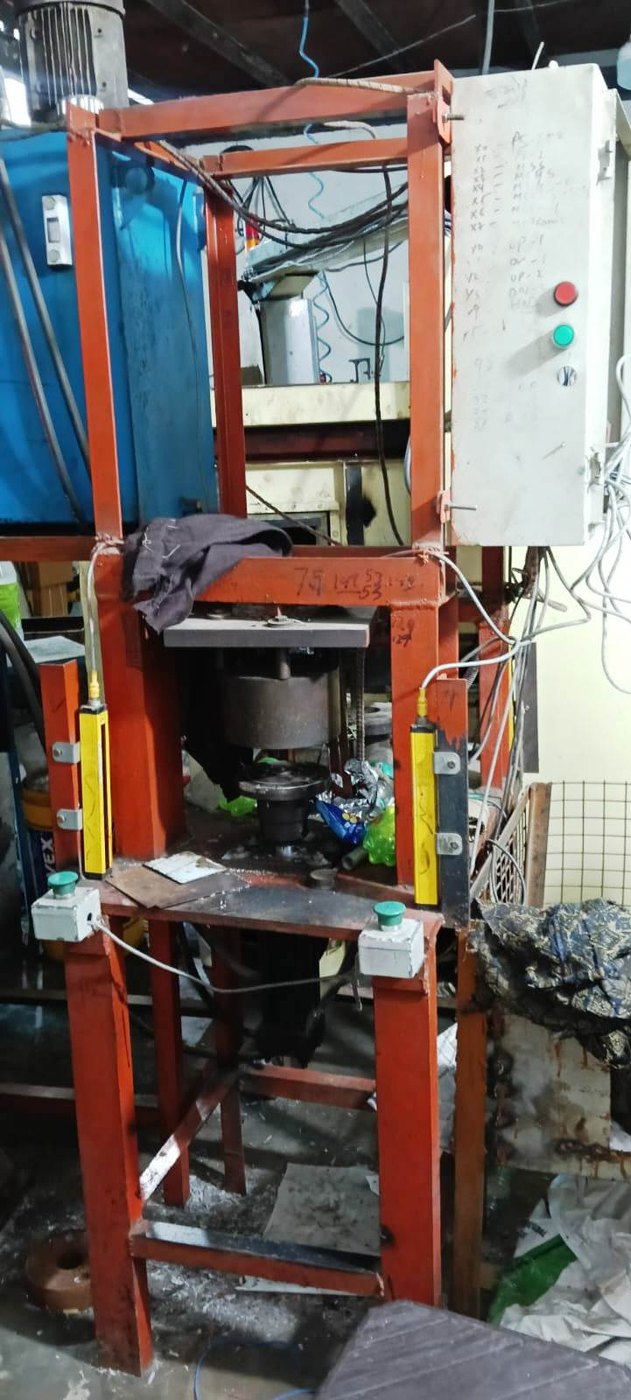
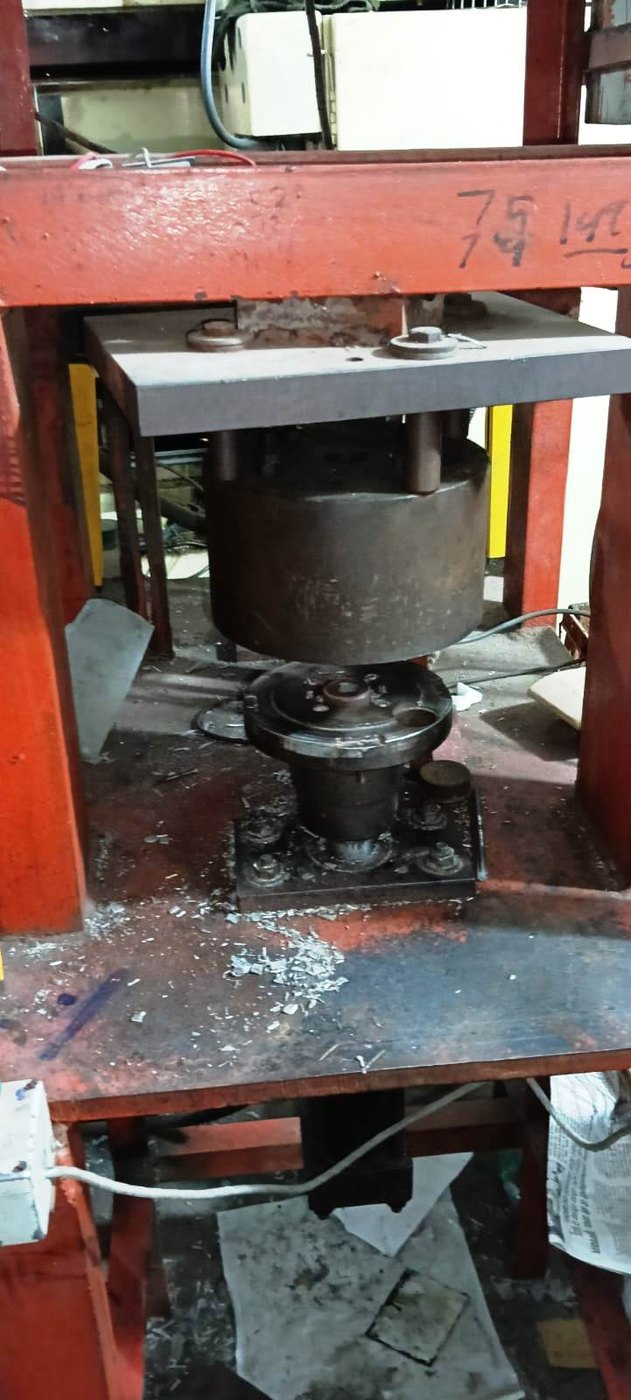
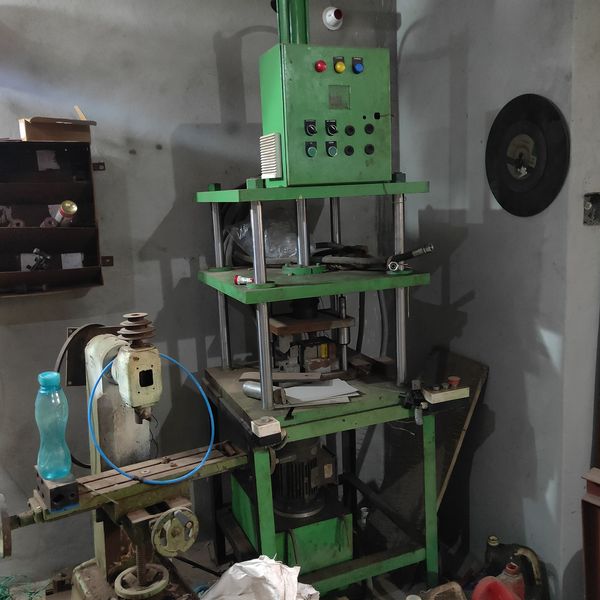
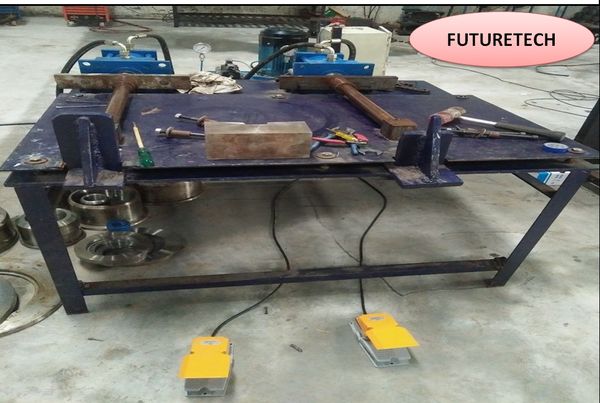
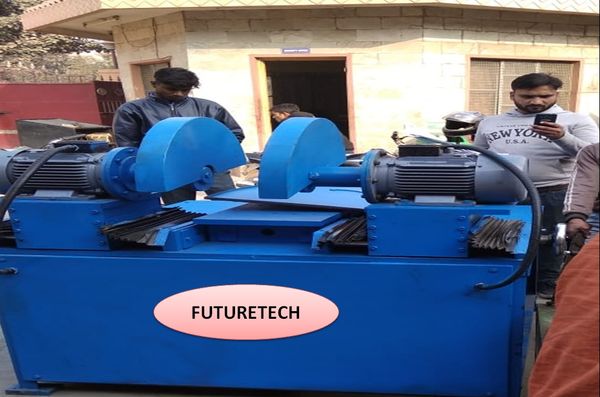
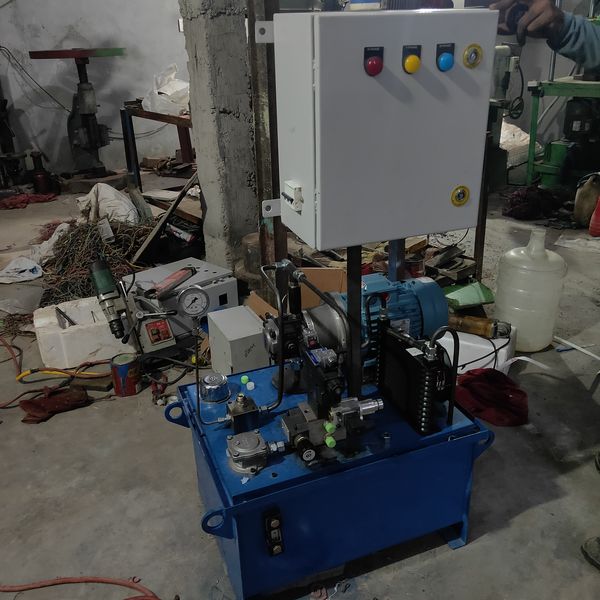
A hydraulic special purpose machine is a machine built for one job on one component, using hydraulic power to do the work. You reach for hydraulics when the force is high, when it must be held steadily for a period rather than delivered as an impact, or when you need fine control of speed under heavy load — the three things pneumatics and electric drives struggle with.
We have built hydraulic SPM for pressing and press-fitting, bending and forming, punching and piercing, clamping and holding, crimping, riveting and staking, high-pressure testing, and lifting and tilting fixtures. The common thread is not the operation — it is that no catalogue machine does exactly that job on exactly that part.
Where most hydraulic SPM projects come unstuck: not the mechanics. It is the handover between the machine builder, the power pack supplier and the panel wiring contractor. Three scopes, three schedules, and a commissioning week where nobody owns the problem.
FutureTech began as a control panel manufacturer in Faridabad and added hydraulic power packs and then complete machines. That order matters. It means the panel is not an afterthought bolted on at the end, and the power pack is not a stock unit that happens to be nearby — the pump, the valve bank, the cooling and the control sequence are all sized together, for your duty cycle.
Several of our hydraulic SPM have grown into product lines of their own: bolt press machines with SCADA force-displacement graphing, stator-in-shell presses, rotor and shaft presses, pipe bending machines and high-pressure leak test rigs. Where the requirement does not match any of them, we design from your component drawing — which is what a special purpose machine means.
An honest answer saves money. Pneumatic is right for light, fast, repetitive work where the force is modest. Servo-electric is right where positioning precision and programmable speed matter more than raw force, and where cleanliness rules out oil. Hydraulic earns its place when force is high, when it must be held for a dwell period, or when heavy loads need controlled speed. Tell us the force, the stroke, the dwell and the cycle rate, and we will tell you which one your job actually needs — including when the answer is not hydraulics.
Every hydraulic SPM ships with its own control panel, built and ferruled in the same workshop as the machine. The sequence, the interlocks and the safety circuit are designed alongside the hydraulic circuit rather than after it.
Pump, valve bank, accumulator and cooling calculated for your force, dwell and cycle rate — not picked from stock.
Pressures, dwells, positions and speeds stored per part number, so one machine handles a family of components.
Relief valves, guarding, interlocks and E-stop through a safety relay — never depending on a PLC output alone.
Pressure, position, force and verdict logged per part, with SCADA trends and reports for lines that need traceability.
Oil cooling and tank sizing worked out for your duty cycle — the commonest cause of a machine that works in January and stalls in June.
Mechanical, hydraulic or electrical — the same team answers, and the drawings are the ones we made.
Photographs from our Faridabad workshop and from customer installations.
hydraulic-spm-1.jpgComplete hydraulic SPMhydraulic-spm-power-pack.jpgPower pack built in-househydraulic-spm-valve-bank.jpgValve bank and manifoldhydraulic-spm-panel.jpgPLC control panelhydraulic-spm-hmi.jpgHMI cycle screenhydraulic-spm-installed.jpgMachine on customer floorA special purpose machine has nothing standard about it, so everything below is agreed and drawn before manufacturing begins.
| Parameter | What it covers | Fixed at |
|---|---|---|
| Operation | What the machine must do to the component | Enquiry |
| Force and stroke | Working force, peak force, stroke and dwell | Enquiry |
| Cycle rate | Parts per hour, which sizes the power pack and cooling | Enquiry |
| Hydraulic circuit | Pump, valve bank, accumulator, filtration, cooling | Drawing approval |
| Fixture and tooling | Part-specific, poka-yoke, quick-change where needed | Drawing approval |
| Measurement | Pressure, position, force — what is monitored and judged | Drawing approval |
| Control and data | PLC and HMI make, recipes, SCADA if required | GA approval |
| Line interface | Handshake with line PLC, if the machine sits inline | GA approval |
| Safety | Guarding, relief, interlocks, E-stop through safety relay | Always |
1. The component and the operation. Send the drawing or the part, tell us what has to happen to it and how many per hour. That is enough to start.
2. Concept and cycle chart. Machine layout, hydraulic circuit concept and a timing chart showing how the rate is actually achieved — reviewed with you before detailed design.
3. GA drawings. Mechanical GA, hydraulic circuit diagram and control panel GA, approved by you as one package.
4. Build. Fabrication, power pack assembly, ferruled panel wiring and PLC/HMI programming, all in our Faridabad workshop.
5. Trial and FAT. Run with your components, prove the cycle time and repeatability, witnessed acceptance at our works.
6. Installation and training. Commissioned on your floor by our engineers, operators and maintenance trained, drawings and program backup handed over.
The component drawing or a sample, what operation has to be performed, the force and stroke if you know them, and the parts per hour you need. If you do not know the force, tell us the material and the operation and we will work it out.
Pneumatic for light, fast, low-force work. Servo-electric where positioning precision and programmable speed matter, or where oil is unacceptable. Hydraulic where force is high, must be held for a dwell, or heavy loads need controlled speed. We will tell you honestly which your job needs, including when it is not hydraulics.
Yes. Hydraulic power packs are one of our own product lines, so the pump, valve bank, tank and cooling are sized for your duty cycle rather than picked from stock.
Yes, and it is where the company started. Panel design, ferruled wiring and PLC/HMI programming are all done in the same workshop as the machine.
Yes. We handshake with line PLCs over Modbus, Ethernet/IP or Profinet, with poka-yoke interlocks so the station cannot be bypassed.
One number covers mechanical, hydraulic and electrical, and the drawings we support against are the ones we made. Spares are specified at handover so you are not hunting for a valve six months later.
Yes — Delhi NCR, Gurugram, Manesar, Bhiwadi, Ghaziabad, Noida and across India, installed and commissioned by our own engineers.
Share the drawing or a photo on WhatsApp and we will come back with a method, a cycle time and a price.
Please add a phone number or an email so we can reply.
Only a phone number or email is needed. Everything else is optional — the WhatsApp chat opens with your requirement already written, so you can add the rest there.
Want to know more, or ask anything about Hydraulic SPM? We reply fast on WhatsApp