A drill press and a skilled operator can make any hole you like. What they cannot do is make the eleventh hole on the four-hundredth part exactly where the first one was. We build drilling and tapping special purpose machines in Faridabad that hold position, depth and thread quality without depending on how the shift is going.
Free site visit and quotation across Faridabad, Ballabgarh, Palwal, Gurugram, Delhi NCR, Noida, Ghaziabad and Manesar. Looking for a drilling and tapping SPM manufacturer near you? Call +91 90154 04168 — same-day reply, or send your drawing on WhatsApp.
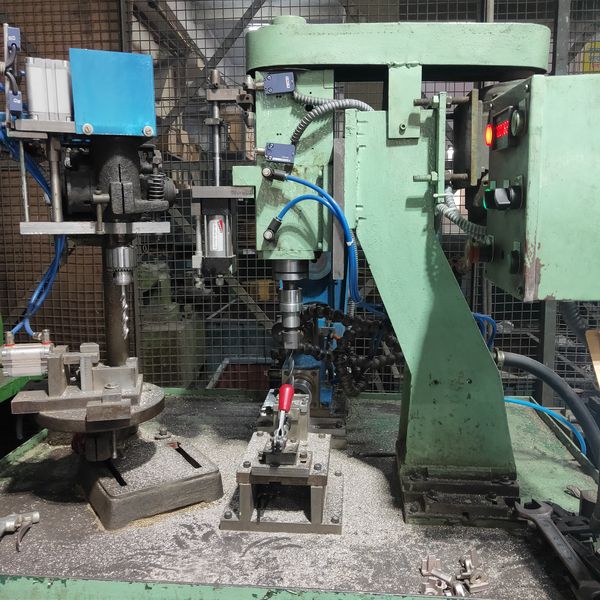
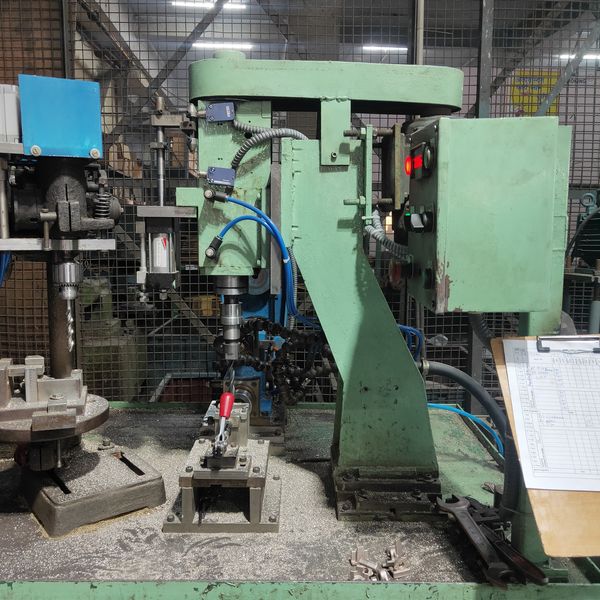
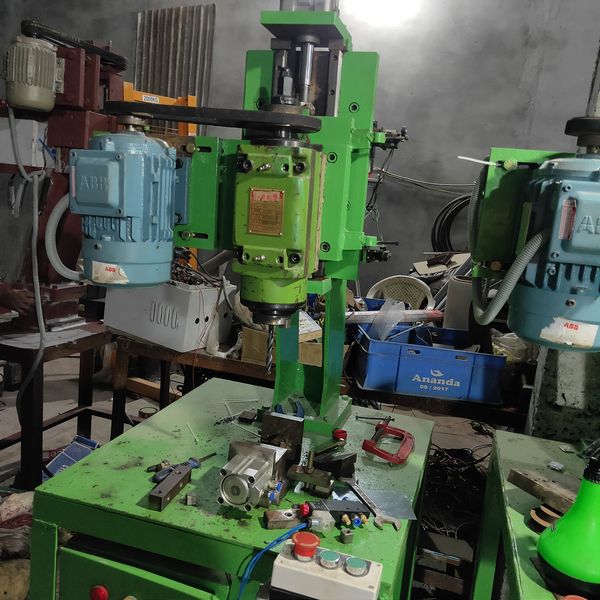
Any competent operator can drill a hole. The problem a drilling and tapping SPM solves is different: making the same set of holes, in the same positions, to the same depth, on part after part, without the accuracy depending on who is running the machine or how long they have been standing there.
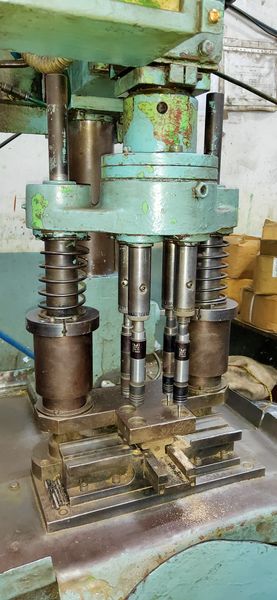
On a manual drill or a radial arm, every hole is a fresh setup — mark, centre-punch, align, drill, check. Multiply that by eleven holes and four hundred parts and you have both a time problem and a scatter problem. A purpose-built drilling SPM fixes the component once, brings all the spindles down together, and produces the whole hole pattern in one cycle.
The real saving is rarely the labour. It is the rework, the scrap and the argument at final inspection when one hole in a pattern is a millimetre out and the part will not assemble.
Drilling is one of the few operations where the failure is invisible after the fact. A drill that broke on hole seven leaves a hole that looks almost right until assembly. A tap that stripped leaves a thread that takes a bolt for two turns and then does not. So the machine has to notice at the moment it happens.
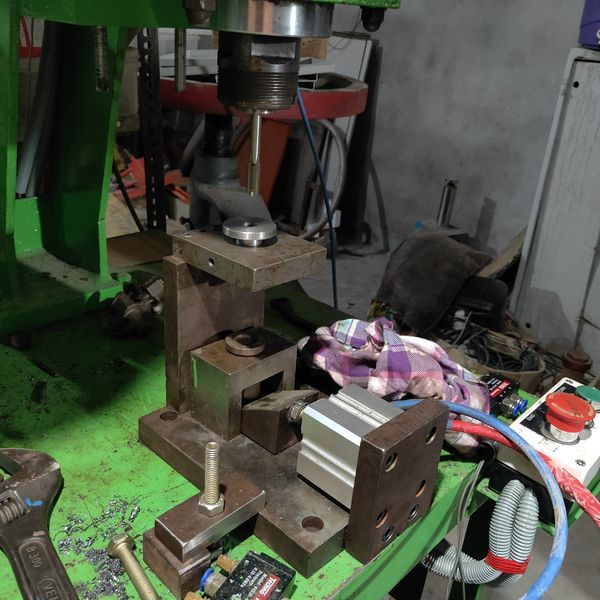
Three things decide whether a drilling SPM is still producing good parts a year later, and none of them is the spindle. The fixture must locate and clamp without distorting the component and without the operator being able to load it wrong. The coolant must reach the cutting edge, or tool life collapses and holes go oversize. And the swarf must have somewhere to go — a machine with no chip management becomes an operator with a hook and a shift's worth of downtime.
We design all three around your component and your production rate, along with the PLC control panel, which is built and ferruled in the same Faridabad workshop.
Sequence, depth verification, tool life and interlocks all live in a panel we design, build and ferrule ourselves — which is where FutureTech started before it built machines.
Encoder or scale confirms actual depth against the recipe. A worn mechanical stop cannot quietly change your hole depth.
A blunt or broken tool changes the load signature instantly. The cycle aborts and the part is flagged rather than passed on.
Every hole counted per tool, with change reminders before quality drifts instead of after a rejection.
Feed, speed, depth and dwell stored per part number, with tooling ID checks so the wrong setup cannot run.
Presence and orientation sensing in the fixture. A reversed or missing component stops the cycle before the head moves.
Guarding, two-hand start where needed, and E-stop through a safety relay rather than a PLC output.
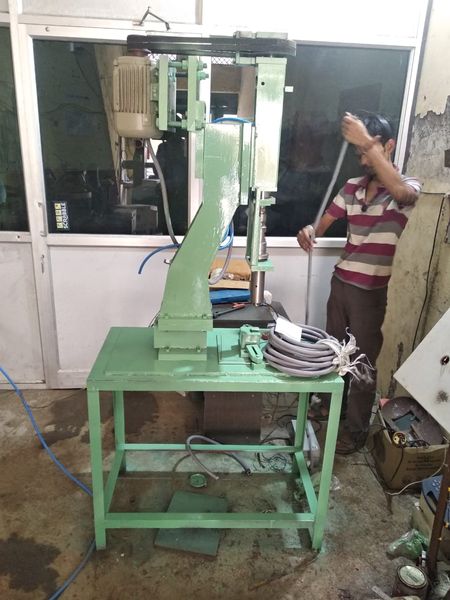
Photographs from our Faridabad workshop and from customer installations.
drilling-tapping-spm.jpgComplete drilling and tapping SPMmulti-spindle-head.jpgMulti-spindle head close-updrilling-spm-fixture.jpgComponent fixture and clampingdrilling-spm-hmi.jpgHMI cycle and tool life screendrilling-spm-panel.jpgPLC control paneldrilling-spm-installed.jpgMachine on customer floorHole pattern and fixture decide everything else, so all of it is agreed and drawn before manufacturing begins.
| Parameter | What it covers | Fixed at |
|---|---|---|
| Hole pattern | Number, diameter, depth, positions and tolerances | Enquiry |
| Component material | Cast iron, aluminium, steel — decides speeds and feeds | Enquiry |
| Cycle time | Parts per hour, which decides spindle count and layout | Enquiry |
| Spindle configuration | Gang head, geared multi-spindle, or indexed single spindle | Drawing approval |
| Fixture | Locating, clamping, poka-yoke, quick-change if multi-part | Drawing approval |
| Coolant | Flood or through-spindle, tank, filtration and recovery | Drawing approval |
| Swarf handling | Tray, conveyor or auger, and where the chips end up | GA approval |
| Monitoring | Depth, spindle load, torque, broken tool detection | GA approval |
| Safety | Guarding, interlocks, two-hand start, E-stop circuit | Always |
1. Component drawing and rate. The hole pattern with tolerances, the material, and the parts per hour you need. That decides whether the answer is one spindle indexed, or eleven spindles in one head.
2. Concept and cycle chart. Head layout, fixture concept and timing chart showing how the rate is actually achieved — agreed before detailed design.
3. GA drawings. Mechanical GA, fixture drawing and panel GA approved by you as one package.
4. Build and programming. Fabrication, head assembly, ferruled panel wiring and PLC/HMI programming in our own workshop.
5. Trial and buy-off. Run your components, measure the hole pattern, prove the cycle time, witnessed FAT at our works.
6. Installation and training. Commissioned on your floor, operators trained, tooling and spares list handed over.
It comes from the cycle time, not from the hole count. Eleven holes at a relaxed rate may be fine on one indexed spindle. The same eleven at 120 parts per hour needs a multi-spindle head. Tell us the pattern and the rate and we will work out the layout.
Yes. Either with separate heads that the part indexes between, or with a combined head where drilling and tapping spindles work in sequence. The part is fixtured once and comes off finished.
Spindle load changes the moment it happens — a broken drill takes almost no load, a blunt one takes too much. We watch the load signature, and where the tolerance demands it, add a probe check after the cycle.
That depends on the fixture, the head and the component. Send us the drawing with the tolerances and we will tell you honestly what the machine will hold, rather than quoting a number that sounds good.
Yes. Speeds, feeds, depths and dwell are stored as recipes, with quick-change fixtures and a tooling ID check so the wrong setup cannot run against the selected part.
Yes. Fixture, tooling and the control panel are all designed and made in our own Faridabad workshop against your component drawing.
Yes — Delhi NCR, Gurugram, Manesar, Bhiwadi, Ghaziabad, Noida and across India, installed and commissioned by our own engineers.
Share the drawing or a photo on WhatsApp and we will come back with a method, a cycle time and a price.
Please add a phone number or an email so we can reply.
Only a phone number or email is needed. Everything else is optional — the WhatsApp chat opens with your requirement already written, so you can add the rest there.
Want to know more, or ask anything about Drilling & Tapping SPM? We reply fast on WhatsApp