On most projects the panel comes from one supplier and the software from another, and commissioning week becomes a negotiation between them. We do both, which means when an output does not do what the logic says it should, one team goes and finds out why.
PLC programming, HMI and SCADA development, VFD and servo drive integration, safety circuits and turnkey special purpose machines — across automotive, sheet metal, plastics, pharma, food, textile, chemical, packaging, foundry, water treatment, HVAC and more. See all 133 applications by industry ↓
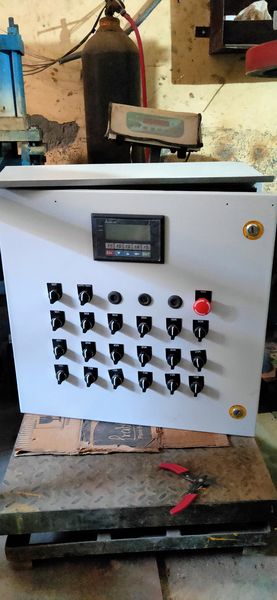
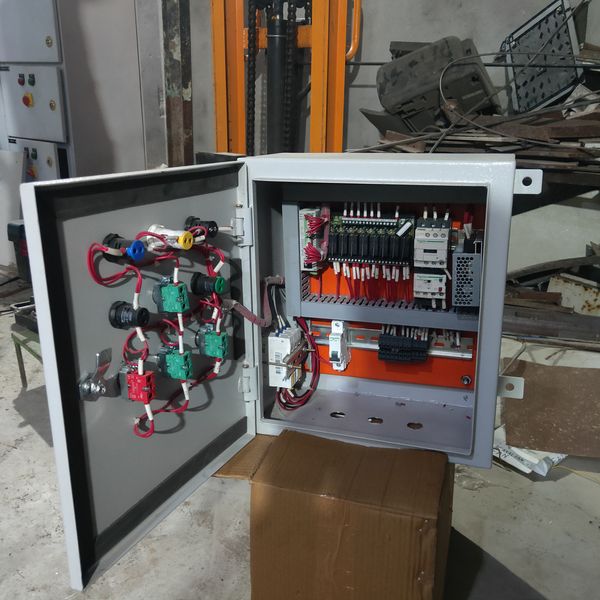
FutureTech started in 2012 as a control panel manufacturer in Faridabad. Machines came later, and they came because customers kept asking us to build the machine as well as the panel that ran it. That order — panel first, machine second — is why the automation on our special purpose machines is not an afterthought bought in from a contractor.
On a typical SPM project, the machine builder subcontracts the panel, the panel builder subcontracts the programming, and at commissioning nobody owns the gap between them. We do all three, so the sequence is designed alongside the mechanics and the person who wrote the logic is the person who wired the output.
The test of an automation supplier is not the demo. It is what happens on day four of commissioning when something intermittent is happening and three vendors are on site. That is the situation this arrangement exists to avoid.
We are not tied to one brand, and we will work with whatever your plant already standardises on — because a factory with a Siemens spares cupboard should not be given a Delta machine.
The clearest example is our bolt press machine with SCADA force-displacement graphing, where the whole value of the machine is the curve and the envelope. The same approach runs our automated leak testing SPM, torque-monitored tapping machines, and servo-indexed drilling stations.
On the panel side, the same team builds PLC control panels, AHU panels with BMS integration and multilevel car parking control systems.
The software is specified at drawing stage, not written after the machine is built and then blamed for the mechanics.
The sequence and the interlock rules are agreed on paper first. It is the document that defines both the logic and the safety case.
Safety functions hard-wired through a relay. The PLC supervises the machine; it does not decide whether it is safe.
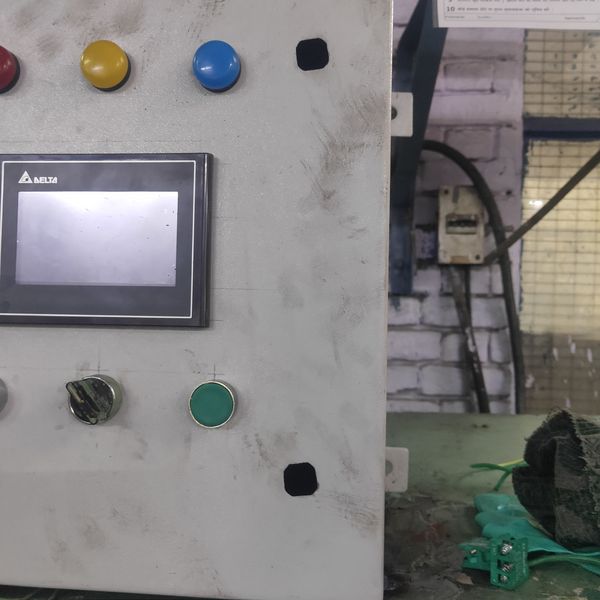
Designed for someone standing there all shift — live values, clear faults, and login levels so limits cannot be quietly widened.
Serial-level records with curves, retrievable months later when a customer complaint needs answering.
Program backup, parameter list, IO list and drawings handed over. Not held hostage as a service arrangement.
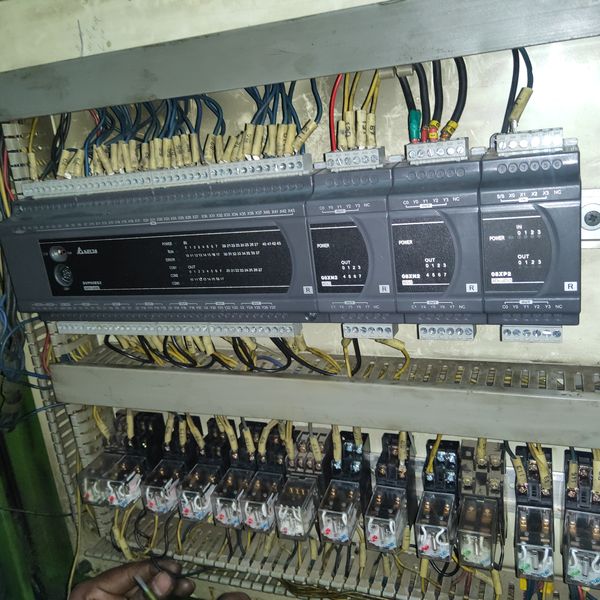
Panel, wiring and program from the same workshop, so nobody is on the phone to a subcontractor on day four.
Photographs from our Faridabad workshop and from customer installations.
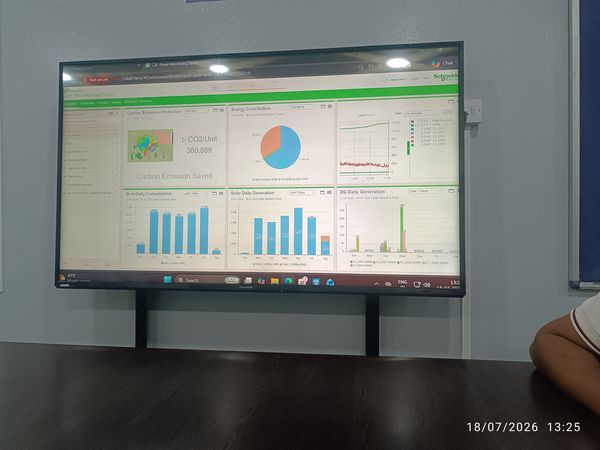
scada-screen.jpgSCADA trend screenhmi-screen-design.jpgHMI operator screenplc-panel-internal.jpgPLC panel, ferruled wiringplc-programming.jpgProgramming in progressscada-report.jpgShift report outputautomation-commissioning.jpgCommissioning on siteThese are the points we settle before writing any code, because changing them afterwards is what makes automation projects overrun.
| Item | What it covers | Agreed at |
|---|---|---|
| Platform | PLC, HMI and SCADA make, matched to your plant standard | Enquiry |
| Cycle chart | Step sequence, conditions and interlocks for every move | Concept stage |
| Recipes | Which parameters vary per part number and their limits | Concept stage |
| Measurements | What is measured, at what resolution, and what is judged | Drawing approval |
| Safety | Risk assessment, hard-wired functions, safety relay scope | Drawing approval |
| IO list | Every input and output, named and documented | GA approval |
| Data model | Fields logged per cycle, retention, export format | GA approval |
| Line interface | Protocol and handshake with the line or plant system | GA approval |
| Handover | Program backup, parameters, IO list, drawings, training | Always |
Some automation suppliers keep the program locked so that any change has to come back through them. We hand over the backup, the parameter list, the IO list and the drawings at commissioning.
Partly because it is the right thing to do, and partly because a machine that only one company can service is a machine that becomes a liability the moment that company is busy, has moved on, or is no longer in business. If you want us to make the changes, call us because we are good at it, not because you have no choice.
Whichever your plant already standardises on, so your maintenance team knows it and your spares cupboard already has parts. Where there is no existing standard, we recommend based on the application, the IO count and the support available locally — and we explain the trade-offs rather than just naming a brand.
Yes. Panel design, wiring, PLC programming, HMI screens and SCADA are all done by our own team in Faridabad. That is the main reason our commissioning weeks do not turn into three-way phone calls.
The HMI runs the machine — setpoints, live values, faults, operator actions. SCADA keeps the history and the analysis — trend graphs, serial-level records, shift reports and export to your systems. Small machines often need only an HMI; anything with traceability requirements needs both.
Yes, over Modbus RTU or TCP, Ethernet/IP or Profinet, with a handshake designed so the station cannot be bypassed and the line knows every verdict.
Yes — program backup, parameters, IO list and drawings at commissioning. We do not lock machines to force service work back through us.
Yes. Retrofitting modern control onto sound mechanics is something we do regularly, including full CNC retrofits — the same discipline applied to machine tools.
Yes, on the machine, on your parts, at handover — for operators and for the maintenance team separately, because they need different things.
Share the drawing or a photo on WhatsApp and we will come back with a method, a cycle time and a price.
Please add a phone number or an email so we can reply.
Only a phone number or email is needed. Everything else is optional — the WhatsApp chat opens with your requirement already written, so you can add the rest there.
Automation is not one product. It is whatever the machine in front of you has to be made to do, reliably, ten thousand times. Below is the ground we have actually covered — twenty industries and 133 applications. If your application is not listed, it is almost certainly a variation of one that is.
Tier-1 and Tier-2 plants across Faridabad, Manesar, Gurugram and Bhiwadi.
Press shops, laser lines and welding cells.
Moulding shops running hydraulic and electric machines.
GMP environments needing audit-ready records.
Hygienic design with washdown-rated enclosures.
Spinning, weaving, processing and garment units.
Batch and continuous plants with hazardous area needs.
Carton, corrugation and pouch lines.
Melting, moulding and heat treatment.
Long conveyors and crushing plants.
Municipal and industrial plants.
AHU, chiller and utility plant rooms.
Sortation, storage and retrieval.
Web and sheet-fed lines.
Mixing, curing and finishing.
Generation, distribution and monitoring.
High-volume assembly and testing.
The line we know from the inside.
Tractor and implement plants.
Low volume, high traceability.
Special purpose machines we have built or automated, and the machine types we are most often called in to retrofit. Every one of these has been through our workshop or a customer site.
We are not tied to one brand. We work on the platform your plant already runs, so your maintenance team does not have to learn a new one for a single machine.
A working machine or line, not just a program. On our projects that means the control panel, the field wiring and sensor selection, the PLC logic, the HMI screens, the drive parameters, the safety circuit, commissioning at your plant, operator training, and the backup files and documentation handed over at the end.
Yes. A large share of our work is half-finished or abandoned automation — a panel built by one vendor and a program written by another that never met. We audit what exists, quote for what is salvageable, and finish it.
Yes. Relay logic converted to PLC, new drives and HMI added, obsolete controllers replaced, and the existing enclosure reused where it is sound. This is usually a fraction of the cost of a new machine and keeps the mechanical structure you already trust.
Yes. You get the source program, the HMI project file, the drive parameter list, the I/O list and the as-built drawings. A machine you cannot modify is a machine you do not own.
Automotive and auto components, sheet metal, plastics and moulding, pharmaceutical, food and dairy, textile, chemical and paint, packaging, foundry and forging, cement and bulk handling, water and wastewater, HVAC and building services, warehousing, printing, rubber, power and renewables, electronics assembly, cooler and fan manufacturing, agriculture equipment, and precision engineering.
Faridabad, Ballabgarh, Palwal, Gurugram, Manesar, Delhi NCR, Noida, Ghaziabad and Bhiwadi for regular site work, and across India for turnkey machines and commissioning visits.
Free site visit and quotation across Faridabad, Ballabgarh, Palwal, Gurugram, Manesar, Delhi NCR, Noida and Ghaziabad. Looking for an industrial automation company near you? Call +91 90154 04168 — same-day reply, or send the machine details on WhatsApp.
Want to know more, or ask anything about PLC & SCADA Capability? We reply fast on WhatsApp